


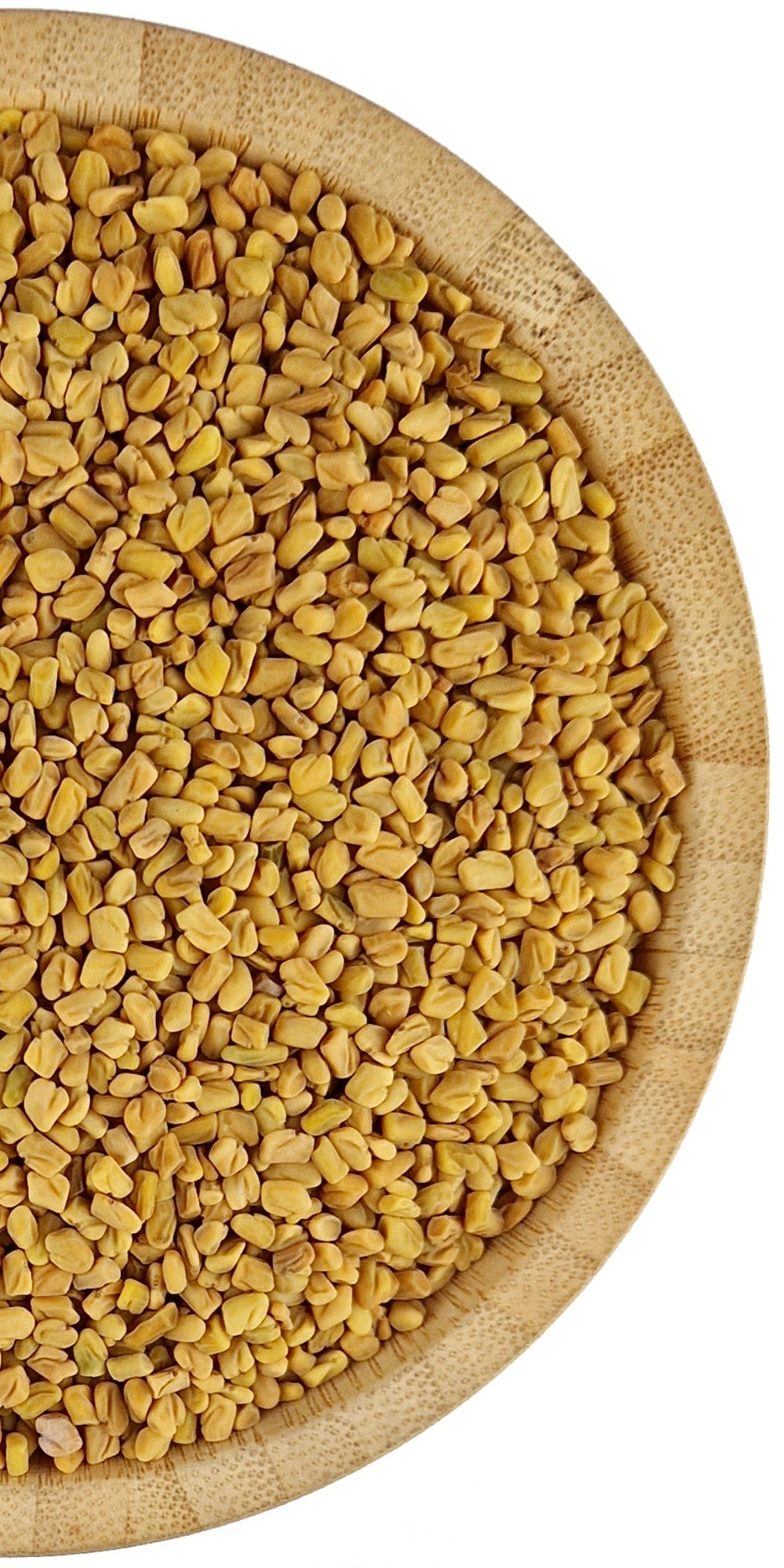
Fenugreek seeds are the small yellowish seeds of Trigonella foenum-graecum, a legume of the pea family native to western Asia. Mildly bitter, with an aroma that recalls maple syrup, they are a standard part of curry powders and go into pickles, chutneys and the Bengali whole-spice blend panch phoron.
A legume called "Greek hay"
Fenugreek is a legume: its seeds grow in pods, about 10 to 20 to a pod. The name goes back to the Latin fenum Graecum, "Greek hay". It reached English very early, as Old English fēnogrēcum, and the modern word came later through Old French fenegrec.
Why it smells of maple
Researchers have identified a compound called sotolon as the key to the character of fenugreek, and its maple-syrup aroma comes largely from it. The likeness is close enough that fenugreek is used to make imitation maple flavouring. One spice seller describes the flavour as sweet and nutty with a maple aroma. Raw seeds taste bitter; toasted or fried, the bitterness softens and nutty, caramel notes come through.
How it is used today
- Curry powders. Toasted and ground, it is a standard part of curry powders and pastes.
- Panch phoron. One of the five whole spices in this Bengali blend.
- Pickles and chutneys. It gives pickles and chutneys a subtle sweet note.
- Middle Eastern, Turkish and Egyptian cooking. In marinades for lamb and in vegetable stews.
For another whole seed for curry powders, see Coriander Seeds, and for a seed that also goes into hot oil at the start of cooking, see Cumin Seeds. More are in our Whole Spices and Herbs & Spices collections.
Fenugreek seeds in your kitchen
Fenugreek burns quickly, and burnt seeds taste harsh and very bitter, so toast or fry it only briefly. In hot oil or ghee, whole seeds turn golden and aromatic in well under a minute. For grinding, toast the seeds lightly in a dry pan until golden, then let them cool. Keep the bag tightly closed in a cool, dry place away from heat, light and moisture, and use it within about a year; a faint smell means the seeds are past their best. Taste varies between batches.
Frequently asked questions
Why do fenugreek seeds smell like maple syrup?
Mainly because of sotolon, an aroma compound in the seeds. The maple note is so characteristic that fenugreek is used to make imitation maple flavouring.
Are fenugreek seeds bitter?
Mildly, especially raw. Brief toasting softens the bitterness, but burnt seeds turn very bitter.
What does the name fenugreek mean?
It comes from the Latin fenum Graecum, "Greek hay".
Where do our fenugreek seeds come from?
The current batch was grown in Egypt.
Sources
- The Spice House, Fenugreek Seeds, Whole, thespicehouse.com, accessed 23 November 2026.
- Penzeys Spices, Fenugreek Ground, penzeys.com, accessed 23 November 2026.
- Blank I., Lin J., Devaud S., Fumeaux R., Fay L.B., The Principal Flavor Components of Fenugreek (Trigonella foenum-graecum L.), ACS Symposium Series 660 (1997), pp. 12 to 28, imreblank.ch, accessed 23 November 2026.
- The American Heritage Dictionary of the English Language, "fenugreek", ahdictionary.com, accessed 23 November 2026.
- Dictionary.com, "fenugreek", dictionary.com, accessed 23 November 2026.




