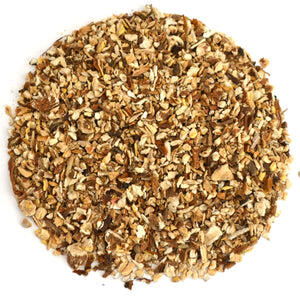
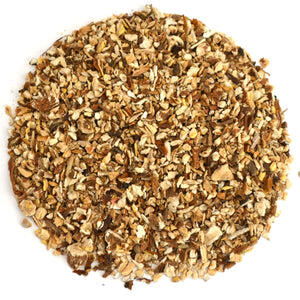
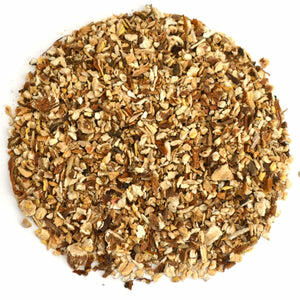
Dried dandelion root is the cut taproot of Taraxacum officinale, simmered as dandelion root tea, or roasted first for a dark, coffee-style cup. It is the part of the dandelion that stays underground, anchoring the yellow flower to lawns and roadsides.
The plant above the root
A long taproot
Above ground, dandelion forms a rosette of jaggedly toothed leaves, and its leafless stems hold bright yellow discs of tightly packed florets, followed by fluffy white seed heads. Below ground it sends down a long taproot, the part cut and dried here.
Around 250 kinds in one country
According to Plantlife, dandelion flowers from March to October on pasture, roadsides, lawns, paths and waste ground, and it is common throughout the British Isles. Around 250 microspecies grow in the UK, and more than 40 of them are thought to grow nowhere else. In the language of flowers, the dandelion stands for faithfulness and happiness.
Dandelion in the coffee pot
A wartime substitute
Roasted and ground, dandelion root has long been brewed as a coffee-style drink, and Plantlife notes that it was used as a coffee substitute during the Second World War.
Roasting the root at home
For a coffee-style drink, some people dry-roast the cut root in a pan or oven until it is dark brown and fragrant, then grind it and brew it. One seller describes the unroasted root as earthy and vegetal, with a bitterness closer to radicchio or endive than to coffee, and an amber to light brown colour. Roasted, it turns toasty and nutty, with a caramel sweetness up front and a dark brown cup.
A temperance bar drink
Dandelion is also the first half of dandelion and burdock; see Burdock Root. In Rawtenstall, Mr Fitzpatrick’s, described as Britain’s last temperance bar, has been open since 1890 and still sells its own cordials, dandelion and burdock among them.
How it is used today
- Root tea. A small amount of cut root, simmered gently for 5 to 10 minutes, then left covered for 10 minutes.
- Coffee-style cup. Dry-roasted, ground and brewed, for example in a French press.
From the same plant come Dandelion Leaf and Dandelion Flowers. For another root to simmer, see Siberian Ginseng Root. More single herbs are in our Single Herbs collection, and other plants for the cup are in Herbal Tea.
Getting the strength right
The root needs time, so it is simmered rather than just steeped. Start with the amount above and adjust to taste, using less for a milder cup.
Frequently asked questions
Can dandelion root be used instead of coffee?
Yes, as a coffee-style drink: dry-roast the cut root, grind it and brew it, for example in a French press. Plantlife notes it was used as a coffee substitute during the Second World War.
How do I make dandelion root tea?
Use no more than 1 tablespoon of cut root per 250 ml of water. Bring it to the boil, simmer on a low heat for 5 to 10 minutes, then leave it covered for 10 minutes and strain.
How is the root different from dandelion leaf?
This is the long taproot, cut into pieces. The leaves come from the rosette above ground and are sold separately; Plantlife notes they are added to salads for their slightly bitter flavour.
Is it suitable if I react to daisy-family plants?
If you are sensitive to plants of the daisy family, ask your doctor or pharmacist before use.
Can I drink it during pregnancy or with medication?
It is not recommended during pregnancy or breastfeeding. If you take medication or have a health condition, ask your doctor before drinking herbal infusions.
Where does dandelion root come from?
Depending on the batch, our dandelion root comes from Poland or China.
Sources
- Plantlife, Dandelion, plantlife.org.uk, accessed 22 November 2026.
- Methodist Heritage, Mr Fitzpatrick’s: Britain’s Last Temperance Bar, methodistheritage.org.uk, accessed 22 November 2026.
- Valley of Tea, Dandelion Root Tea: A Complete Brewing Guide, valleyoftea.com, accessed 22 November 2026.