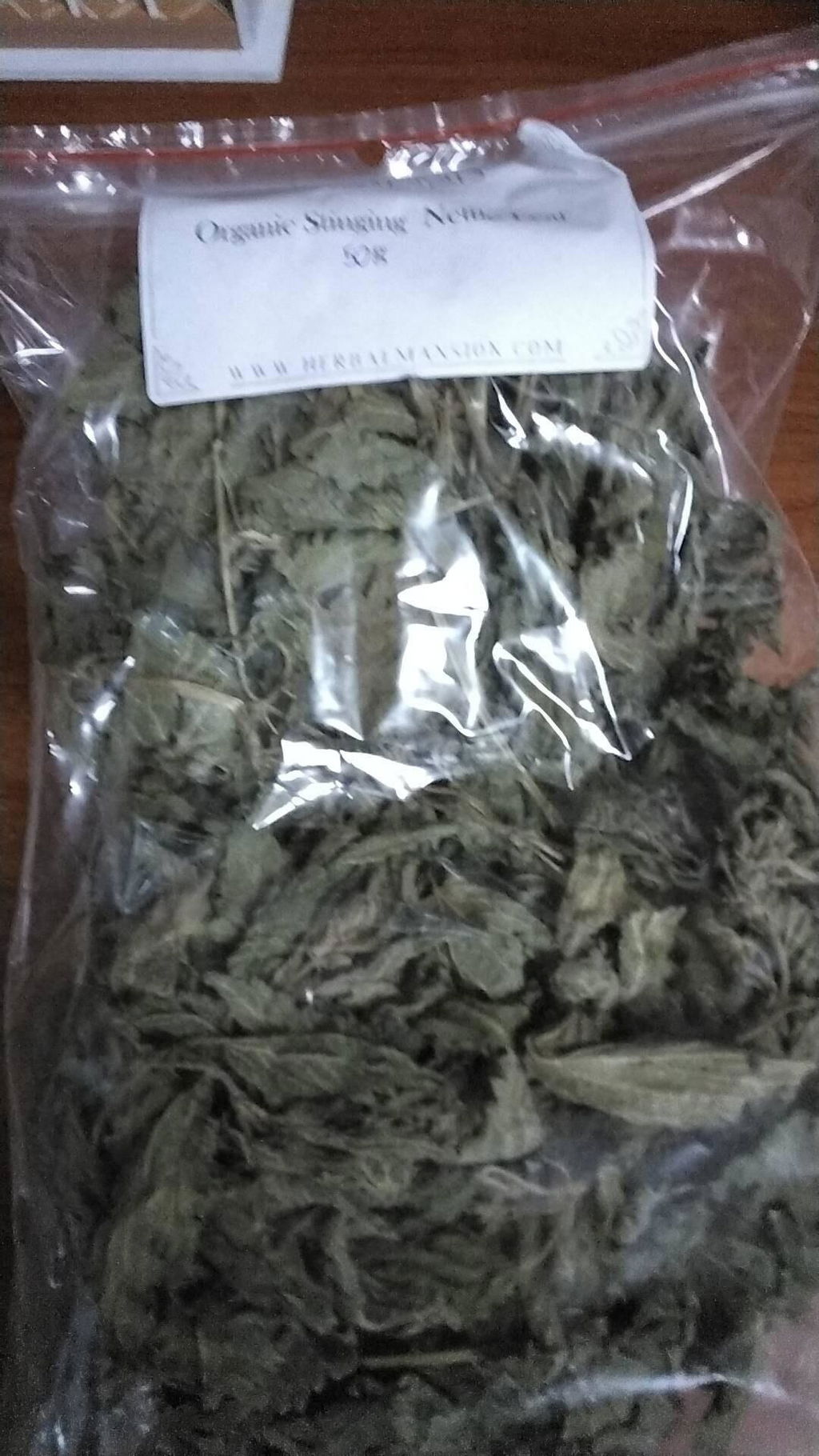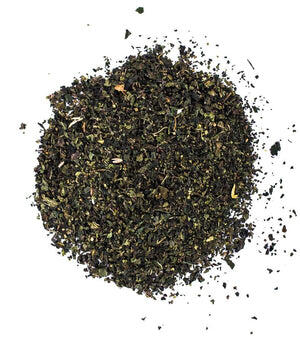


Dried nettle leaves do not sting, because the stinging hairs break and dry out during drying. What remains is a herbal, grassy taste reminiscent of spinach and young greens. Nettle tea is brewed on its own or in blends with other herbs, and in the kitchen the dried leaves go into soups, sauces and pesto, as well as into hair rinses. The leaves are easy to measure with a spoon and can be added straight to the pot.
A plant from the field, the kitchen and the weaving shed
The Bronze Age and antiquity
Nettle was one of the first fibre plants in Europe. Cloth was woven from its stems as early as the Bronze Age, and the most famous surviving fragment, in which cremated remains were wrapped in a grave at Lusehøj in Denmark, is about 2,800 years old. The Greeks and Romans ate young nettle shoots as a vegetable. Dioscorides and Pliny described it among useful plants.
The Middle Ages and the Polish countryside
In monastery gardens and in the countryside, nettle was the first green vegetable after winter. Young leaves were cooked into soup and put into bread, and dried leaves were added to poultry feed. In Poland nettle soup was an ordinary spring dish.
How dried nettle leaf is made
The shoots are cut before flowering, when the leaves are young and green, and dried in shade with good airflow so that they do not turn brown. The dried leaves are stripped from the stems and cut. Today dried leaf is returning to the kitchen along with the fashion for wild edible plants.
How it is used today
- Infusion. Nettle on its own or in blends with field horsetail, lemon balm and mint, with a grassy, slightly salty taste.
- Cooking. Cream of nettle soup, an addition to vegetable soups, sauces, omelettes and sandwich spreads, and once soaked it replaces basil in pesto.
- Bread and pancakes. A tablespoon of dried nettle in bread dough, potato pancakes or crêpes.
- Home cosmetics. A hair rinse made from the infusion, and an infusion for foot baths.
In blends nettle is most often combined with field horsetail and lemon balm. Other herbs for single-ingredient infusions are in our Single Herbs collection.
Nettle in your herb cupboard
Dried nettle is one of the more versatile herbs in the cupboard, because the same pack serves for an infusion, for soup and for a hair rinse. It is a herb for people who like grassy, green flavours and are happy to use herbs in the kitchen too.
More ways to use it
- In the kitchen. For soup for 4 servings, take 2 handfuls of leaves and add them to the simmering stock for the last 10 minutes. For pesto, soak 3 tablespoons of leaves in hot water for a quarter of an hour and squeeze them out.
- Hair rinse. For a hair rinse, brew 3 tablespoons of leaves in a litre of boiling water, covered, for 20 to 30 minutes, then strain and let it cool. Try it on a strand first.
Frequently asked questions
Does dried nettle sting?
No, the stinging hairs break and dry out during drying, so the dried leaves can be picked up, measured and added to dishes without worry.
How does nettle leaf differ from the root?
The leaf is brewed like tea and added to soups; the root is hard and needs to be boiled. We also stock nettle root.
How do I make nettle tea?
For a mug of water, take a tablespoon of leaves, pour over water that has just boiled and brew for 5 to 10 minutes, covered. It can be combined with lemon balm or mint in one infuser.
Can I drink nettle during pregnancy or combine it with medication?
In these situations, ask a doctor or pharmacist. A product description does not replace their advice.
Sources
- Christian Bergfjord, Ulla Mannering, Karin Margarita Frei et al., Nettle as a distinct Bronze Age textile plant, Scientific Reports 2, 2012, article 664.
- Pliny the Elder, Natural History, 1st century AD, book XXII, chapters on nettle (urtica).
- Maud Grieve, A Modern Herbal, London 1931, entry “Nettles”.