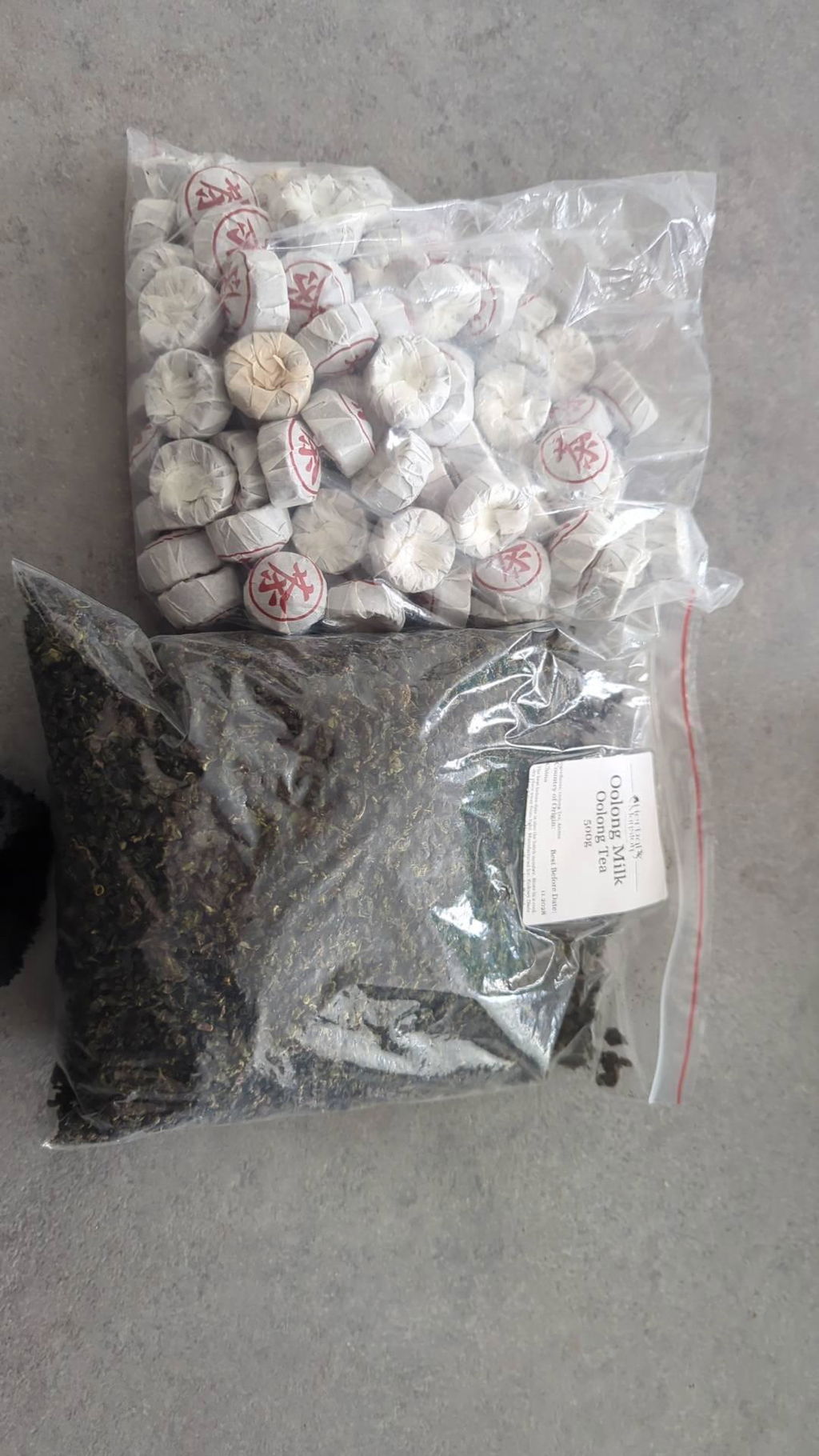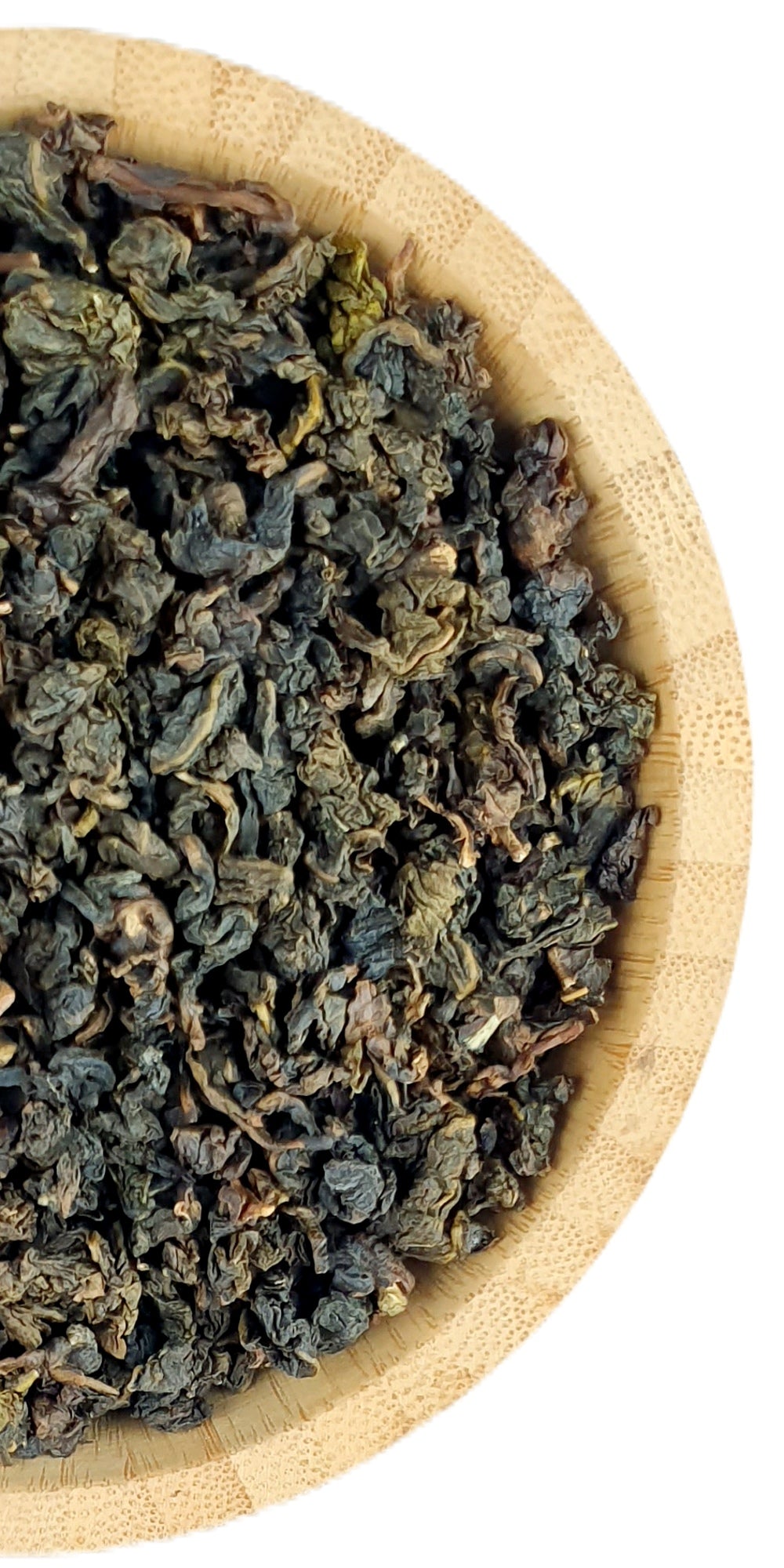
Oolong Milk is an oolong tea with added creamy flavouring and a milky, buttery scent that you notice as soon as you open the pack. The leaves are rolled into dark green nuggets that unfurl with each infusion. The infusion is pale gold, smooth and sweetish, with no astringency, and the milky note lingers on the palate long after you have finished the cup. The same leaves are infused several times, and the flavour holds up well to both hot and cold brewing.
Where milk oolong came from
Oolongs from Fujian and Taiwan
Partly oxidised teas, known today as oolong, originated in the Chinese province of Fujian. In the 19th century settlers from Fujian brought their cultivation to Taiwan. In the 20th century Taiwan came to specialise in lightly oxidised, floral oolongs rolled into balls, which are infused many times. It was against this background that the variety appeared with which the story of milk oolong began.
Jin Xuan, cultivar number 12
In 1981 Taiwan's tea research station registered a tea bush cultivar called Jin Xuan, number 12 in the Tai Cha register, bred over several decades of crossing. Tea from this cultivar has a natural, delicate milky and buttery note. Under the name milk oolong it quickly became popular on the island and then abroad. The natural note of Jin Xuan is subtle and varies from year to year, and demand for milk oolong grew faster than the plantings of this cultivar. That is why, since the 1990s, milk oolong has also been produced in China, mainly in Fujian.
How Oolong Milk is made
After picking, the leaves are withered and bruised so that their edges oxidise slightly, then heated, rolled into nuggets and dried, like other green-style oolongs. A creamy flavouring is then added, which gives this tea its pronounced milky scent. The light oxidation gives a pale, smooth infusion.
How it is used today
- A tea with dessert, or instead of it. Sweetish and smooth, without bitterness, drunk without additions.
- Multiple infusions. The same leaves are infused 3 to 4 times, and the milky scent is strongest in the first infusion.
- Cold brew. An infusion from a jug in the fridge is sweet and creamy, with no astringency.
- Tea latte. A strong infusion with milk frothed as for coffee, hot or over ice.
Other oolongs, including the floral Oolong Tie Guan Yin and the roasted Oolong Black Dragon, are in our Oolong Tea collection.
Oolong Milk in your tea cupboard
Oolong Milk is a tea for people who want something sweetish without sugar and do not like bitterness or astringency. It is also a good choice for someone just starting out with oolongs, because it is simple to brew and forgives mistakes.
Frequently asked questions
Is Oolong Milk flavoured?
Yes, this tea is flavoured.
Does Oolong Milk contain milk?
No. Milk is not an ingredient of this tea; the milky scent comes from the flavouring.
How does Oolong Milk differ from Tie Guan Yin?
Both are oolongs rolled into nuggets and infused several times. Tie Guan Yin is unflavoured, floral and slightly astringent. Oolong Milk is flavoured, with a milky scent, and is sweeter and smoother.
Does Oolong Milk contain caffeine?
Yes, like every tea from the tea plant. Each further infusion of the same leaves contains less caffeine.
Can I drink Oolong Milk during pregnancy or with medication?
It contains caffeine, so in these situations ask a doctor or pharmacist. A product description does not replace their advice.
Sources
- Tea Research and Extension Station (TRES), Taiwan, register of tea cultivars, cultivar Tai Cha No. 12 “Jin Xuan”, 1981.
- Mary Lou Heiss, Robert J. Heiss, The Story of Tea: A Cultural History and Drinking Guide, Berkeley 2007, chapter “Oolong Tea”.
- Victor H. Mair, Erling Hoh, The True History of Tea, London 2009, chapter on tea in Taiwan.
- William H. Ukers, All About Tea, New York 1935, vol. I, chapter XVII on Formosa tea, pp. 327–340.
- EFSA, Scientific Opinion on the safety of caffeine, EFSA Journal 2015, 13(5):4102.