




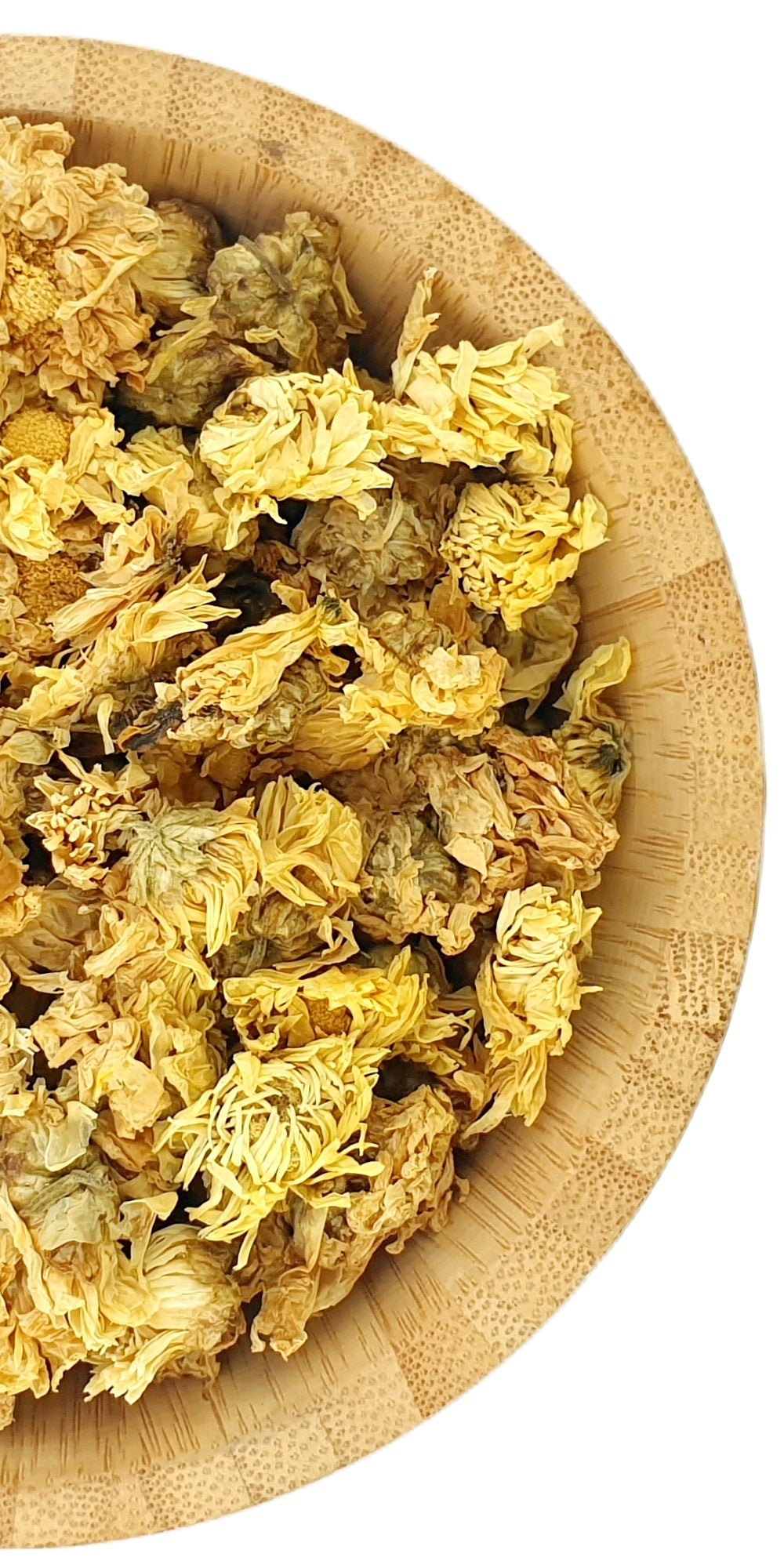
Dried white chrysanthemum flowers are the flowers of Chrysanthemum morifolium, one of the two species that chrysanthemum tea is made from. The drink began in China and became popular under the Song dynasty. Chrysanthemum tea is traditionally described as a clear, pale to light yellow infusion with a floral aroma, and the same flowers go back into the pot several times.
A flower of Chinese gardens and poetry
A hybrid of the garden
The plant is often written Chrysanthemum × morifolium, where the × marks a hybrid that arose in cultivation. It belongs to the daisy family, Asteraceae, and has been grown in China for well over two thousand years. Europe knew the chrysanthemum from the 17th century, and it became popular there in the 19th.
The poet by the eastern fence
Tao Yuanming (365 to 427), a poet of the Eastern Jin dynasty, wrote of picking chrysanthemums beneath the eastern fence and, at ease, catching sight of the Southern Mountain. Since Tao Yuanming, the flower has been linked with the upright scholar who leaves life at court behind.
The Double Ninth
The Double Ninth Festival, Chongyang, falls on the ninth day of the ninth lunar month and is also known as the Chrysanthemum Festival. Its customs include climbing hills, viewing chrysanthemums and drinking chrysanthemum wine, wearing sprigs of zhuyu and eating layered cakes. According to the Xijing Zaji, a collection of records of the Western Capital, chrysanthemum wine was already drunk on this day under the Han dynasty.
The chrysanthemum seal of Japan
The chrysanthemum probably reached Japan in the 8th century, and the emperor adopted it as his seal. The imperial seal shows a chrysanthemum of 16 petals with a second, offset row set behind them. A form with 16 single petals appears on Japanese passports and on the Order of the Chrysanthemum.
How it is used today
- Chrysanthemum tea. A few flowers in a pot or a glass, often with a little rock sugar or cane sugar, topped up with hot water two or three times.
- Ju pu. Ripe pu-erh brewed with chrysanthemum, known in Cantonese as guk pou. It is a classic pairing at Cantonese dim sum and is very popular in Hong Kong. The sweetness of the flowers is said to balance the earthiness of the tea.
- Home decoration. Whole dried flowers in a glass jar or in a dried-flower arrangement.
For ju pu at home, brew the flowers with our Pu Erh. Other flowers for the teapot, among them Honeysuckle Flowers and Jasmine Flowers, are in our Flowers & Petals collection.
White chrysanthemum in your tea cupboard
Four to six flowers make a cup, and they can be brewed again two or three times. They suit anyone who drinks pu-erh, or who likes flowers in a glass teapot.
Frequently asked questions
What is ju pu?
Ju pu, or guk pou in Cantonese, is ripe pu-erh tea brewed together with chrysanthemum flowers. It is a classic pairing at Cantonese dim sum. One tea seller suggests 7 g of pu-erh and 2 g of flowers for a 220 ml pot; adjust the flowers to taste.
What colour is chrysanthemum tea?
Chrysanthemum tea is traditionally clear and pale to light yellow. The shade of the dried flowers varies between batches.
Is chrysanthemum in the daisy family?
Yes. Chrysanthemum belongs to the daisy family (Asteraceae). If you know you are sensitive to plants of this family, ask your doctor or pharmacist before use.
Can I drink it during pregnancy or with medication?
If you are pregnant, breastfeeding, taking medication or have a health condition, ask your doctor before drinking flower infusions.
Where do the flowers come from?
The current batch comes from China.
Sources
- Keats School, “Appreciating Chrysanthemums”, keatschinese.com.
- “Imperial Seal of Japan”, Wikipedia, accessed 19 November 2026.




