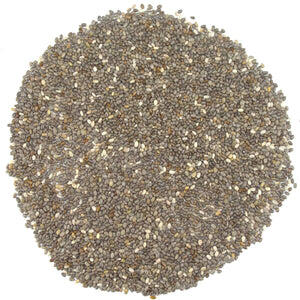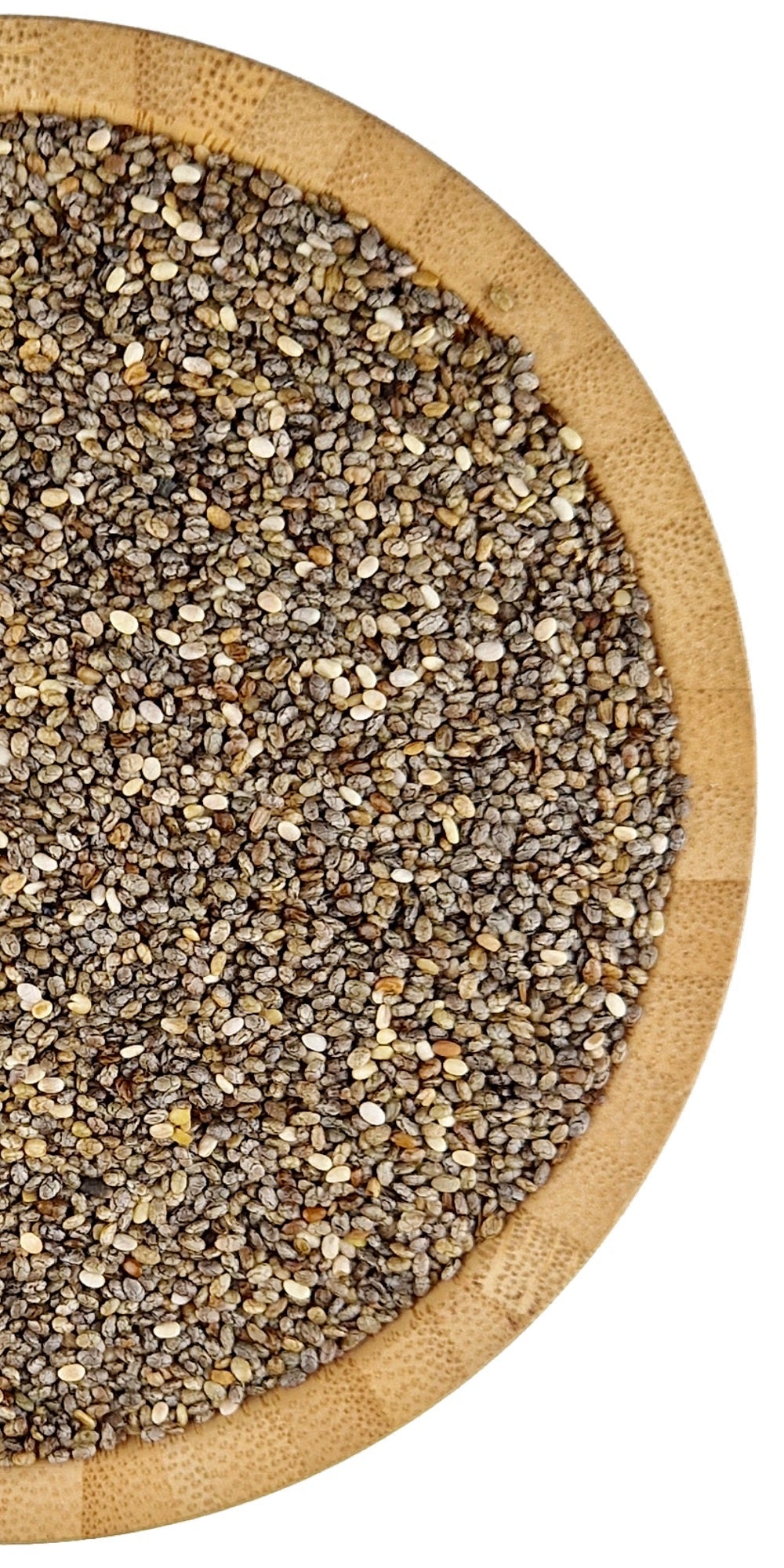
Chia Seeds (Salvia hispanica) are the whole, cleaned seeds of chia, a summer annual of the mint family native to Mexico and Guatemala. Their best-known kitchen property is simple: soaked in water, juice or milk, they swell and set into a soft gel, which is why chia goes into puddings, thick drinks and spoonable breakfasts. The seeds are oval, about 1 mm across, with a shiny, speckled coat from dark brown to grey-white.
Chia gel, puddings and drinks
Stirred into liquid and left to stand, chia seeds turn it thick and jelly-like. The more liquid you use, the looser the result, from a drinkable mix to a pudding you eat with a spoon.
- Chia pudding. Stir the seeds into milk or a plant drink, cover and leave in the fridge overnight. Top with fruit, nuts or a spoonful of jam.
- Thick drinks. Mix chia into fruit juice, or into water with a squeeze of lemon, and leave it to thicken before drinking.
- Yoghurt and porridge. Stir a spoonful into yoghurt, overnight oats or warm porridge.
- Quick fruit spread. Mash ripe berries and stir in chia seeds; as the gel forms, the fruit sets into a soft spread without long boiling. Keep it in the fridge and use it within a few days.
- Salads and sandwiches. Scatter the dry seeds over a salad or into a sandwich for a little crunch.
Chia in baking
Chia seeds also go into bread, muffins and other bakes, whole or ground. To replace an egg, mix one tablespoon of chia seeds with three tablespoons of hot water and let it thicken before use; it stands in for one large egg and adds a bit of crunch.
From the Aztecs to Europe
Chia was a staple of the Aztecs, who roasted the seeds and ground them into flour, and it was eaten alongside beans, maize, squash and amaranth. Its cultivation declined after the Spanish conquest, when European grains such as wheat and barley took its place. Chia seeds were first authorised as a novel food in the European Union in 2009, and EU rules require them to be named "Chia seeds (Salvia hispanica)", the name you see on this page.
For seeds to bake into bread and cook into porridge, see our Golden Linseed (Flaxseed) and Brown Linseed (Flaxseed), or browse our powders and seeds range.
Storage
Keep chia seeds in a closed container in a cool, dry place, and seal the bag well after each use so the seeds stay dry. If you grind chia for baking, grind only what the recipe needs; whole seeds keep longer than ground ones.
Frequently asked questions
What are chia seeds?
They are the seeds of Salvia hispanica, a herbaceous plant of the mint family that grows up to about a metre tall and is native to Mexico and Guatemala. After harvest the seeds are cleaned of flowers, leaves and other plant parts.
How do I make chia gel?
Stir chia seeds into water and leave them to stand, stirring once or twice, until the water turns into a thick gel. Use more water for a drink and less for a firmer gel.
How do I make chia pudding?
Stir chia seeds into milk or a plant drink, sweeten it if you like, cover and chill overnight. In the morning, give it a stir and add fruit or nuts.
Do chia seeds need soaking?
No. Soak them when you want a gel, a pudding or a thick drink, or use them dry over salads and in bakes.
Why are some chia seeds lighter than others?
The seed coat naturally varies from dark brown to grey-white, often speckled or mottled, so chia seeds usually come in a mix of shades.
Sources
- Encyclopaedia Britannica, Chia, accessed 24 November 2026.
- N.C. Cooperative Extension, Brunswick County Center (NC State University), Baking With Egg Substitutes, accessed 24 November 2026.