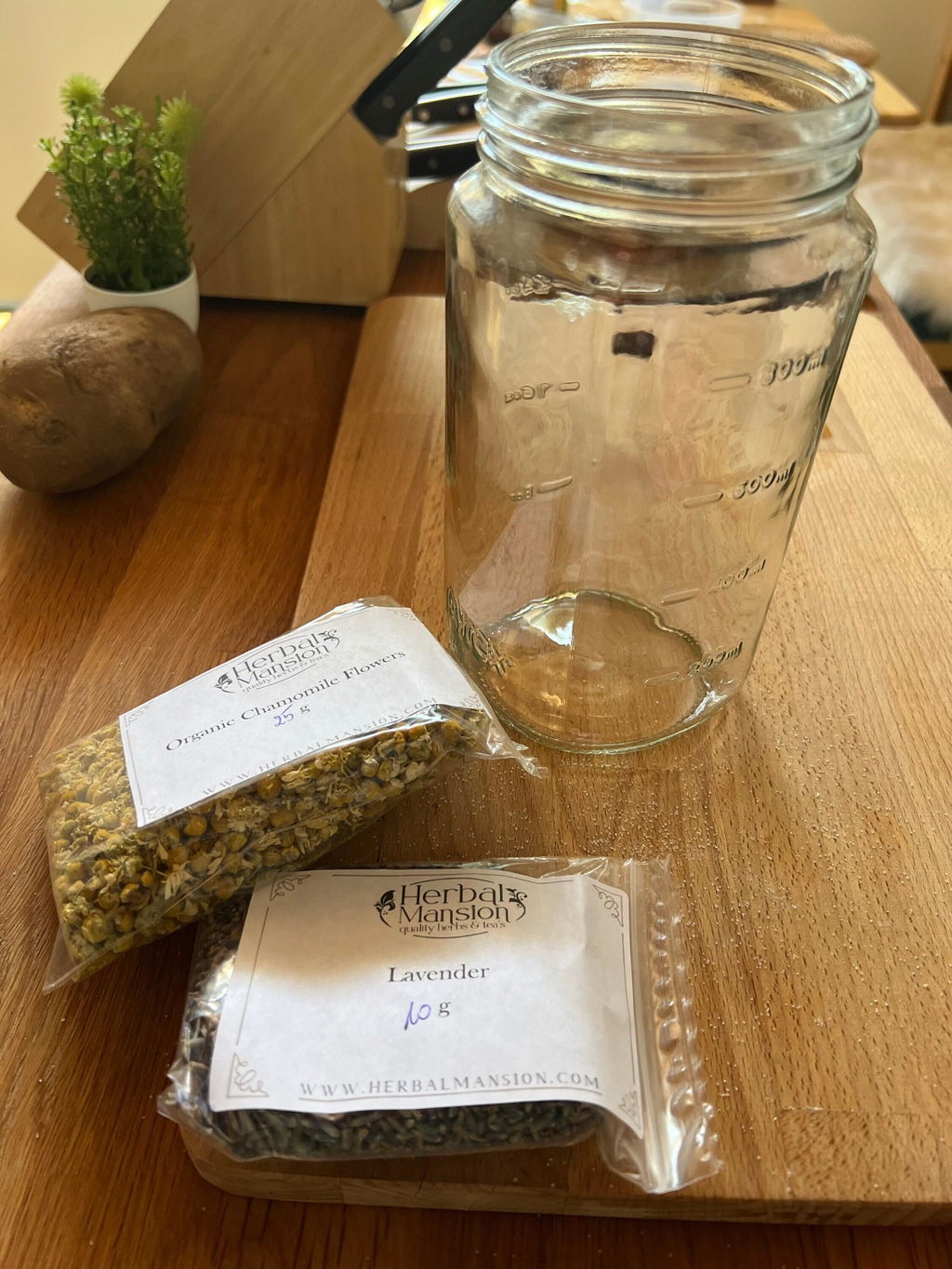
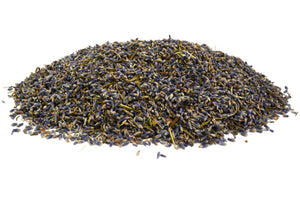
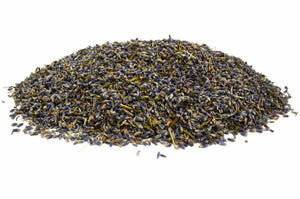
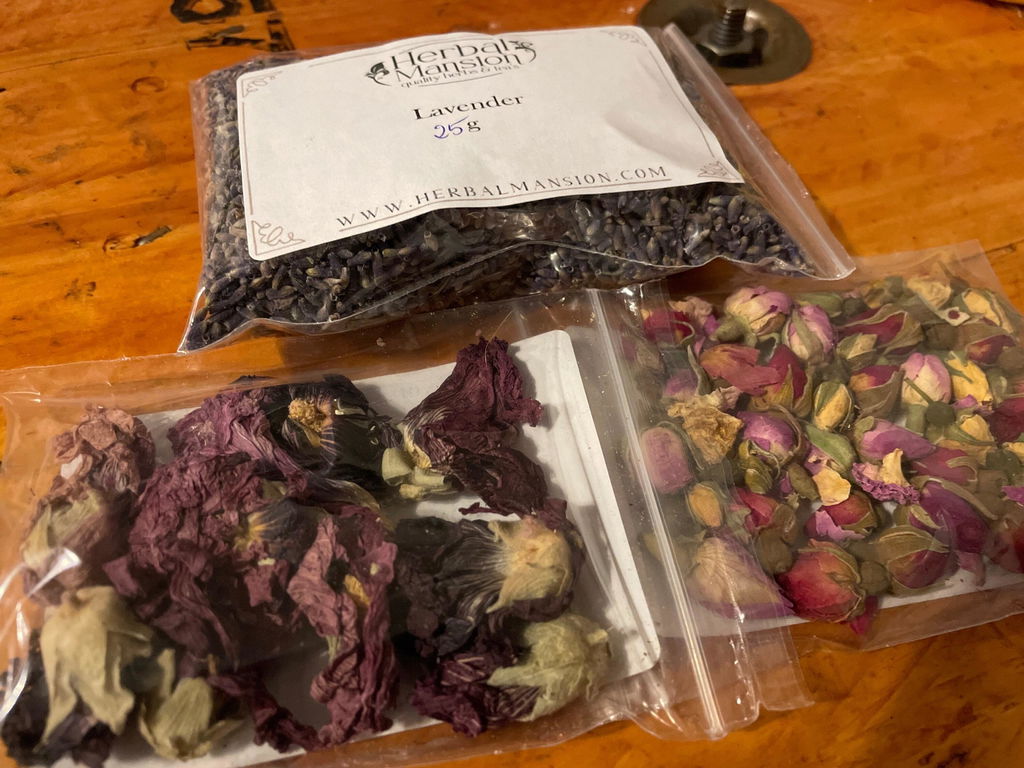
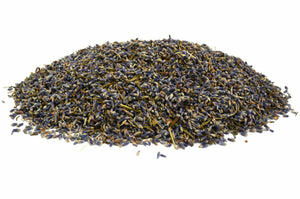
Dried edible lavender flowers smell floral, slightly resinous and cool, and taste sweetish, turning bitter if you use too much. These are whole flowers of true lavender (Lavandula angustifolia), the species long grown for its oil and for the kitchen. Brew them on their own or in blends, add small amounts to cakes, sugar and lemonade, and outside the kitchen fill scented sachets, baths and soaps with them. Whole flowers are easy to measure with a teaspoon and to strain after brewing.
A plant that was valued for its scent before it reached the kitchen
Antiquity
The Greeks and Romans knew lavender, though a different species. In the 1st century Dioscorides described stoichas (Lavandula stoechas), the lavender of the Stoechades islands off the coast of Provence, and it was this one that went into wine and baths. The popular explanation that the name comes from the Latin lavare, to wash, is later, and no ancient source confirms it.
The Middle Ages and Provence
The name lavandula only appears in medieval texts. In the 12th century Hildegard of Bingen gave lavender its own chapter in her Physica and wrote about it above all as a strongly scented plant. Monastery gardens grew it next to sage and rosemary, and dried flowers were tucked between linen and into straw mattresses. Commercial cultivation began in Provence in the 19th century, when the perfumers of Grasse needed more oil than wild harvesting could supply.
How dried lavender is made
The spikes are cut on a dry day, when most flowers on the spike have opened. They are dried in shade with good airflow, then the flowers are stripped from the stems and the small leaves sifted out. Flowers of true lavender go into the kitchen and into infusions. Most oil fields, on the other hand, are planted with lavandin, a hybrid of true and spike lavender that yields several times more oil, with a sharper, camphor-like scent.
How it is used today
- Infusions and blends. On its own or with lemon balm, chamomile and rose, brewed briefly, because longer brewing brings out bitterness.
- Baking and desserts. Lavender sugar, biscuits, lemon sponge cake, ice cream and syrup for lemonade, best paired with lemon, honey, vanilla or blueberries.
- Savoury cooking. A pinch in a marinade for lamb or roast chicken, and in herb mixes with thyme and rosemary.
- Home. Scented sachets for the wardrobe, herbal pillows, potpourri and an addition to homemade bath salts and soaps.
In infusions lavender is most often combined with lemon balm and chamomile, and we also stock French lavender as a separate product. Other flowers for infusions and decoration are in our Flowers & Petals collection.
Lavender in the kitchen and in the wardrobe
Dried lavender is not an everyday spice, but in small amounts it comes in handy often: in a cake, in an infusion and in a sachet between jumpers. It is never used in large quantities. It is a flower for people who like to keep one thing in the cupboard for both lemonade and linen.
Frequently asked questions
How does lavender differ from French lavender?
They are two different plants. We stock French lavender separately.
Are these flowers edible?
Yes, they are intended for infusions and for cooking. The amount matters: half a teaspoon per cup and a teaspoon per cake. Larger amounts give a bitter taste.
Why can lavender in a cake taste like soap?
Lavender's scent comes from the same oil that is used in soaps and cosmetics. In a small amount it gives a floral note; in a larger one it overpowers the other flavours, which is why lavender for baking is measured with a teaspoon.
Where do these flowers come from?
The current batch comes from Albania.
Can lavender be combined with other herbs in an infusion?
Yes. Most often with lemon balm, chamomile, mint and rose petals. Lavender is the smallest part of such a blend, because its scent easily drowns out the rest.
Sources
- Dioscorides, De materia medica, 1st century AD, book III, chapter on stoichas.
- Hildegard of Bingen, Physica, 12th century, book I, chapter on lavender.
- Tim Upson, Susyn Andrews, The Genus Lavandula, Royal Botanic Gardens, Kew 2004, chapters on the history of cultivation and on lavandin (Lavandula × intermedia).
- Maud Grieve, A Modern Herbal, London 1931, entry “Lavender”.