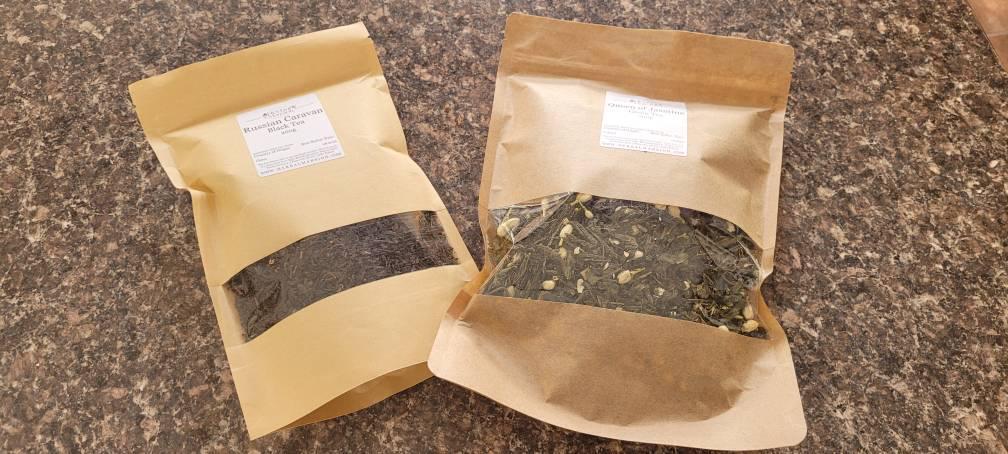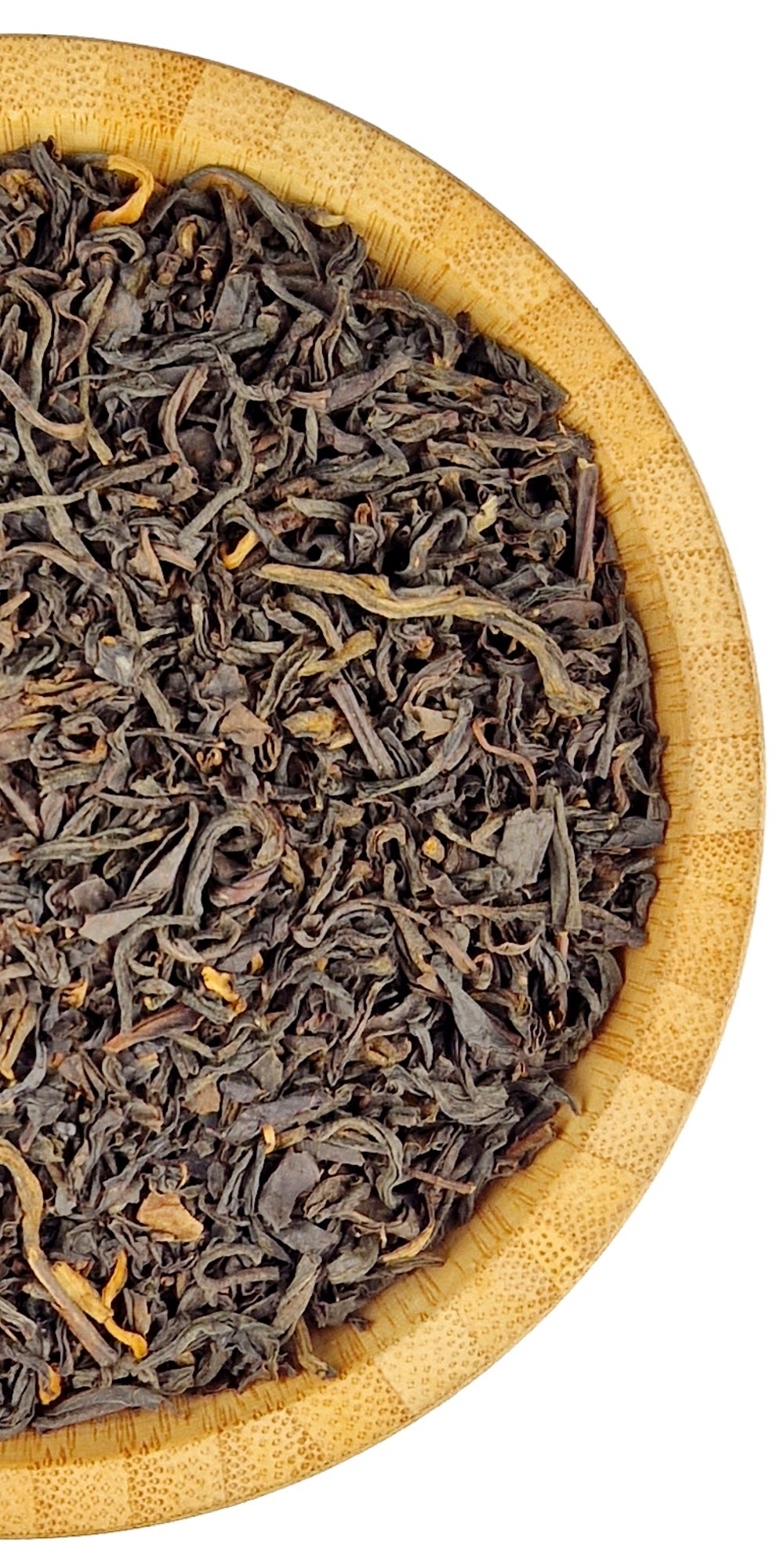
Russian Caravan is a blend of loose-leaf black teas with an addition of smoked tea and added smoke flavouring. The infusion is full and malty, and the smoke stays in the background, like the scent of a campfire from a distance. It is a gentler way into smoky teas for people who find Lapsang Souchong too strong. The name comes from the caravans that carried Chinese tea overland to Russia.
A tea that travelled overland
The treaty and Kyakhta
After the Treaty of Nerchinsk of 1689, Russian caravans began to trade with China overland. Under the Treaty of Kyakhta of 1727, the exchange moved to Kyakhta, a small town on the border south of Lake Baikal. There Chinese merchants handed over tea, and Russian merchants furs and hides. Camel caravans carried it across the Gobi to Kyakhta. From there the tea travelled on through Siberia to Moscow.
Where the smoke in the cup comes from
According to a story that has long been repeated, the tea soaked up smoke on the way from the campfires at which the caravans stopped for the night. Russians are said to have grown used to this taste and later looked for it in tea. Trade historians are more cautious. The smoky character of the modern blend comes from the addition of smoked tea and from added smoke flavouring.
How Russian Caravan is made
Today the name means a style of blend. The base is black teas. The leaves are withered, rolled, oxidised and dried. Smoked tea and smoke flavouring are added to the finished base. The caravans disappeared when tea began to travel to Russia by rail, but the name remained.
How it is used today
- With or without milk. The smoky infusion is drunk both ways.
- With savoury dishes. It goes well with cheeses, cured meats and roast meat.
- The Russian way, with preserves. A strong infusion drunk with a teaspoon of fruit preserves instead of sugar.
- Smoky marinade. A strong infusion makes the base of a marinade for ribs or tofu.
A tea with smoke in the foreground is our Lapsang Souchong. Other black teas without smoke are Assam and Yunnan OP. You will find the rest in our Black Tea collection.
Russian Caravan in your tea cupboard
This is a tea for people who prefer smoke in the background rather than in the foreground. It leaves a warm, smoky aftertaste.
Frequently asked questions
What is in the blend?
Loose-leaf black teas with an addition of smoked tea and added smoke flavouring.
Is this tea flavoured?
Yes. The blend contains smoked tea, and smoke flavouring is also added.
How does it differ from Lapsang Souchong?
In the amount of smoke. Lapsang Souchong puts the smoke in the foreground. In Russian Caravan the smoky tea is only an addition to ordinary black teas.
Does it contain caffeine?
Yes, the base of the blend is black tea. The amount of caffeine in the infusion depends on the amount of leaves and the brewing time.
Can I drink it during pregnancy or with medication?
It contains caffeine, so in these situations ask a doctor or pharmacist. A product description does not replace their advice.
Sources
- William H. Ukers, All About Tea, New York 1935, vol. I, chapter III “Introduction of Tea into Europe”, pp. 32–33 (Treaty of Nerchinsk, Kyakhta), and vol. II, chapter I “Trading in Producing Countries”, pp. 20 and 25 (caravan route, Trans-Siberian Railway).
- Martha Avery, The Tea Road: China and Russia Meet Across the Steppe, Beijing 2003.
- Victor H. Mair, Erling Hoh, The True History of Tea, London 2009, chapter on tea in Russia.
- Mary Lou Heiss, Robert J. Heiss, The Story of Tea: A Cultural History and Drinking Guide, Berkeley 2007, chapter “Manufacture: From Fresh Leaves to Distinctive Tea”, section “Black Tea”, pp. 131–135 (Lapsang Souchong).
- EFSA, Scientific Opinion on the safety of caffeine, EFSA Journal 2015, 13(5):4102.