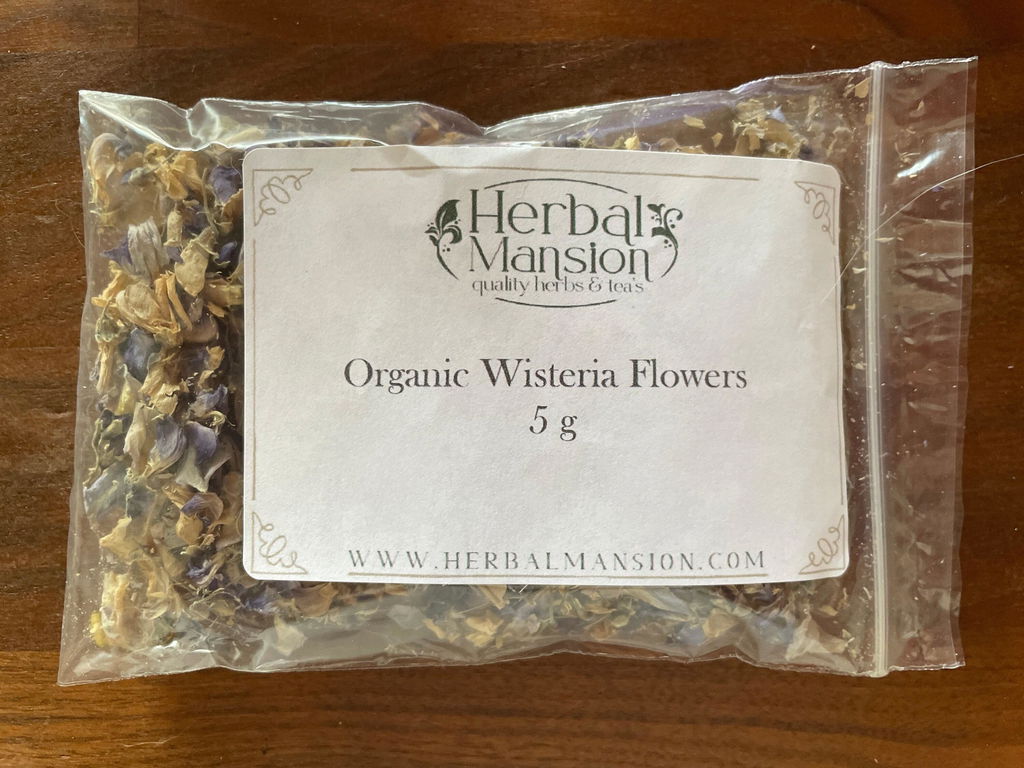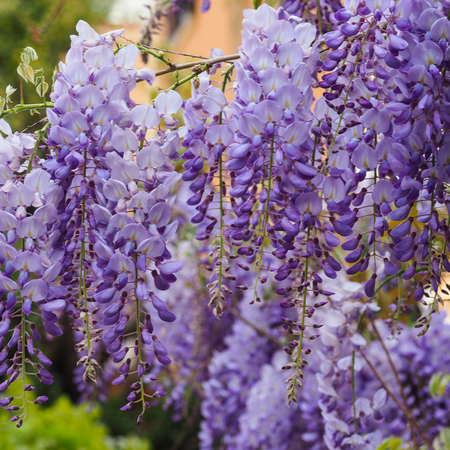
These are dried wisteria flowers: small, butterfly-shaped blossoms in pale cream and lavender. We sell them only as a decorative dried flower. They are not for consumption.
We picked them by hand from the wisteria in our garden in Poland and dried them. This is a small batch from one garden, packed in 5 g bags.
What to make with them
- Dried flower arrangements and wreaths.
- Greeting cards, frames and resin pieces.
- Candles and potpourri bowls.
- A herbarium or botanical collection.
Not for consumption. Keep away from children and pets. The ASPCA lists wisteria as toxic to dogs, cats and horses, and the seeds of every wisteria are poisonous.
More dried flowers for craft work: flowers for crafts.
A climber of the pea family
Wisteria belongs to the pea family, Fabaceae. Wild wisterias grow in central and southern China, temperate East Asia and the central and eastern United States. We sell these flowers under the genus name only: the species of our garden plant has not been confirmed.
Six guineas a plant, 1819
Chinese wisteria, Wisteria sinensis, reached Britain in 1816, through John Reeves of the East India Company in Canton. The first plants came from the garden of the merchant Consequa. By 1819 it was flowering in England and young plants sold for about six guineas. By 1835 they cost less than two shillings.
Storage
Keep the flowers in a closed container in a cool, dry place, apart from food and out of reach of children and pets.
Frequently asked questions
Can I use dried wisteria flowers in food or drinks?
No. We sell them only as a decorative dried flower. They are not for consumption.
Is wisteria safe around pets?
No. The ASPCA lists wisteria as toxic to dogs, cats and horses. Keep the flowers and finished pieces out of their reach.
Which wisteria is it?
A wisteria from our garden in Poland. The species has not been confirmed, so we name it only to genus.
Sources
- ASPCA Animal Poison Control, Wisteria, accessed 25 November 2026.
- Plants of the World Online, Royal Botanic Gardens, Kew, Wisteria Nutt..
- Plants For A Future, Wisteria sinensis, pfaf.org, accessed 25 November 2026.
- Trees and Shrubs Online, Wisteria sinensis, accessed 25 November 2026.
- University of Reading, Cole Museum and Herbarium blog, The first Wisteria sinensis in Europe, accessed 25 November 2026.