


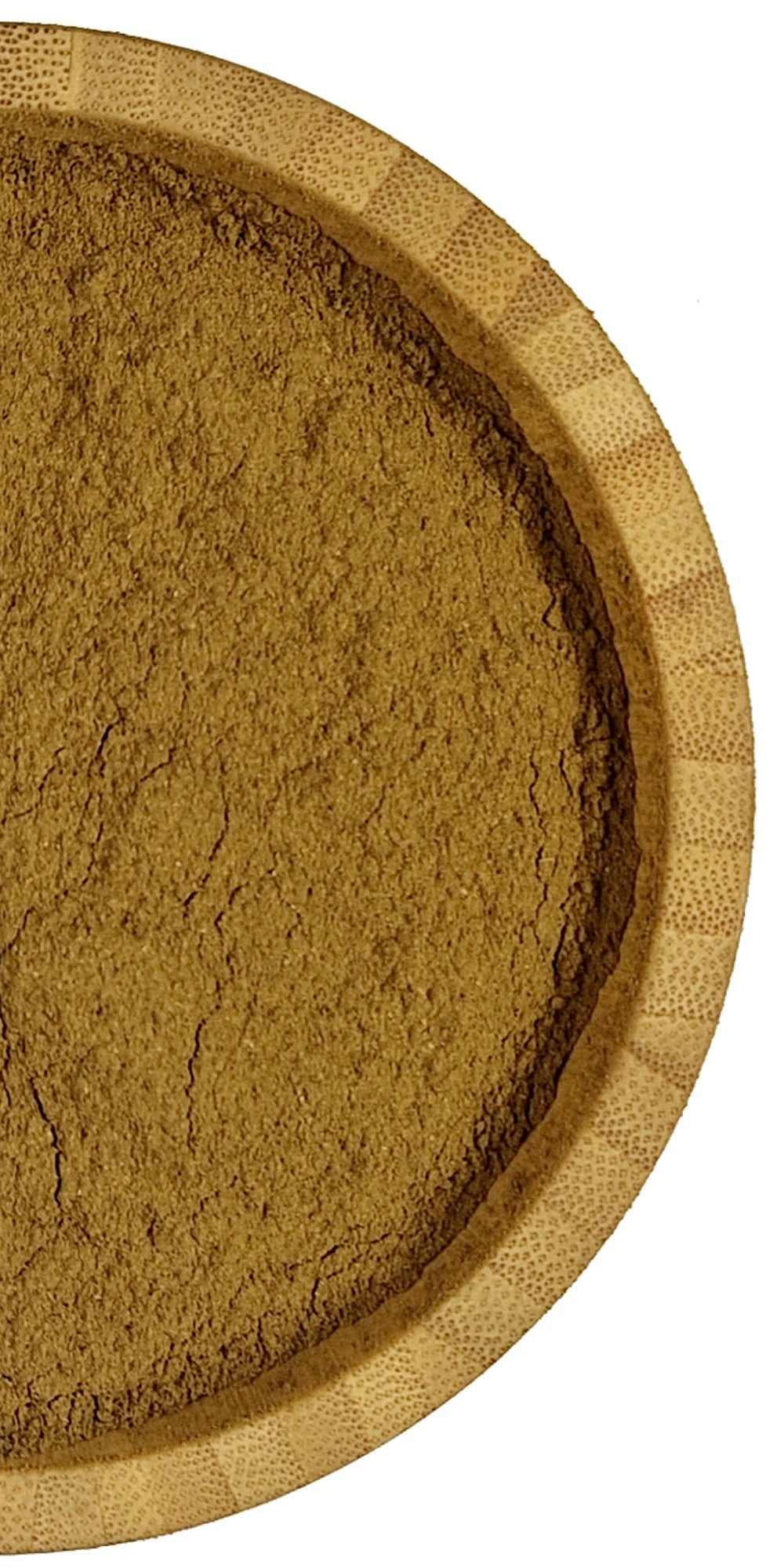
Our ground cinnamon is cassia cinnamon powder, milled from the bark of Cinnamomum species grown in China or Vietnam, depending on the lot. It has the strong, sweet and spicy flavour of classic cinnamon baking and goes straight into doughs, batters and spice blends.
Cassia in the kitchen
Ground cassia suits recipes where cinnamon should be clearly tasted.
- Baking. Cinnamon rolls, spice cakes, gingerbread and biscuits.
- Savoury dishes. Curries and braised meats.
- Spice blends. Cassia is a key part of Chinese five-spice powder.
- Drinks. Mulled wine and hot cider.
- Toppings. Mixed with sugar, or dusted over sweet dishes just before serving.
What cassia is
Cassia is the bark of several close relatives of Ceylon cinnamon. Chinese cassia is usually Cinnamomum cassia, and Vietnamese or Saigon cinnamon is usually Cinnamomum loureiroi. Compared with Ceylon, cassia is darker and tastes stronger and sharper, with a slightly bitter, astringent edge. Its oil contains more cinnamaldehyde and only traces of eugenol.
Hard to tell apart once ground
As sticks, the two types are easy to recognise: cassia is one thick curl of bark, Ceylon a roll of many thin layers. Once milled, they look almost the same, and the BfR notes that consumers can hardly tell the powders apart. That is why we say plainly on this page that our ground cinnamon is cassia.
An old name
The word cassia comes from the Greek kasia, of Semitic origin. Cinnamon reached English through Latin from the Greek kinnamōmon, related to the Hebrew qinnāmōn. The Book of Exodus lists both cinnamon and cassia among the ingredients of a fragrant anointing oil. According to Gernot Katzer's Spice Pages, cassia was the cinnamon mainly known in the West until the 16th century.
For whole cassia, see our Cinnamon Sticks 8 cm. For the milder Sri Lankan powder, see Ground Ceylon Cinnamon. More spices are in our Herbs & Spices collection.
Storage
Keep ground cinnamon in an airtight container away from light, heat and moisture. Ground spices lose their aroma sooner than whole ones, so if you use cinnamon only now and then, whole sticks grated as needed will keep longer.
Frequently asked questions
What is the difference between Ceylon and cassia cinnamon?
As sticks, Ceylon cinnamon, Cinnamomum verum, is a roll of many thin, papery layers, while cassia, from related species such as Cinnamomum cassia, is a single thick, darker layer. Ceylon tastes mild and sweet with citrus and floral notes; cassia is stronger and sharper. According to the German Federal Institute for Risk Assessment (BfR), cassia contains considerably more coumarin, a natural aroma compound, than Ceylon cinnamon.
Is ground cinnamon always cassia?
No. Cinnamon can be Ceylon or cassia, and the powders look alike. Our Ground Cinnamon is cassia; for Ceylon, choose Ground Ceylon Cinnamon.
Where does our cinnamon come from?
Our cassia cinnamon comes from China or Vietnam, depending on the lot.
Can I make cinnamon tea with ground cinnamon?
Cinnamon tea is usually made from sticks, about one per cup, steeped in boiling water or simmered briefly. Ground cinnamon is used to season drinks such as mulled wine and hot cider.
Sources
- German Federal Institute for Risk Assessment (BfR), FAQ on coumarin in cinnamon and other foods, accessed 24 November 2026.
- Gernot Katzer's Spice Pages, Cassia (Cinnamomum cassia, Chinese Cinnamon), accessed 24 November 2026.
- Gernot Katzer's Spice Pages, Ceylon cinnamon (Cinnamomum zeylanicum), accessed 24 November 2026.




