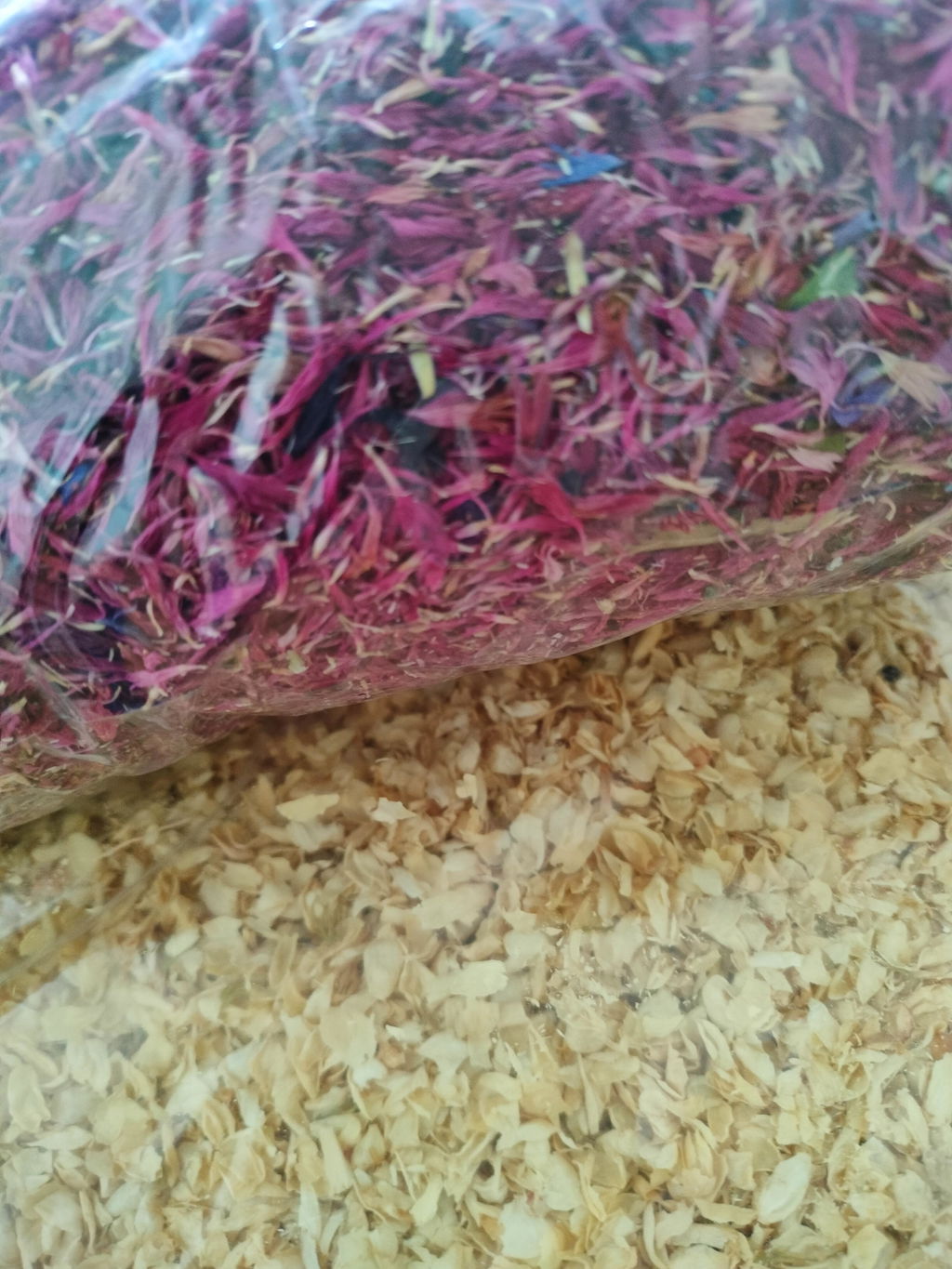
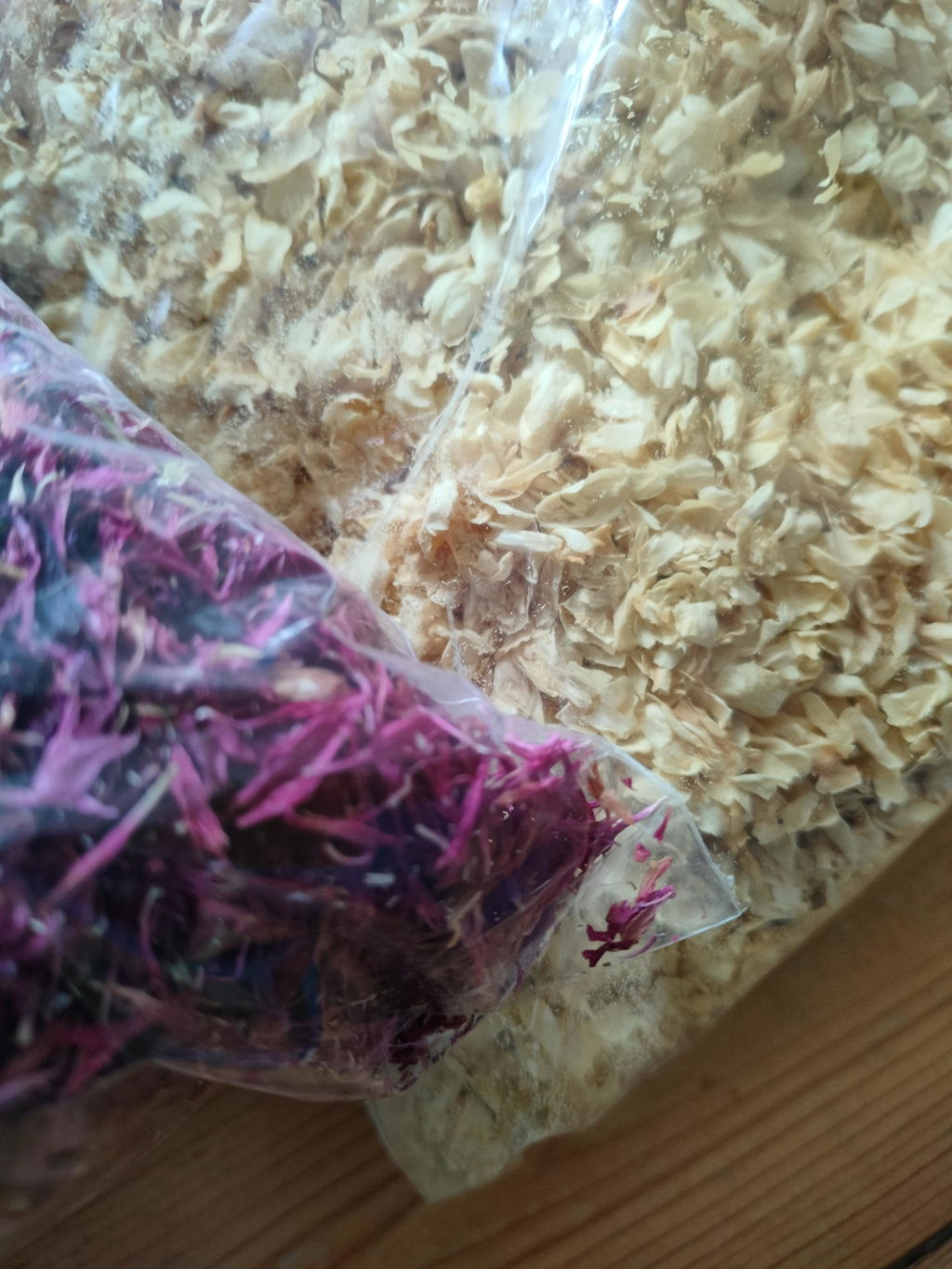
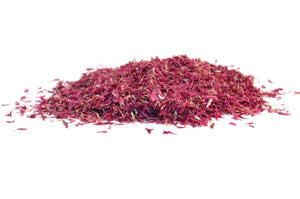
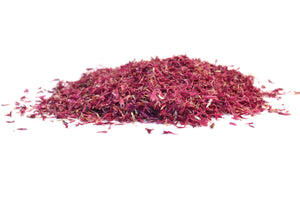
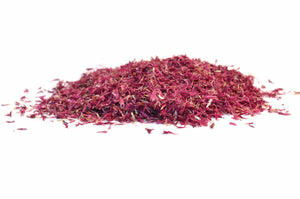
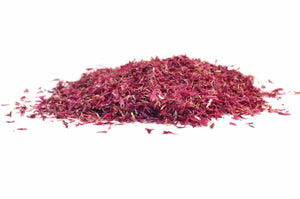
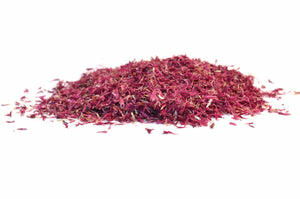
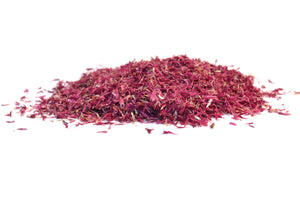
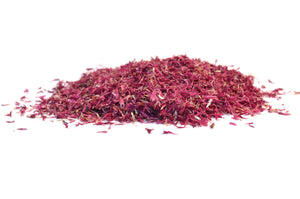
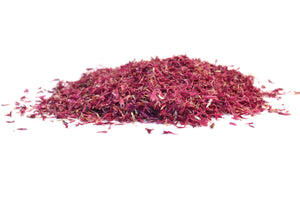
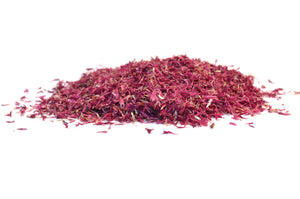
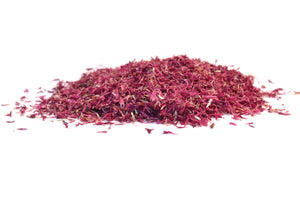
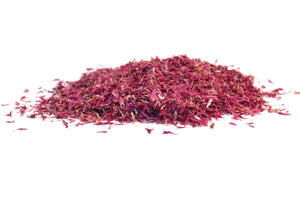
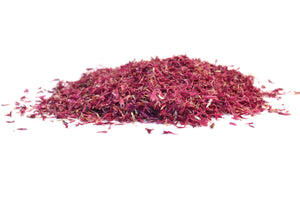
Pink cornflower petals come from a garden variety of the wild field cornflower, grown for petals in colours from pink to raspberry. The dried petals are scattered over cakes and desserts, added to lemonades and tea blends, and outside the kitchen to soaps, bath salts and wedding confetti. The colour is intense and clearly visible even in a small amount, and the taste is mild, so the petals do not change the character of a dish.
Cornflower in wreaths and in the field
The flower of wreaths
In Poland, cornflower was the flower of girls' wreaths. They were woven from cornflowers, poppies and chamomile for Whitsun and for St John's Eve. Wreaths blessed during the octave of Corpus Christi were hung above the door and in the cowshed to protect the home from lightning and bring a good harvest. Cornflower grew in every field of rye, so nobody planted it. Ethnographers in Hungary and Poland recorded dozens of such customs before cornflower disappeared from the fields.
The weed that went missing
For thousands of years cornflower travelled across Europe with seed grain, because its seeds ripened together with the cereal and ended up in the grain sack. In the 20th century seed cleaning and herbicides cut off this route, and cornflower went from a common plant to a rarity in the fields. Today in many countries it is sown deliberately along field margins and in flower strips for bees.
How pink cornflower petals are made
Wild cornflower is blue, but among the plants in the field there were occasional pink and white specimens, from which gardeners collected seed and fixed the colour over successive generations. All the colours belong to one species. The pink varieties are grown on plantations; the flowers are picked in full bloom and dried in shade, and then the petals are separated from the flower heads. The shade varies between batches, because it depends on the variety and the weather in the season.
How it is used today
- Cakes and desserts. A topping for pale creams, meringues, ice cream and individual desserts, against which the pink petals stand out clearly.
- Drinks. Lemonades, cocktails, prosecco and ice cubes with petals inside.
- Tea blends. An addition to fruit teas, rooibos and blends with hibiscus, where it complements the red and pink tones.
- Crafts. Wedding confetti, soaps, bath salts, bath bombs and cards.
Other cornflower petal colours, including Blue Cornflower Petals and light pink, as well as Pink Rose Petals, are in our Flowers & Petals collection.
Pink cornflower in your home cupboard
A pinch of pink petals is enough to make an ordinary dessert look different. This is an addition for people who decorate baking and drinks or make homemade cosmetics and confetti.
More ways to use it
- Cakes and desserts. Scatter the petals over a cake or dessert just before serving, because in contact with moist cream they lose their colour within a few hours. Sprinkle meringues before baking.
- Lemonade. Drop a pinch into the jug at the end, so the petals float on top.
- Tea blends. Take a teaspoon of petals per 50 g of tea.
- Crafts. Add the petals to soaps and bath salts at the end. The petals are ready to use straight from the pack.
Frequently asked questions
Are pink cornflower petals edible?
Yes. They are petals of an edible variety of cornflower, used as an addition to desserts, drinks, salads and teas. They contain no caffeine.
Do pink petals colour an infusion or lemonade?
Only slightly. The colour stays in the petals, which float on the surface, and an infusion of the petals alone is pale, with a faint pink tint.
What other cornflower colours do you stock?
We stock cornflower petals in blue, purple, light pink and white, and we also stock Pink Cornflowers as whole flowers. All of them are in the same collection.
Where do the petals come from?
The current batch comes from Albania.
Sources
- Gyula Pinke, Viktória Kapcsándi, Bálint Czúcz, Iconic Arable Weeds: The Significance of Corn Poppy, Cornflower, and Field Larkspur in Hungarian Ethnobotanical and Cultural Heritage, “Plants” 12(1), 2023, art. 84.
- Riklef Kandeler, Wolfram R. Ullrich, Symbolism of plants: examples from European-Mediterranean culture presented with biology and history of art. September: Cornflower, “Journal of Experimental Botany” 60(12), 2009, pp. 3297–3299.
- Adam Fischer, Rośliny w wierzeniach i zwyczajach ludowych. Słownik Adama Fischera [Plants in folk beliefs and customs: Adam Fischer's dictionary], ed. Monika Kujawska, Łukasz Łuczaj, Joanna Sosnowska, Piotr Klepacki, Wrocław 2016, entry “Chaber”.
- Tamaki Mishio, Kosaku Takeda, Tsukasa Iwashina, Anthocyanins and Other Flavonoids as Flower Pigments from Eleven Centaurea Species, “Natural Product Communications” 10(3), 2015, pp. 447–450.
- Zbigniew Podbielkowski, Barbara Sudnik-Wójcikowska, Słownik roślin użytkowych [Dictionary of useful plants], Warsaw 2003, entry “Chaber bławatek”.