





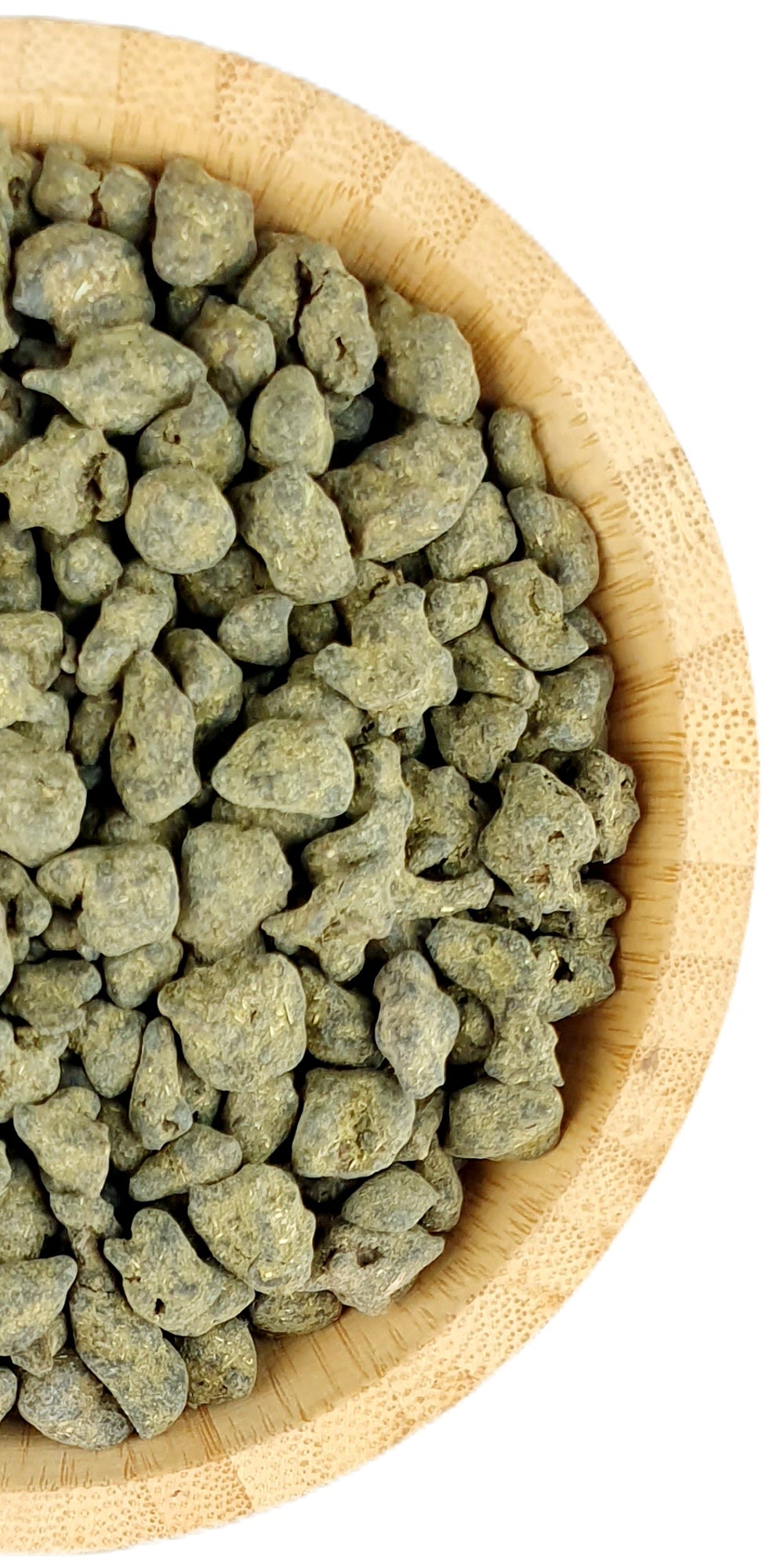
Oolong Ginseng, known by the Chinese name Lan Gui Ren, is a green oolong rolled into tight balls and coated in a pale powder made from ginseng root. The infusion is floral and full-bodied, and after each sip a long, sweet aftertaste stays on the tongue, which is how this tea is recognised. The balls open slowly, so one portion gives several infusions. It is a tea for the flask and for homemade bubble tea, for people who like a sweet aftertaste.
Ginseng alongside tea
Lu Yu on tea and ginseng
The oldest book about tea, Lu Yu's Cha Jing from the 8th century, mentions ginseng alongside tea, and Ukers quotes this passage in translation. Lu Yu ranks ginseng by where it grows: the best in Shangdang, the middling kind in Korea.
The noble lady's orchid
The Chinese name of this tea, Lan Gui Ren, means “noble lady's orchid”. Sellers from Taiwan and Fujian describe it as a young style from the late 20th century, in which balls of green oolong are rolled in powdered ginseng. The coating dissolves in hot water, which is why the first infusion is cloudy and the sweetest. The leaf itself is a green oolong rolled into balls, in the Taiwanese or Fujian style, much like Tie Guan Yin.
How Oolong Ginseng is made
Mature leaves are picked, withered in the sun and indoors, and then shaken in baskets many times so that the edges of the leaf oxidise slightly. Brief pan-firing stops oxidation, after which the leaves are rolled into tight balls by kneading them in cloth bundles. The finished balls are mixed with powder made from ginseng root and dried together at a low temperature until the coating adheres and hardens.
How it is used today
- In a flask. The balls release their flavour for many hours.
- Bubble tea. The sweet infusion goes well with tapioca and milk.
- Several infusions. Each one less sweet and more floral than the last.
- After a meal. A long, sweet aftertaste to finish with.
In our Oolong Tea collection you will also find Tie Guan Yin and Oolong with Siberian Ginseng Root.
Oolong Ginseng in your tea cupboard
This is a tea for people who like a sweet aftertaste and a long finish. It also suits those who prefer to put the balls in a flask and have tea to hand at work.
Frequently asked questions
Where does the sweet aftertaste come from?
The sweetness comes from the coating, which dissolves in hot water and stays on the tongue longer than the taste of the leaf.
Why is the first infusion cloudy?
Because the powder from the coating dissolves in the water. This is normal. If you prefer a clear infusion, rinse the balls with the first water and pour it away after a few seconds.
How many times can I infuse the same balls?
Four or five times in a cup, more in a small teapot. The first infusion is the sweetest, and the following ones are increasingly floral, because the coating comes away and the leaf opens.
Does Oolong Ginseng contain caffeine?
Yes. Like every tea from the tea plant, it contains caffeine, and the ginseng does not add any. The amount in the infusion depends on the quantity of balls, the number of infusions and the water temperature.
Can I drink it during pregnancy or with medication?
It contains caffeine and ginseng, so during pregnancy and if you take medication regularly, ask a doctor or pharmacist. A product description does not replace their advice.
Sources
- William H. Ukers, All About Tea, The Tea and Coffee Trade Journal Company, New York 1935, vol. I, chapter II “China and the Ch'a Ching”, pp. 16–17 (Lu Yu on tea and ginseng).
- EFSA, Scientific Opinion on the safety of caffeine, EFSA Journal 2015, 13(5):4102.




