





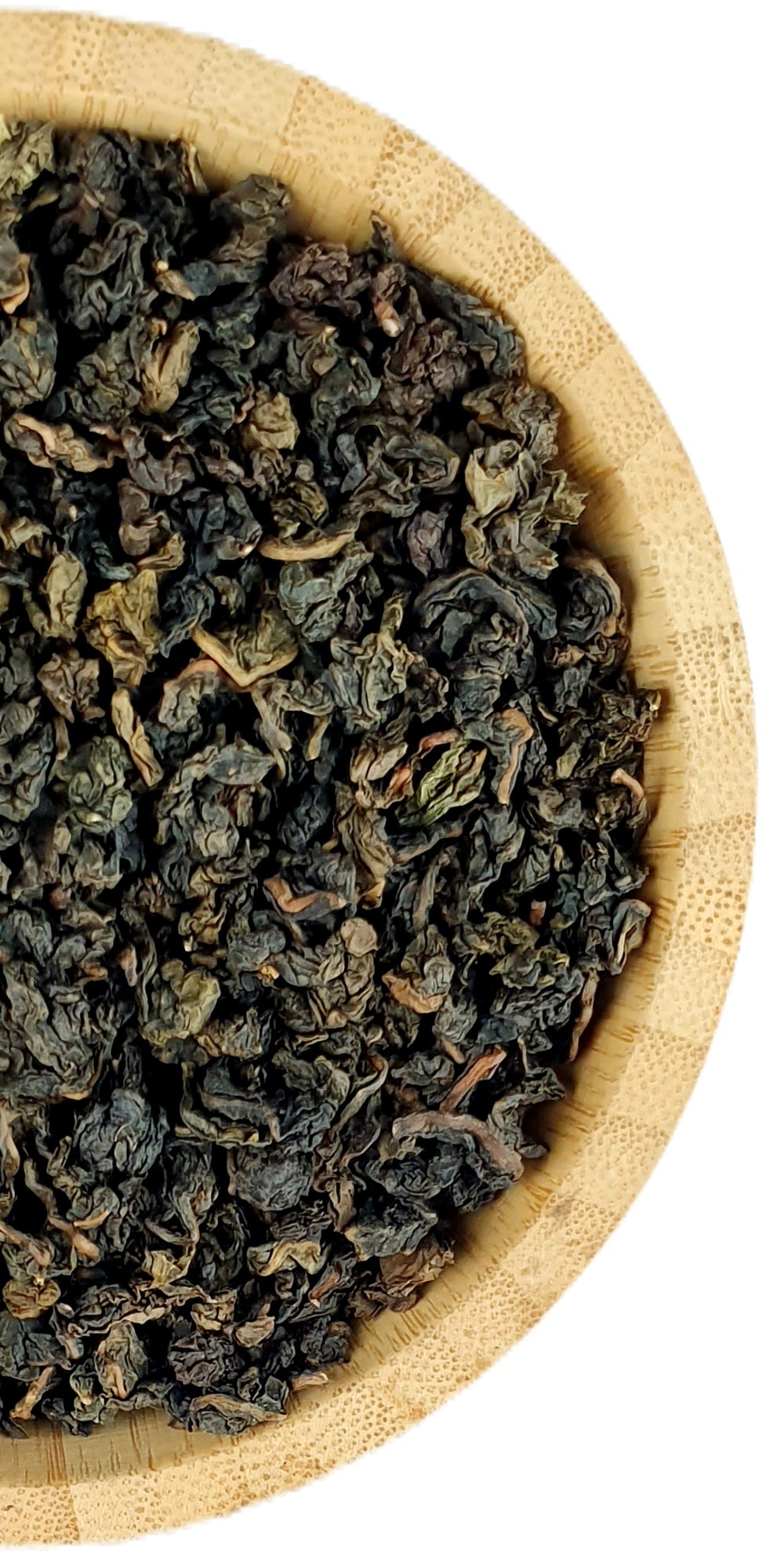
Oolong Black Dragon is a roasted oolong with a full taste and notes of caramel and nuts. The infusion is amber-brown, with a distinct but not heavy sweetness. It takes well to short, repeated infusions in a small teapot.
An oolong that went back to the oven
Wulong from Fujian
Fujian is one of the main regions associated with the development of oolong. In Anxi, tea growing goes hand in hand with skills passed down in families and workshops. Making the infusion begins long before brewing. Its character is decided by the picking, withering, processing of the leaves and drying. It is exactly this link between landscape, cultivation and craft that the Anxi Tieguanyin Tea Culture System describes, a system included in the FAO agricultural heritage programme. Individual regions developed their own ways of carrying out these stages. That is why the word “oolong” covers a broad family of teas, from delicate and floral to distinctly roasted.
Oxidation and roasting
Oxidation and roasting are two different stages that shape the taste of an oolong. The first takes place while the fresh leaves are being processed. The second consists of heating the tea after earlier processing and drying. Traditional methods used charcoal, and many modern workshops use ovens. Roasting can be done in several rounds separated by periods when the leaves rest, and the length and intensity of the heating affect the final result in the cup. After roasting, the tea is left to rest before its taste is assessed and a decision is made about further heating to achieve the intended profile of the infusion.
How roasted oolong is made
The picked leaves are withered, then tossed and gently bruised to control the course of oxidation and the desired appearance. Once the intended stage is reached, heating halts further enzyme activity. The tea is rolled and dried, and later roasting gives it another dimension of taste. It is at this stage that associations with bread, nuts or caramel can develop. The finished tea can be roasted again. Each heating requires the temperature and time to be matched to the leaves, and between stages the scent and taste of a trial infusion are assessed.
How it is used today
- Tea with a meal. The roasted profile can be paired with roasted vegetables, rice or meat.
- Short infusions. A small teapot or a gaiwan lets you compare infusions from the same portion of leaves.
- A cup with dessert. The nutty and caramel notes go well with simple butter biscuits.
- Cold. Brewing in the fridge gives another way to get to know the taste of a roasted oolong.
In our Oolong Tea collection you will also find Tie Guan Yin, Oolong Milk and Oolong Ginseng.
Oolong Black Dragon in your tea cupboard
Oolong Black Dragon is a tea for people who like notes of roasted nuts and caramel in their tea. Successive infusions let you get to know this profile in a slightly different form.
Frequently asked questions
Is Oolong Black Dragon a black tea?
No. It is a partly oxidised oolong that has been roasted.
What does roasting do?
It changes the taste and scent profile of the tea. Nutty, caramel and bread-like notes can appear in the infusion.
Do I need to pour off the first water?
A short rinse is one way of preparing the leaves. You can compare the infusion with and without rinsing.
Does Oolong Black Dragon contain caffeine?
Yes, caffeine occurs naturally in the leaves of this tea.
Can I drink it during pregnancy or with medication?
It contains caffeine, so in these situations ask a doctor or pharmacist. A product description does not replace their advice.
Sources
- Mary Lou Heiss, Robert J. Heiss, The Story of Tea: A Cultural History and Drinking Guide, Berkeley 2007, chapter “Manufacture: From Fresh Leaves to Distinctive Tea”, section “Oolong Tea” (Anxi, roasting).
- Victor H. Mair, Erling Hoh, The True History of Tea, London 2009.
- Kevin Gascoyne, François Marchand, Jasmin Desharnais, Hugo Américi, Tea: History, Terroirs, Varieties, Richmond Hill 2011, chapter on oolongs.
- William H. Ukers, All About Tea, New York 1935, vol. I, chapter XIII “Tea Characteristics”, p. 232 (Fujian oolongs).
- FAO, Anxi Tieguanyin Tea Culture System, GIAHS.
- EFSA, Scientific Opinion on the safety of caffeine, EFSA Journal 2015, 13(5):4102.




