


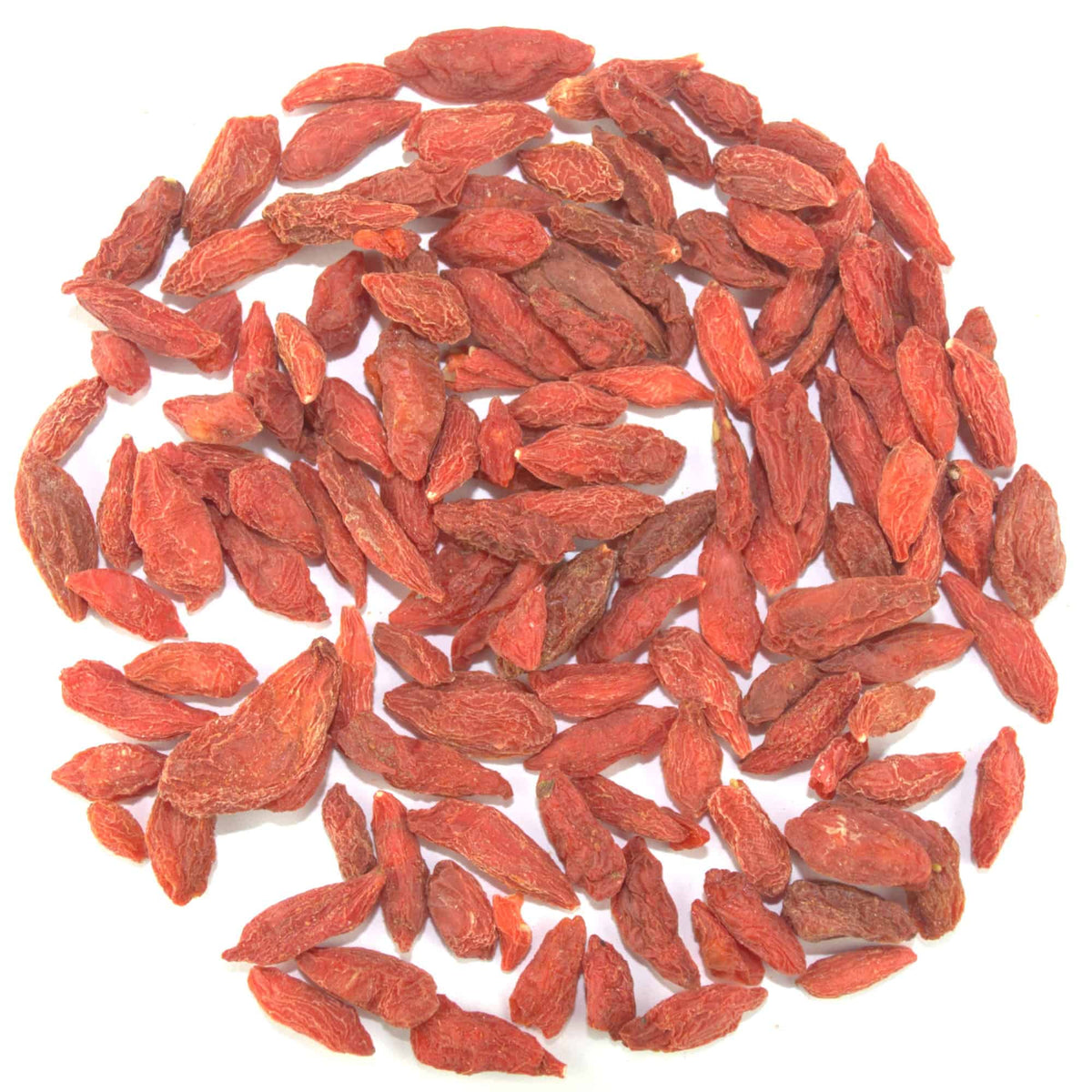
Our goji berries are the dried fruit of Lycium barbarum, the small red berries used in Chinese cooking and known in English as wolfberries. They are sweet, with fruity and light caramel notes. Eat them as they are, add them to breakfast and baking, or brew them into a tea.
What a goji berry is
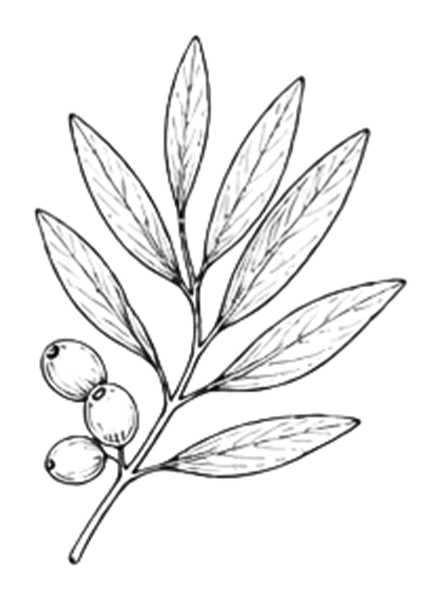
A goji berry is the fruit of a deciduous, often thorny shrub of the nightshade family, Solanaceae. Lycium barbarum grows to about 2.5 to 3.7 metres, has mostly purple flowers and carries its bright red berries from June to September. The word goji is an English rendering of the plant's Chinese name, gouqi, and in English the shrub is also called wolfberry or matrimony vine.
Two related shrubs give goji berries, Lycium barbarum and Lycium chinense. Most goji berries on the market come from L. barbarum, and so do ours. Its fruit is meatier, sweeter and less astringent than that of L. chinense.
Where goji is grown
The species is native to northern and central China. Cultivation has grown steadily since the 1960s and has spread beyond Asia in this century, while the Ningxia region of China remains the core area of goji production. Most fresh goji berries are dried, traditionally in the sun or with warm air.
Flavour
Dried goji berries have sweet, fruity and light caramel notes. Some of these aromas form during drying itself.
How to use goji berries
- As a snack. Eat them as they are, or mix them into trail mix with nuts and seeds.
- Breakfast. Scatter them over yoghurt, breakfast cereal, porridge or granola.
- Baking. Fold them into biscuits, scones and bread dough.
- Salads, soups and sauces. Add them to salads, simmer them in Chinese-style soups, or soak them in water until plump and stir them into salsas and sauces.
- Tea. In China the berries have long been brewed into herbal teas.
For more breakfast toppings, see Bee Pollen and Chia Seeds (Salvia hispanica), or browse our powders and seeds range.
Storage
Keep goji berries in an airtight container in a cool, dry place, away from light. If they firm up over time, a short soak in water softens them again.
Frequently asked questions
What is a goji berry?
It is the small red fruit of Lycium barbarum, a shrub of the nightshade family native to China. We sell the berries dried.
Are goji berries the same as wolfberries?
Yes. Wolfberry is another English name for goji, and the shrub is also known as matrimony vine. The word goji comes from the Chinese name, gouqi.
What do dried goji berries taste like?
They are sweet, with fruity and slightly caramel-like notes.
How do you eat dried goji berries?
Straight from the bag, over yoghurt, cereal or porridge, in trail mix, salads and bakes, or soaked until plump and added to sauces and soups.
Can you make tea with goji berries?
Yes. In China goji berries are traditionally brewed into a herbal tea: put a few berries in a cup and pour over hot water.
Sources
- Encyclopaedia Britannica, Goji berry, accessed 24 November 2026.
- Yu J. et al., A comprehensive review of goji berry processing and utilization, Food Science & Nutrition, 2023, accessed 24 November 2026.
- Comprehensive Characterization of Flavor Compounds in Dried Goji Berry (Lycium barbarum L.) Obtained from Different Origins with Different Drying Methods, Metabolites, 2026, accessed 24 November 2026.




