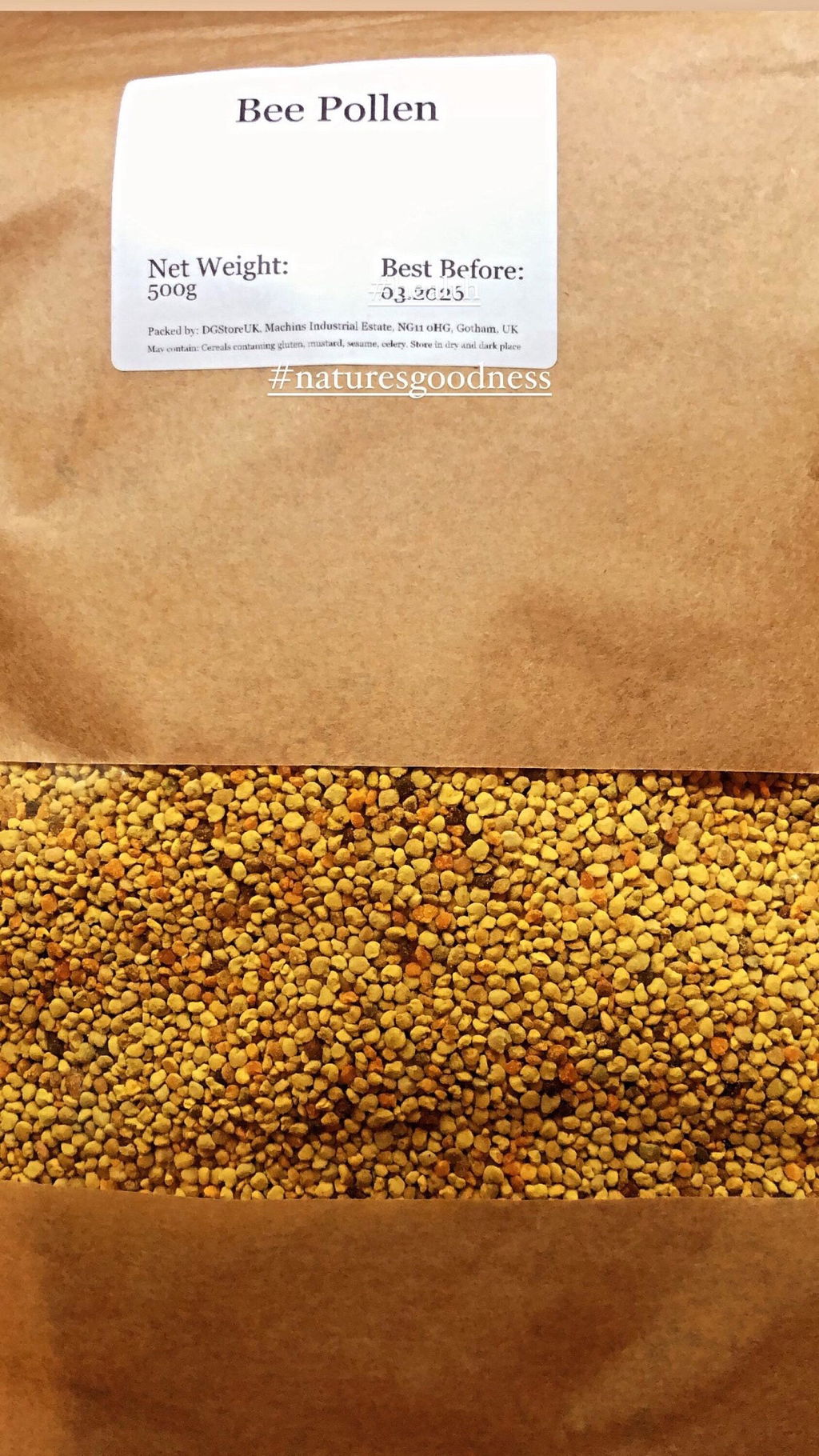
Our bee pollen is flower pollen that honeybees have packed into tiny pellets, which is why it is also sold as bee pollen granules or bee pollen grains. It is a blend from European Union member states: a mix of granules, usually mostly yellow, with a gently sweet taste, ready to sprinkle over breakfast and desserts just before serving.
How bee pollen is collected
As a honeybee works its way through flowers, it gathers pollen and moistens it with nectar or honey so that the grains stick together. The bee presses this sticky pollen into a small pellet in the pollen basket on each hind leg and flies home with two pellets per trip. These pellets are also known as pollen loads.
To harvest them, the beekeeper fits a pollen trap at the entrance of the hive. On their way in, the bees squeeze through the trap, which knocks part of the pellets off their legs, while the rest of the pollen still reaches the colony. Bee pollen sold as food is usually dried at a low temperature.
Bee pollen and bee bread
Bee pollen is not the same as bee bread. Bee bread is pollen that the bees store inside the comb under a layer of honey, where it ferments and changes its composition. Bee pollen is taken from the bees before it ever reaches the comb.
Colour and flavour
A bee rarely collects from more than one kind of plant on a single flight, so each pellet usually has one colour. Most are yellow, but red, purple, green and orange pellets turn up too, and some are almost black. Because the bees mix the pollen with nectar or honey, the granules usually taste sweet. Colour and flavour vary from batch to batch with the flowers the bees visited.
How to use bee pollen
- Breakfast. Sprinkle the granules over yoghurt, muesli or a smoothie bowl, or over porridge once it is cooked.
- Granola. Add the pollen after baking, over the cooling granola, rather than into the mix before it goes into the oven.
- With honey and dairy. Stir it into honey, or scatter it over quark, cottage cheese or a creamy dessert.
Add bee pollen at the end and do not cook or bake it: that way the granules keep their colour and texture.
Bee pollen sits well next to Goji Berries on a breakfast bowl. For seeds to stir into yoghurt or drinks, see Chia Seeds (Salvia hispanica), or browse our powders and seeds range.
Storage
Keep bee pollen tightly closed in a cool, dark, dry place, away from sunlight. Once opened, store it in the fridge; in the freezer it keeps even longer.
Frequently asked questions
What are bee pollen granules?
They are pellets of flower pollen that honeybees pack together with nectar or honey and carry home on their hind legs. Bee pollen granules, bee pollen grains and pollen pellets are names for the same thing.
Where does our bee pollen come from?
It is a blend from European Union member states.
What does bee pollen taste like?
Usually sweet, because the bees mix the pollen with nectar or honey. The exact flavour depends on the flowers the bees visited, so it varies a little from batch to batch.
Why are the granules different colours?
Each pellet usually comes from one kind of plant, and pollen from different plants has different colours, from yellow and orange to red, purple, green and almost black.
How do you eat bee pollen?
Sprinkle it over yoghurt, muesli, porridge, granola or desserts, or stir it into honey. Add it at the end, after cooking or baking.
Sources
- Krell R., Value-added products from beekeeping, FAO Agricultural Services Bulletin No. 124, chapter 3 “Pollen”, Food and Agriculture Organization of the United Nations, 1996, accessed 24 November 2026.