




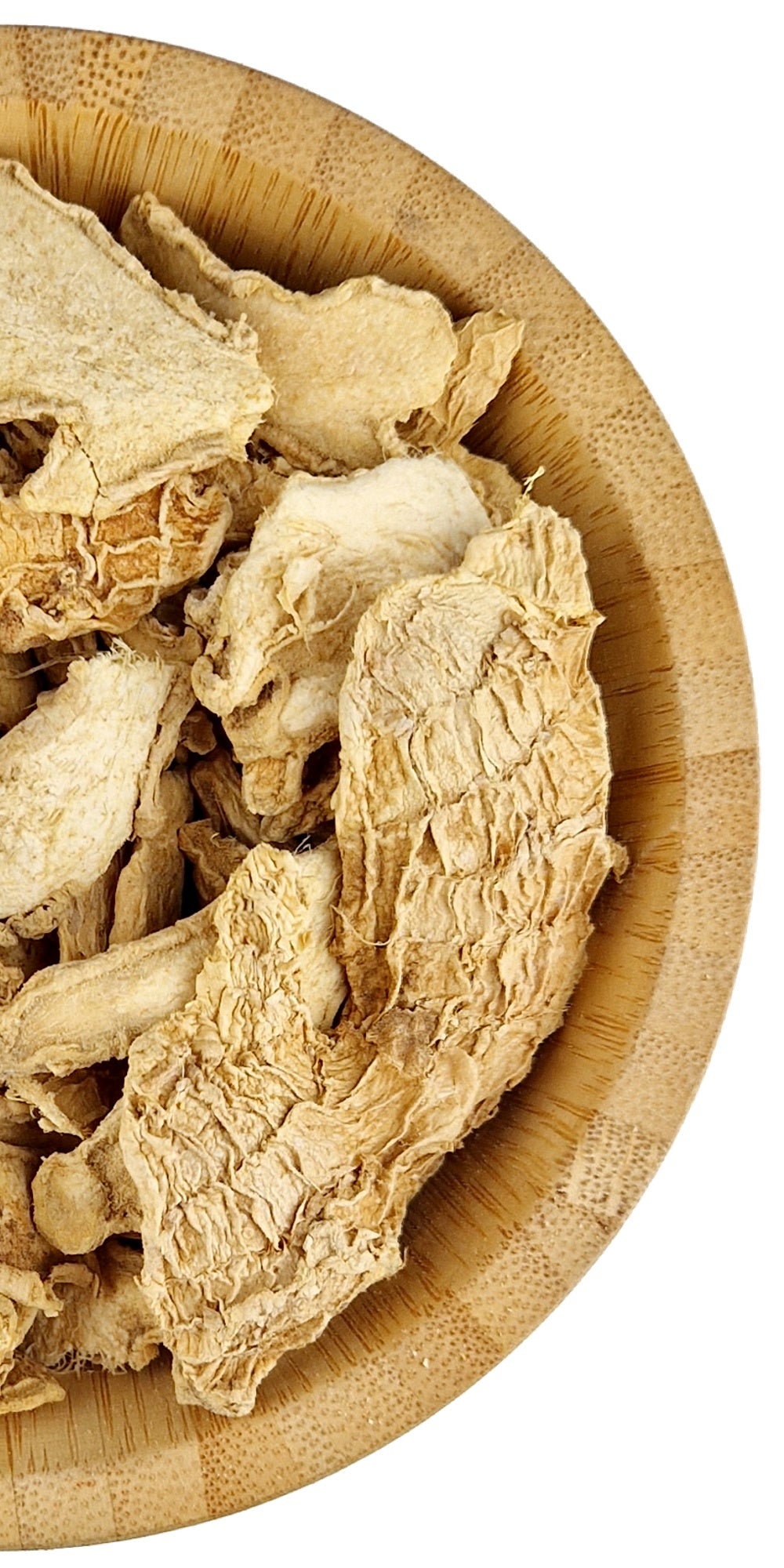
Whole dried ginger root is the dried rhizome of Zingiber officinale, the plant behind the spice in gingerbread and ginger beer. Botanically it is not a true root but a swollen underground stem, and here it comes as whole dried pieces for cooking and home brewing.
A root that is really a stem
The rhizome
The spice comes from the rhizome, the plant’s underground stem. It is thick and branched and sometimes looks rather like a swollen hand, with a brown, corky outer layer and a pale yellow inside. Kew’s Plants of the World Online describes ginger as a perennial of the seasonally dry tropics.
Known only in cultivation
Kew places its range from the eastern Himalaya to south-central China. Yet, as the PROSEA plant resources handbook puts it, ginger is known only as a cultivated plant; the species probably arose in India or China.
A familiar spice
Ginger is the familiar spice of gingerbread and Yorkshire parkin, and older recipes for spruce beer were brewed with dried ginger bruised in a mortar. Drying turns some of the gingerols in fresh ginger into shogaols, which is why dried ginger tastes sharper and more earthy than the fresh rhizome.
How it is used today
- Broths, stews and curries. A bruised piece added during cooking, then taken out before serving or left in.
- Mulled drinks and chai. Simmered gently with other spices in wine, cider or spiced tea.
- Pickling. Added to pickling liquids.
- Home brewing. Simmered for ginger beer, or added to the boil when brewing beer.
Other roots in this range include Liquorice Root and Angelica Root. More single herbs are in our Single Herbs collection, and other plants for the cup are in Herbal Tea.
Whole ginger in your home cupboard
Whole dried pieces are hard, so crack them in a mortar or grate them before use, and give them time: a short steep is not enough. Keep the bag tightly closed in a cool, dry, dark place. Taste varies between batches.
Frequently asked questions
Is ginger a root?
Not botanically. Ginger is a rhizome, a swollen underground stem, although the trade calls it ginger root.
How do I use whole dried ginger?
Bruise or grate the pieces first. Add them to broths, stews and curries as they cook, or simmer them in water for 10 to 20 minutes for a ginger infusion, then strain.
Can I make ginger beer with it?
Yes. Home brewers simmer dried ginger in water and add the liquid to the brew, or add chopped ginger to the boil when brewing beer.
Can I use it during pregnancy or with medication?
If you are pregnant, breastfeeding, taking medication or have a health condition, ask your doctor before using it.
Where does ginger root come from?
The current batch comes from China.
Sources
- Royal Botanic Gardens, Kew, Zingiber officinale Roscoe, Plants of the World Online, powo.science.kew.org, accessed 22 November 2026.
- Pl@ntUse, Zingiber officinale (PROSEA), plantuse.plantnet.org.




