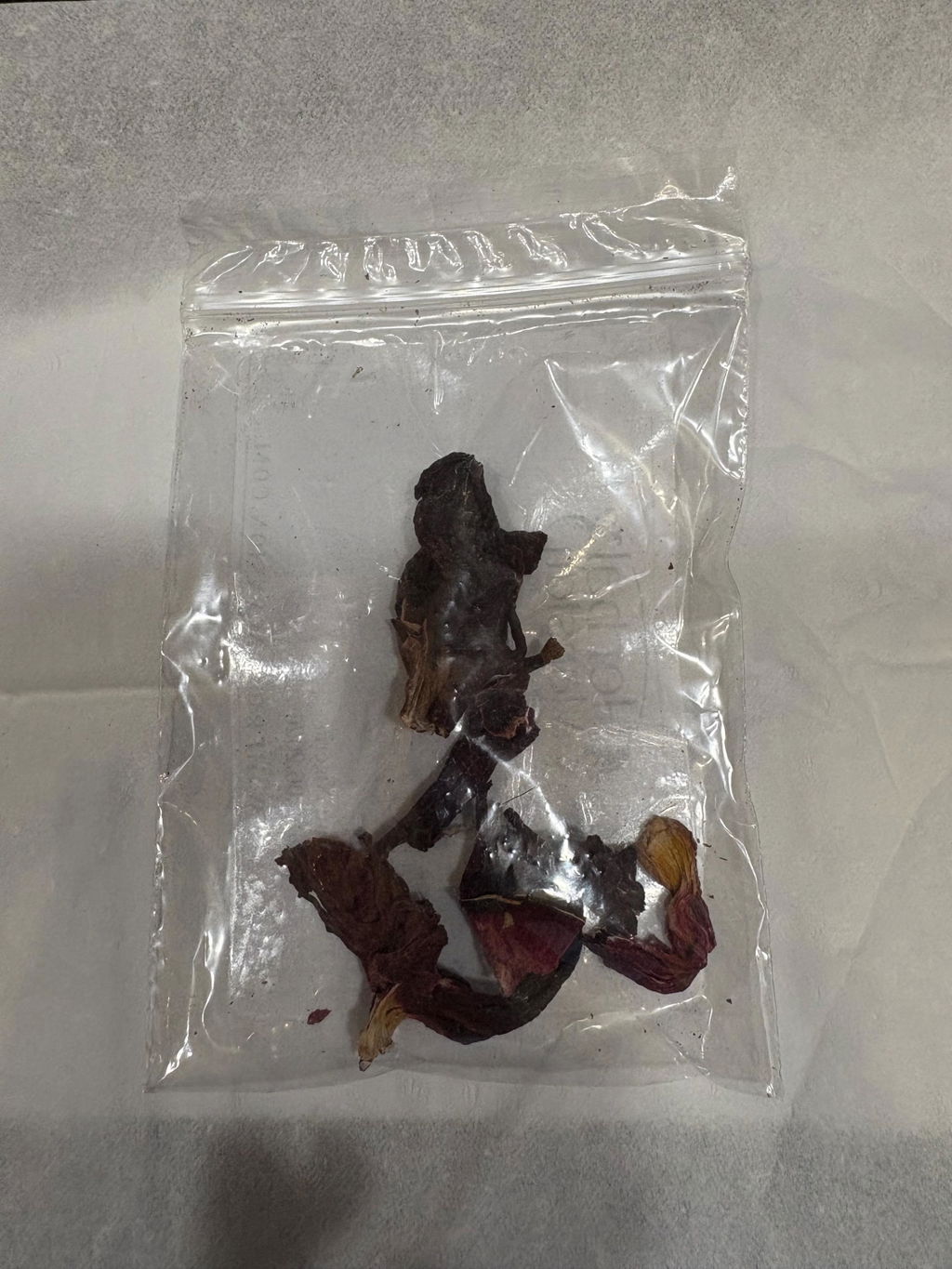
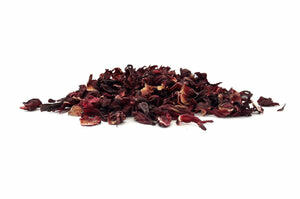
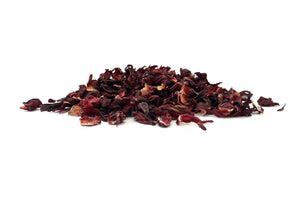
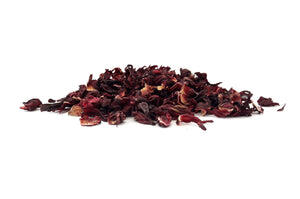
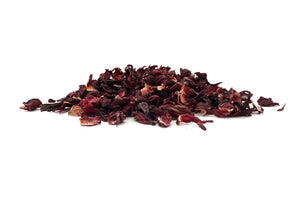
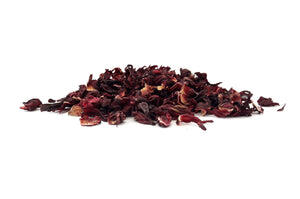
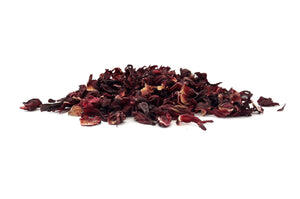
Dried hibiscus flowers are, strictly speaking, the dried calyces of roselle, Hibiscus sabdariffa: the cups that stay on the stem and swell after the petals fall. They are the hibiscus behind bissap in West Africa, karkadé in Egypt and Sudan, sorrel in the Caribbean and agua de Jamaica in Mexico.
Roselle and its calyces
The flower that is not the product
Roselle belongs to the mallow family, Malvaceae. Its true flowers are white to pale yellow, with a dark red spot at the base of each petal. Once the petals drop, the calyx stays on the stem, grows larger and turns fleshy and deep crimson, and this is the part that is dried and sold as hibiscus flowers. It is a different plant from the ornamental hibiscus, Hibiscus rosa-sinensis, which is grown for its large, showy flowers and is not used for tea. Kew’s Plants of the World Online now lists roselle as Sabdariffa gossypiifolia, but the trade still uses Hibiscus sabdariffa.
One plant, many names
The names of roselle follow its kitchens: bissap in Senegal and across West Africa, zobo in Nigeria, sobolo in Ghana, karkadé in Egypt and Sudan, sorrel in the English-speaking Caribbean, flor de Jamaica in Mexico and rosella in Australia.
Drinks hot, cold and festive
In Nigeria the calyces make zobo, a sweetened drink with fruit juice and spices. In Mexico agua de Jamaica is made by steeping the calyces in hot water, then straining, sweetening and chilling it, often with lime. Saveur steeps it off the heat for at least five hours. In the Caribbean, Christmas sorrel is made from the red calyces with ginger, allspice, cinnamon and cloves. Roselle was traditionally harvested in November and December, which probably made it a Christmas drink. In Jamaica the ginger comes through strongly, and in Trinidad cooks add cinnamon, cloves and bay leaf, sometimes with a dash of Angostura bitters.
Jam without added pectin
The calyces hold enough natural pectin for a jam to set without adding any. Cooks also turn them into sauces, syrups, jellies, chutney, vinegar, wine and ice lollies. Sellers put the tart taste of red hibiscus down to natural fruit acids, among them hibiscus, malic and tartaric acid.
How it is used today
- Hot infusion. One or two teaspoons per cup in water just off the boil. Red bissap is drunk both hot and cold.
- Agua de Jamaica. A larger amount of calyces steeped for hours off the heat, then sweetened and served chilled.
- Cold brew. Calyces left in cold water in the fridge overnight.
For the pale form of the same plant, try White Hibiscus. To add other colours to a cup, see Red Rose Petals and Blue Cornflower Petals, and find ingredients for your own blends in Herbal Tea.
Hibiscus in your home cupboard
The infusion stains, so brew it in a cup or jug that will not mark. Taste varies between batches, so brew your first cup for the shorter time and taste it before adding more calyces or brewing longer.
Frequently asked questions
Are these hibiscus flowers or calyces?
They are calyces. Roselle’s calyx stays on the stem after the petals fall, grows fleshy and is then dried. The trade sells it as hibiscus flowers, and tea sellers describe it the same way: dried calyces, not petals.
Is this the hibiscus from the garden centre?
No. The ornamental hibiscus, Hibiscus rosa-sinensis, is grown for its large, showy flowers and is not used for tea. This product is roselle, Hibiscus sabdariffa.
What are bissap, zobo and karkadé?
They are local names for roselle and the drink made from its calyces: bissap in Senegal and West Africa, zobo in Nigeria and karkadé in Egypt and Sudan.
Can I drink it during pregnancy or with medication?
If you are pregnant, breastfeeding, taking medication or have a health condition, ask your doctor before drinking flower infusions.
Where do the calyces come from?
The current batch comes from Nigeria.
Sources
- Royal Botanic Gardens, Kew, Sabdariffa gossypiifolia (Mill.) M.M.Hanes & R.L.Barrett (syn. Hibiscus sabdariffa L.), Plants of the World Online, accessed 19 November 2026.
- Saveur, Agua de Jamaica, saveur.com.