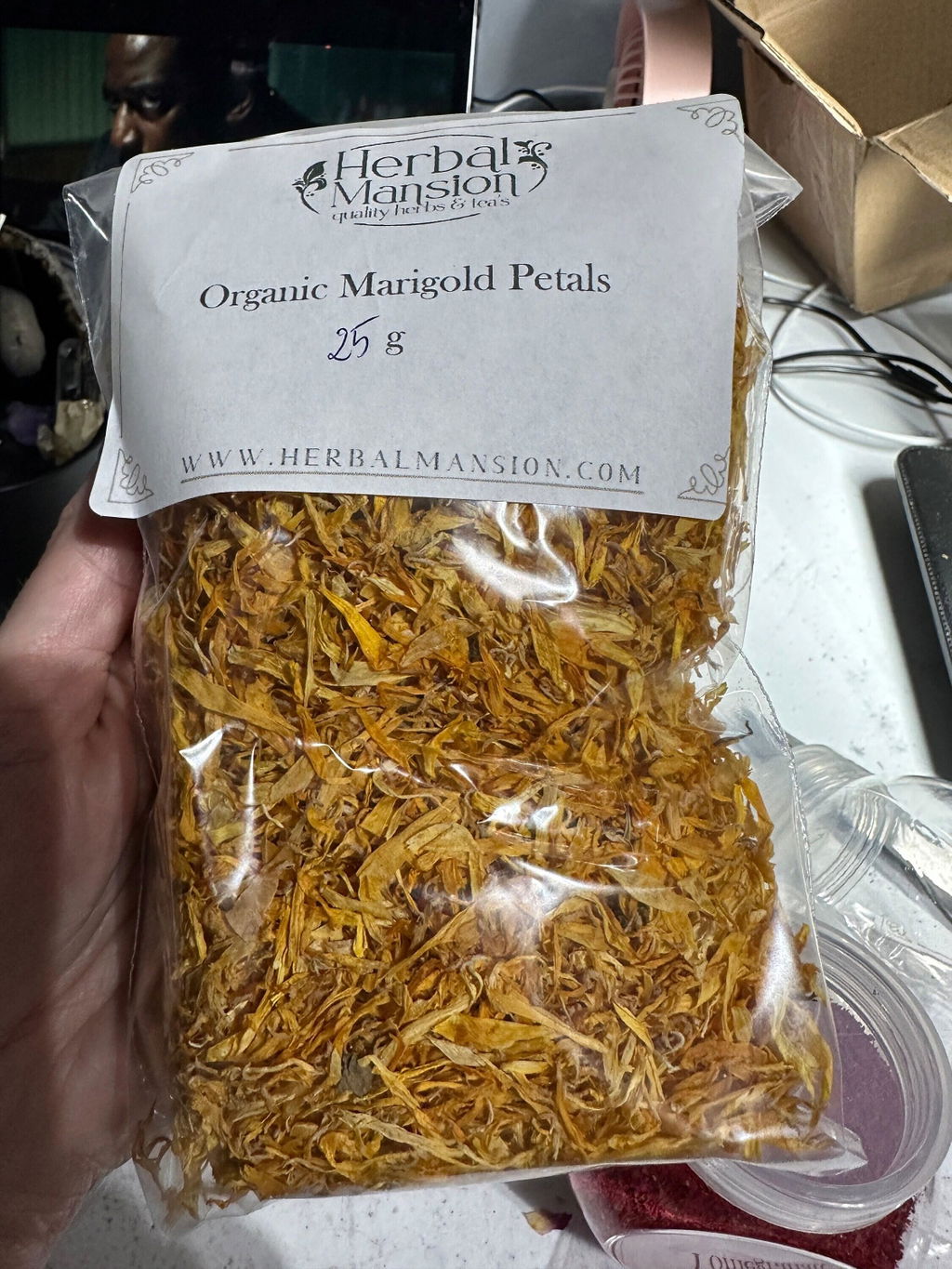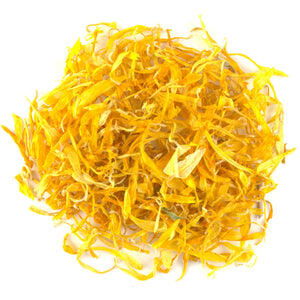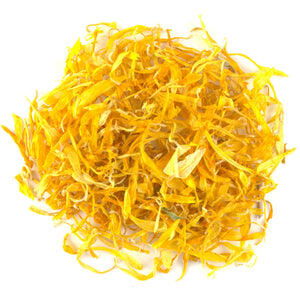


Dried calendula petals, often sold as marigold petals, come from pot marigold, Calendula officinalis, a plant once called “poor man’s saffron” for the golden colour it gave to butter, cheese and soups. They are scattered over salads, used as a garnish and steeped as a flower infusion.
Mary’s gold
Where the names come from
“Marigold” comes from “Mary’s gold”, in honour of the Virgin Mary, and the name is linked to the use of the flower at feasts of Mary. Other English names include pot marigold, Scotch marigold and ruddles. The name pot marigold is usually linked to the old habit of adding the petals to soups and broths.
Poor man’s saffron
Calendula petals coloured and flavoured butter, cheese, custard, bread, cakes, soups and rice dishes, which earned them the name poor man’s saffron. The name refers to the golden colour, not the taste: the Herb Society of America notes that dried petals give a colour like saffron, but they do not taste like it. In the Middle Ages the petals went into pots of soup and stew and coloured cheese and butter. In the 16th century John Gerard wrote that no good Dutch soup went without them, and English cooks boiled them with spinach or added them to stewed fowl.
A plant of the daisy family
Calendula officinalis is a short-lived, aromatic herbaceous perennial up to 80 cm tall, with flower heads 4 to 7 cm across. It probably comes from southern Europe, though long cultivation has blurred its exact origin. The flowers are yellow or orange, garden forms range from pale yellow to orange-red, and most have a spicy aroma. Greek, Roman, Middle Eastern and Indian cultures used the flowers to dye cloth and food.
How it is used today
- In the kitchen. Scattered over salads for colour, or used as a garnish in place of saffron.
- Flower infusion. One to two teaspoons per cup. The infusion is often described as mild, earthy, slightly peppery and floral.
- Decoration and crafts. Loose petals in a glass jar or in dried-flower work.
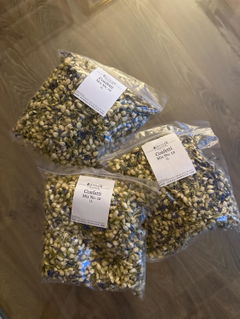
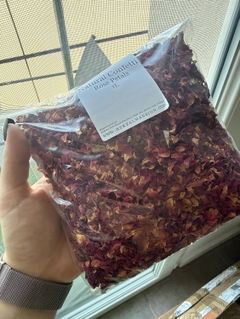
For whole flower heads, choose Marigold Calendula Flowers. To add another colour to a salad or a cup, try Blue Cornflower Petals or Red Rose Petals, and find more in our Flowers & Petals collection.
Calendula petals in your home cupboard
A pinch of petals colours a pan of rice or a bowl of salad, and a teaspoon or two makes a cup. The shade varies between batches. Calendula belongs to the daisy family (Asteraceae). If you know you are sensitive to plants of this family, ask your doctor or pharmacist before use.
Frequently asked questions
Calendula or Tagetes: which marigold is this?
These are petals of Calendula officinalis, known as pot marigold or English marigold. French and African marigolds belong to a different genus, Tagetes, and are related to calendula only at family level. The “French” marigold, Tagetes patula, in fact comes from Mexico and Central America. In older British books, “marigold” usually means calendula.
Do calendula petals taste like saffron?
No. They give food a golden colour like saffron, but not its taste.
What does calendula infusion taste like?
It is often described as mild, earthy, slightly peppery and floral. It turns bitter if brewed for longer than about 10 minutes or with too many petals.
Can I drink it during pregnancy or with medication?
If you are pregnant, breastfeeding, taking medication or have a health condition, ask your doctor before drinking flower infusions.
Where do the petals come from?
The current batch comes from Egypt.
Sources
- Herb Society of America, Calendula: An Herb of the Sun, Herb of the Month.
- Keeler, K., Plant confusion: marigolds and calendulas, A Wandering Botanist, 2016.