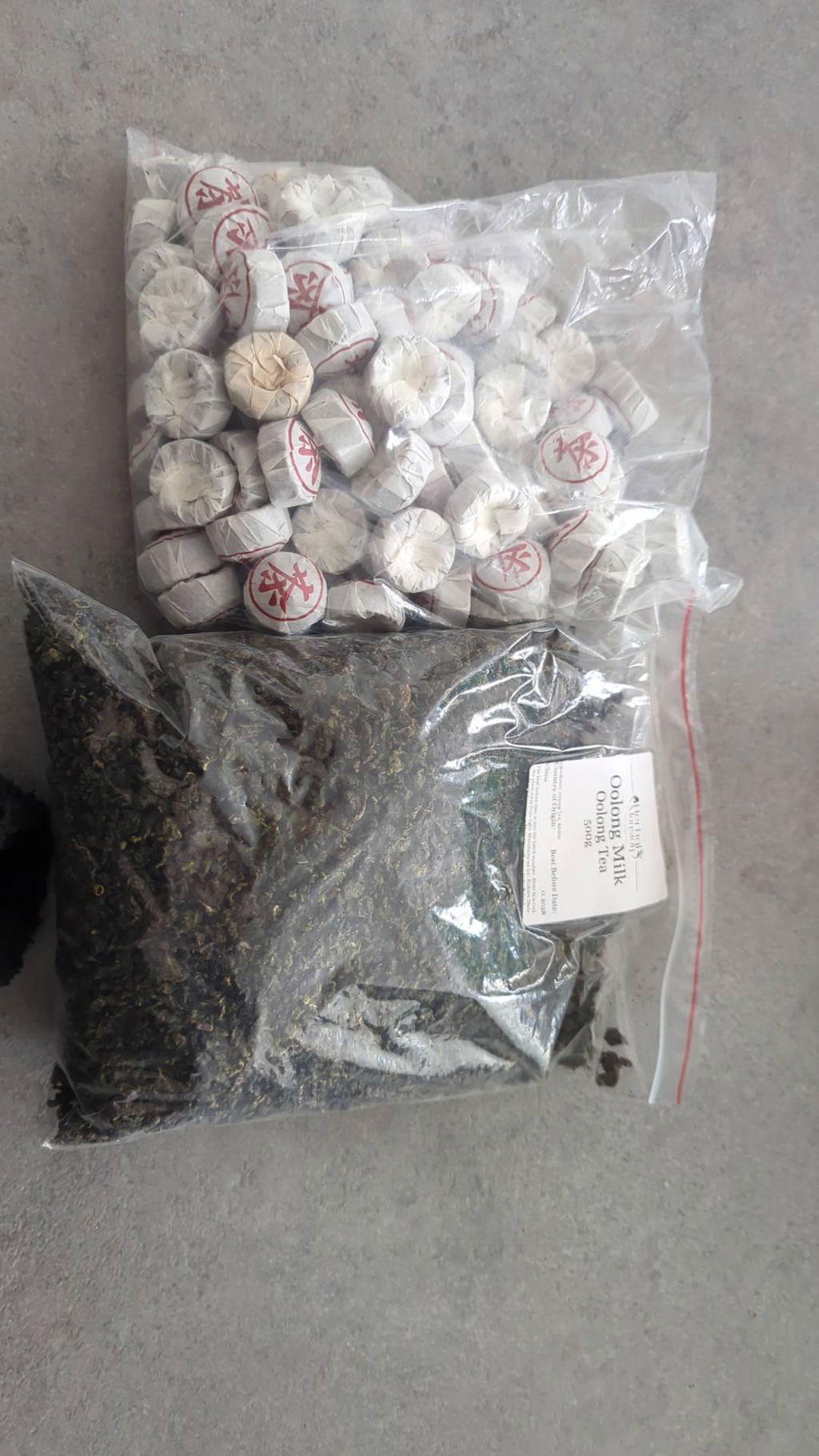
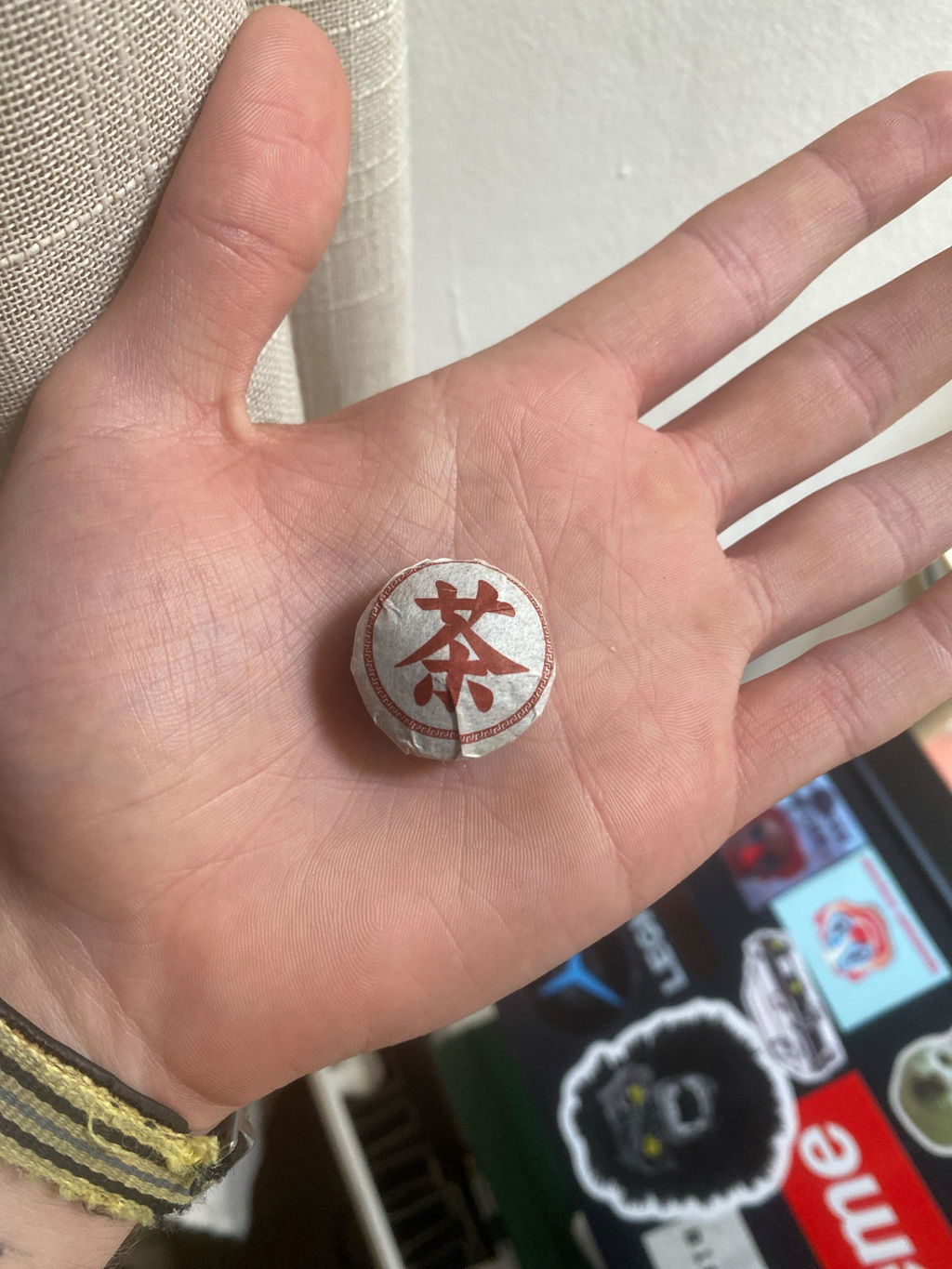
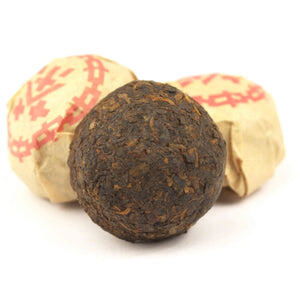
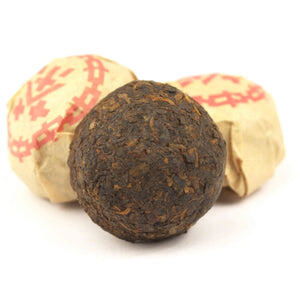
Pu Erh Tuo Cha is a ripened pu-erh pressed into small nests, each wrapped separately in paper and enough for one cup or a small teapot. The nest is shaped like a little bowl with a hollow underneath, and once infused it breaks up into dark leaves and gives a thick, dark red infusion with an earthy, mellow taste and little astringency. Tuo cha is easy to take to work or on a journey, because there is nothing to measure. This is a tea for people who like ripened pu-erh and want it in ready portions.
Tuo cha in history
Tea churned with butter
In his chapter on early customs, Ukers describes the churned tea of Tibet, known from Moorcroft's account from the beginning of the nineteenth century. Tibetans boiled pressed tea with soda for an hour, then churned it with butter and salt, as butter is churned in a churn. With breakfast they drank several cups, adding roasted barley flour. In his chapter on present-day customs, Ukers adds that Tibetans drank many cups a day. Pressed tea from China was part of everyday life in Tibet, and small nests are one of the pressed forms, alongside bricks and cakes.
Tuo cha at the Xiaguan factory
In their handbook the Heisses describe a visit to the factory in Xiaguan, famous for its nests, where two workers measured maocha into cloth bags and pressed them into a perforated mould. They tucked the smaller leaves inside so that the larger ones stayed on the surface. In her book on pu-erh, Zhang Jinghong recalls a tasting at which Xiaguan Yi Tuo was served, a grade B nest from 1988, dried at this factory by machine or over fire. Gascoyne and his co-authors note that a nest usually weighs 100 or 250 g, so a nest for a single cup is a miniature version of this form.
How Pu Erh Tuo Cha is made
The base is maocha, large-leaf tea roasted in a pan, rolled and dried in the sun. For the ripened version, shou, the leaves are laid in damp heaps and covered so that they ferment for several weeks, until they darken and take on an earthy scent. The finished leaf is steamed, pressed into a bowl-shaped mould and dried, and each nest is wrapped in paper. This tea is shou, and one nest weighs 5 to 6 g.
How it is used today
- For work and travel. One nest, one mug, no measuring.
- Tibetan style. With butter and salt, as in the accounts from Tibet.
- With dried apricots. A fruit drink made on the infusion, warm or chilled.
- For many infusions. As it breaks up, the nest gives three or four full infusions.
In our Pu Erh Tea collection you will find loose versions of this tea, the ripened Pu Erh and the raw Pu Erh Green. There is also Pu Erh Milk, likewise in loose leaves.
Pu Erh Tuo Cha in your tea cupboard
This is a tea for people who like ripened pu-erh and want it in portions ready to take out of the house. It suits those who do not want to measure leaves and prefer to drop one nest into a mug.
Frequently asked questions
Does the nest need to be crumbled before brewing?
No. Two rinses with boiling water loosen the pressing, and the nest breaks up by itself as it brews. If you are in a hurry, you can break it gently with your fingers.
Is it shou or sheng?
It is shou, a ripened pu-erh. Raw sheng is sold separately, in loose leaves.
Why is the first infusion poured away?
Because the rinse removes the dust from pressing and warms the leaves. The second and third infusions are cleaner and fuller in taste.
Does Pu Erh Tuo Cha contain caffeine?
Yes. Pu-erh is a tea from the tea plant, so it contains caffeine, and the amount in the infusion depends on the quantity of leaves, the number of infusions and the brewing time.
Can I drink it during pregnancy or with medication?
It contains caffeine, so during pregnancy and when taking medication regularly, ask a doctor or pharmacist. A product description does not replace their advice.
Sources
- William H. Ukers, All About Tea, The Tea and Coffee Trade Journal Company, New York 1935, vol. II, chapter XXII “Early Manners and Customs”, pp. 400–401 (churned tea in Tibet after Moorcroft), and chapter XXIII “Present-Day Manners and Customs”, pp. 432–433 (number of cups a day).
- Mary Lou Heiss, Robert J. Heiss, The Tea Enthusiast's Handbook: A Guide to Enjoying the World's Best Teas, Ten Speed Press, Berkeley 2010, chapter “Classes of Tea”, description of tuo cha pressing at the Xiaguan factory.
- Jinghong Zhang, Puer Tea: Ancient Caravans and Urban Chic, University of Washington Press, Seattle 2014, pp. 172–173 (Xiaguan Yi Tuo from 1988).
- Kevin Gascoyne, François Marchand, Jasmin Desharnais, Hugo Américi, Tea: History, Terroirs, Varieties, Firefly Books, Richmond Hill 2011, chapter on China, entry on pu-erh (pressed forms, nest of 100 or 250 g).
- EFSA, Scientific Opinion on the safety of caffeine, EFSA Journal 2015, 13(5):4102.