


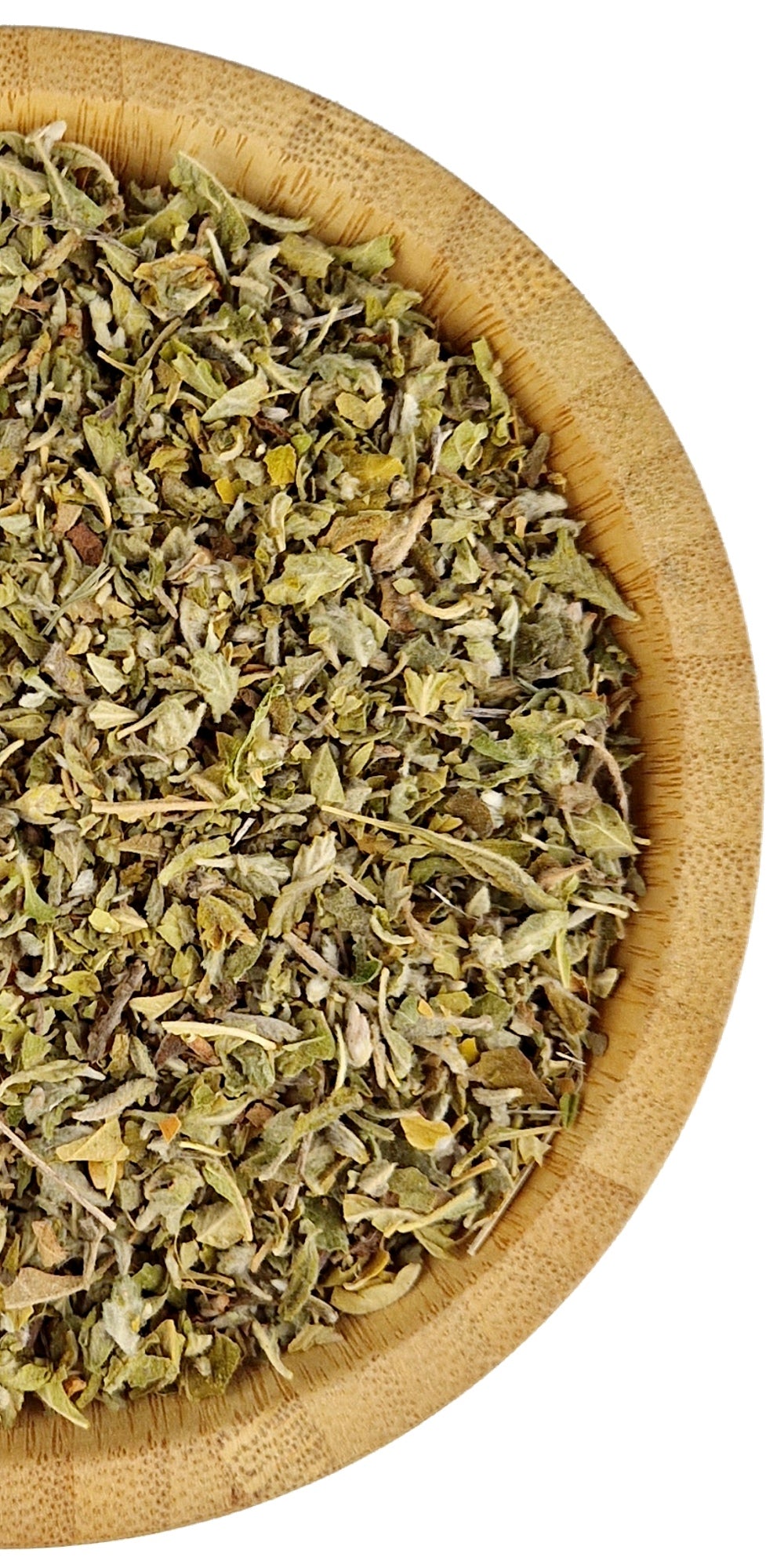
Our damiana is dried leaves of Turnera diffusa, with a few stems here and there. The plant is a small aromatic shrub of Mexico, Central America and the Caribbean. In Mexico its leaves are steeped as a herbal infusion, and in Baja California Sur they flavour a traditional liqueur.
The plant
Turnera diffusa is a densely branched shrub, usually 0.3 to 2 m tall, with small, toothed leaves that smell strongly when crushed, and yellow flowers. It grows wild from southern Texas and Mexico, including Baja California Sur and Sonora, through Central America and the Caribbean to eastern Brazil, in seasonally dry tropical country. Botanists now place it in the passionflower family, Passifloraceae; older books list it under Turneraceae.
Names
In Mexico damiana is also called hierba de la pastora, hierba del venado, pastorcita and oreganillo, and in Yucatec Maya misib-kook. Older English names include Mexican holly and old woman's broom.
Not hierba de San Juan
Damiana is sometimes searched for as "hierba de San Juan", but in Spanish that name belongs to St John's wort, Hypericum perforatum, a different plant.
Flavour
The leaves are strongly aromatic when crushed, and the infusion is usually described as aromatic, herbal and slightly bitter.
Damiana liqueur
In Baja California Sur damiana is the base of a sweet herbal liqueur. According to Mexico News Daily, its origin is credited to the Guaycura, who lived across much of the region, and it was first sold commercially in the 1860s by Antonio Ruffo Santa Cruz in La Paz. Many families still make it at home from the leaves, honey or sugar, and alcohol. Local lore says the first margarita was made with damiana liqueur, although the cocktail's invention is usually credited elsewhere.
How it is used today
- Infusion. The leaves steeped in hot water, as in Mexico.
- Liqueur. Home-made damiana liqueur from leaves, honey or sugar, and alcohol.
- Flavouring. Damiana leaves flavour liqueurs and other drinks.
More single herbs are in our Herbs collection.
Damiana in your kitchen
We have no supplier brewing instructions for this batch, so start with a small amount, about 1 teaspoon per cup, pour over hot water, cover for a few minutes, then strain, taste and adjust. Keep the bag tightly closed in a cool, dark, dry place. Taste varies between batches.
Frequently asked questions
What is damiana?
The dried leaves and stems of Turnera diffusa, a small aromatic shrub native from Texas and Mexico to the Caribbean and eastern Brazil. Our batch is mostly leaves, with a few stems here and there.
Is damiana the same as hierba de San Juan?
No. In Spanish, hierba de San Juan is St John's wort, Hypericum perforatum. Damiana's Mexican names include hierba de la pastora and hierba del venado.
How do I make damiana tea?
Pour hot water over about 1 teaspoon per cup, cover for a few minutes and strain. Taste, then adjust the amount and the time.
What is damiana liqueur?
A sweet herbal liqueur from Baja California Sur, made from damiana leaves with honey or sugar and alcohol.
Can I drink it during pregnancy or with medication?
Do not drink damiana if you are pregnant or breastfeeding. If you take medication or have a health condition, ask your doctor first.
Sources
- USDA ARS GRIN-Global, Turnera diffusa, npgsweb.ars-grin.gov, accessed 24 November 2026.
- CONABIO, EncicloVida, Damiana (Turnera diffusa), enciclovida.mx, accessed 24 November 2026.
- Real Academia Española, Diccionario de la lengua española, "hierba" and "damiana", dle.rae.es, accessed 24 November 2026.
- Chris Sands, "Baja California's secret ingredient for the perfect margarita", Mexico News Daily, 2 March 2024, mexiconewsdaily.com, accessed 24 November 2026.




