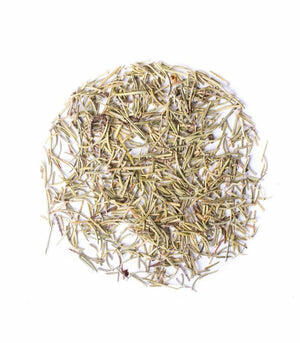
Dried rosemary leaves are the whole, needle-like leaves of Salvia rosmarinus, the evergreen shrub long known as Rosmarinus officinalis. They bring a piney, woody note to roast lamb and chicken, roast potatoes, tomato sauces and bread.
Rosemary is now a sage
A new botanical name
In 2017 a molecular study published in the journal Taxon moved rosemary into Salvia, the sage genus. The Royal Horticultural Society adopted the name Salvia rosmarinus at the end of 2019. The older name, Rosmarinus officinalis, is still common on labels and in recipes, and both names refer to the same plant.
Dew of the sea
The name comes from the Latin ros marinus, "dew of the sea", which is often explained by the plant's coastal habitats. The English form rosemary was later shaped by the words rose and Mary.
The plant
Rosemary is native to the Mediterranean basin, where it grows in dry, rocky places. It is an evergreen, aromatic shrub with square stems and narrow leaves that are green above and white and downy beneath. The small flowers are blue, lavender or white.
How it is used today
- Roast meat. Lamb and poultry, with the leaves rubbed onto the meat or added to the roasting tin.
- Potatoes. Tossed with potatoes before roasting.
- Sauces, stews and marinades. Tomato sauces, stews, stuffings and marinades.
- Bread. Baked into focaccia and other breads.
- Herb blends. One of the usual herbs in Herbes de Provence.
For a gentler Mediterranean herb, see Marjoram, and for another herb that holds up well to drying, see Thyme. More are in our Culinary Herbs and Herbs & Spices collections.
Dried rosemary in your kitchen
Spice sellers describe the aroma as piney and woody. Its flavour stands up to roasting and long cooking, so rosemary can go in at the start. The whole leaves are firm: crush them between your fingers or in a mortar, or chop them, before adding them to a dish. Keep the bag tightly closed in a cool, dark, dry place, away from steam and heat, and use it within about a year. Taste varies between batches.
Frequently asked questions
How do I use dried rosemary leaves?
Crush or chop the leaves, then add them early to roasts, stews, tomato sauces and marinades, or knead them into bread dough.
Is Salvia rosmarinus the same as Rosmarinus officinalis?
Yes. It is the same plant under its current botanical name, adopted by the Royal Horticultural Society in 2019.
Are the leaves whole or crushed?
This rosemary comes as whole dried leaves.
Where does our rosemary come from?
The current batch was grown in Egypt.
Sources
- NC State Extension, Salvia rosmarinus (Rosemary), North Carolina Extension Gardener Plant Toolbox, plants.ces.ncsu.edu, accessed 22 November 2026.
- Gardens Illustrated, Rosemary is now a salvia, according to RHS, gardensillustrated.com, accessed 22 November 2026.
- McCormick, About Rosemary: Uses, Pairings and Rosemary Recipes, mccormick.com, accessed 22 November 2026.
- The Spice House, Rosemary, Cracked, thespicehouse.com, accessed 22 November 2026.
- The American Heritage Dictionary of the English Language, "rosemary", ahdictionary.com, accessed 22 November 2026.