


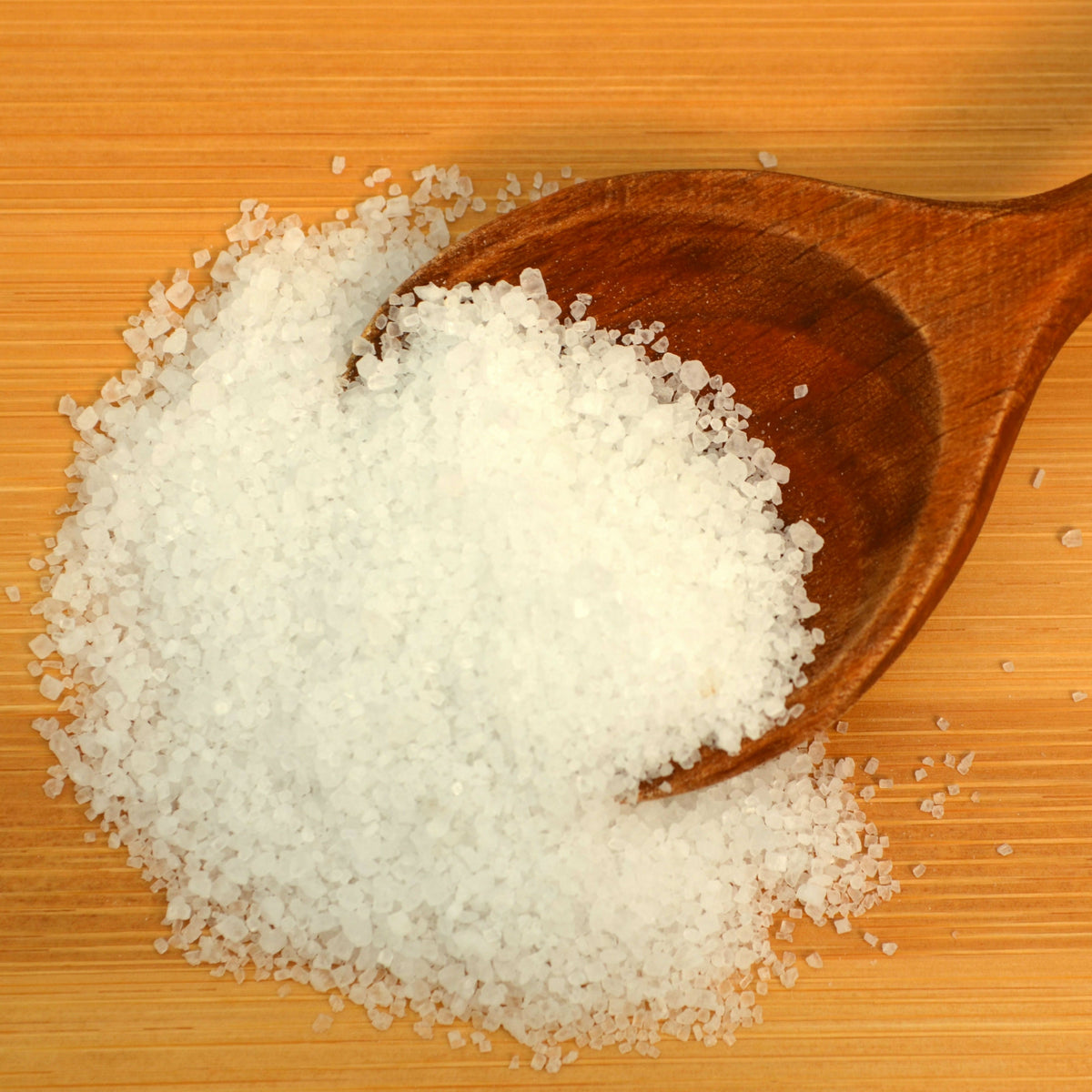
Food-grade citric acid, E 330: white or colourless crystals with a strongly sour taste and no smell, which dissolve readily in water. Use it in the kitchen wherever a recipe calls for citric acid, and with baking soda to make fizzing bath bombs.
A permitted food additive
Citric acid is on the EU list of permitted food additives as E 330. The EU specification for E 330 describes it as a white or colourless, odourless crystalline solid with a strongly acid taste, very soluble in water. It allows citric acid made from lemon or pineapple juice, or by fermentation with Aspergillus niger or Candida species.
The Swedish chemist Carl Wilhelm Scheele first isolated citric acid, from lemon juice, in 1784.
How a bath bomb fizzes
The fizz of a bath bomb comes from two ingredients: baking soda and citric acid. Mixed dry, they do not react. Once they dissolve in the bath water, the acid reacts with the sodium bicarbonate and gives off carbon dioxide, the bubbles you see, leaving sodium citrate and water behind. Cornflour can be added as a filler to slow the reaction.
Our Sodium Bicarbonate is the other half of the pair, and both are in our Bath Bomb Ingredients collection.
Handling and storage
Warning: causes serious eye irritation (H319). Avoid contact with eyes.
Keep the pack closed and dry.
Frequently asked questions
Is this citric acid food grade?
Yes. It is sold as food-grade citric acid, the food additive E 330.
Will citric acid and baking soda react in the jar?
Not while they are dry. The reaction starts only when the mixture dissolves in water.
Why does citric acid carry an eye warning?
Safety data sheets for citric acid give the EU CLP classification Eye Irritation, category 2, with the hazard statement H319, “Causes serious eye irritation”.
Sources
- Commission Regulation (EU) No 1129/2011, Annex II to Regulation (EC) No 1333/2008, EU list of food additives, EUR-Lex, accessed 25 November 2026.
- Commission Regulation (EU) No 231/2012, specifications for food additives, consolidated text of 18 August 2026, entry E 330, EUR-Lex, accessed 25 November 2026.
- Royal Society of Chemistry, RSC Education, reaction of sodium hydrogencarbonate with citric acid.
- Science Buddies, Bath Bomb Science.
- Carl Roth, Safety Data Sheet, citric acid.
- American Chemical Society, Molecule of the Week: citric acid.
- Encyclopaedia Britannica, citric acid.




