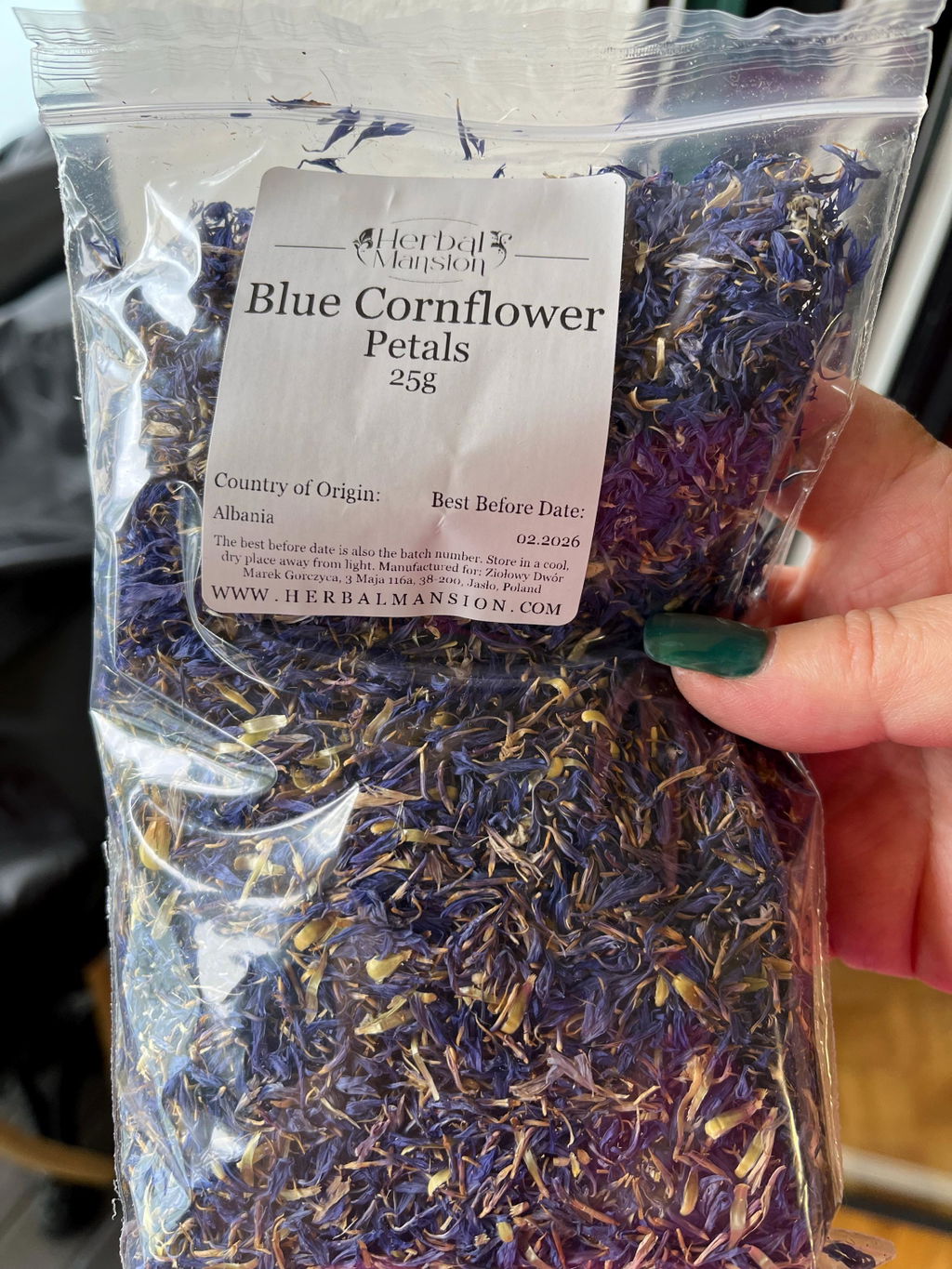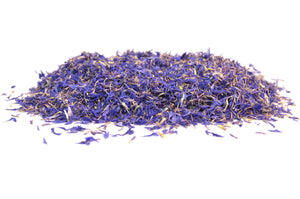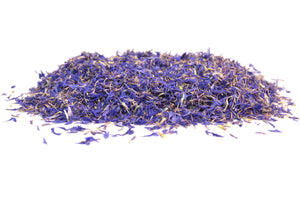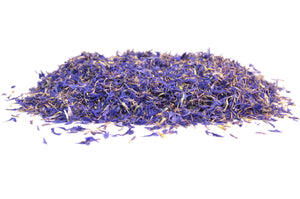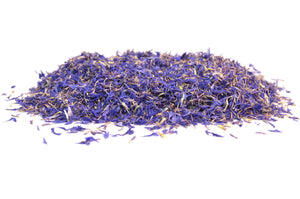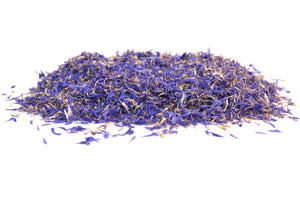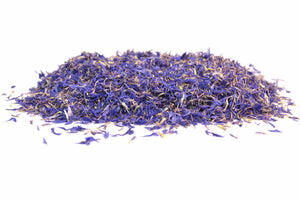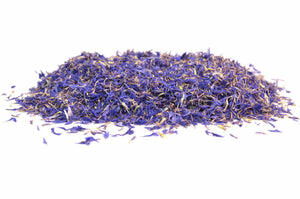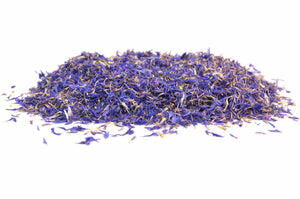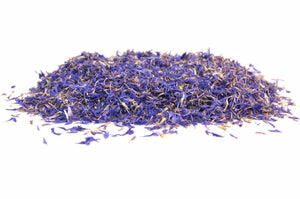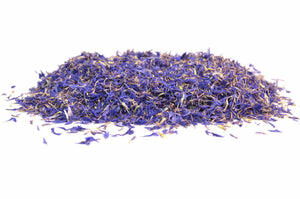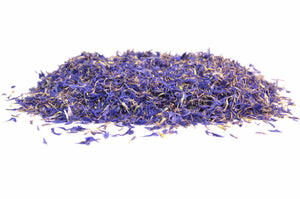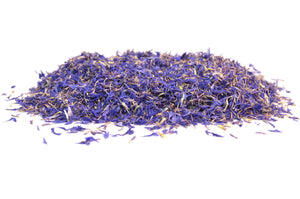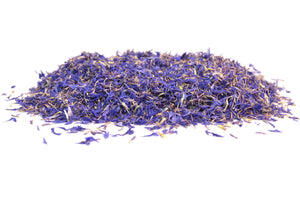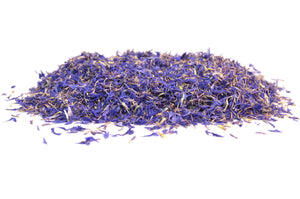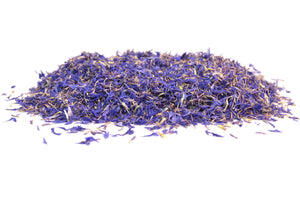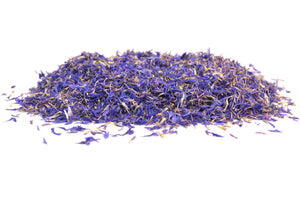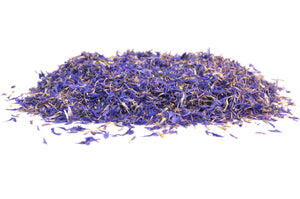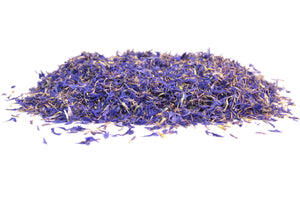


Dried cornflower in the form of blue petals alone is an addition whose role is above all its colour. Cornflower (Centaurea cyanus) has grown among the ears of rye and wheat for centuries, and its petals are gathered and dried for their intense blue. Dried blue cornflower petals are added to tea blends, sprinkled over cakes and desserts, dropped into lemonade and ice cubes, and outside the kitchen used in soaps, bath salts and confetti. Their taste is delicate, almost neutral.
A flower of fields and tombs
Ancient Egypt
Garlands with cornflowers survived in the tomb of Tutankhamun, dried and still recognisable after more than three thousand years. It was a species related to the common cornflower, which reached Egypt from Western Asia. The Kew botanist Nigel Hepper described these garlands together with the other plants from the tomb. In antiquity cornflower was called cyanus, from the Greek word for dark blue, and it appeared under this name in herbals right up to the 18th century.
The weed that became a symbol
In Europe, cornflower arrived together with cereal growing and for centuries was an ordinary weed whose blue flowers farmers saw in every field of grain. In Poland girls wove wreaths from it, and blessed cornflower wreaths were hung in homes for a good harvest and against lightning. 20th-century herbicides drove it from the fields so effectively that today cornflower grows more often in gardens and on plantations than among cereals.
How dried cornflower is made
Cornflower for dried petals is grown on plantations today. The flowers are picked in full bloom, dried in shade with good airflow, and then the petals are separated from the flower heads and sifted. The shade of the petals varies between batches, because it depends on the harvest and the weather in the season.
How it is used today
- Tea blends. A pinch of petals in black tea with bergamot, in green tea and in herbal blends.
- Desserts and baking. A topping for cakes, meringues, ice cream and iced biscuits, added just before serving.
- Drinks. Lemonades, cocktails, ice cubes with petals inside and as a garnish for the glass.
- Crafts. Glycerine soaps, bath salts, bath bombs, potpourri and petal confetti.
Other cornflower petal colours, including Purple Cornflower Petals and Pink Cornflower Petals, as well as Marigold Calendula Petals, are in our Flowers & Petals collection.
Blue cornflower in your home cupboard
Blue cornflower petals are a simple way to make an ordinary tea blend, cake or bath salt look different, because they do not change the taste and need no preparation. This is an addition for people who put together their own tea blends, decorate their baking or make homemade cosmetics.
More ways to use it
- Tea blends. A teaspoon of petals is enough for 50 g of tea, mixed in with the leaves and stored together with them.
- Ice cubes. Put a few petals into each compartment, fill halfway with water and freeze, then top up with water, so the petals stay inside the cube.
- Crafts. Add the petals to soaps and bath salts at the end, so they do not crumble. The petals are ready to use straight from the pack.
Frequently asked questions
Are cornflower petals edible?
Yes. They are edible flowers, used as an addition to teas, desserts, salads and drinks. They contain no caffeine.
Do blue petals colour the infusion?
They colour the infusion only slightly. An infusion of the petals alone is pale, with a greyish-blue tint, and in tea the colour of the petals shows in the blend but only faintly in the cup. When lemon is added, the tint turns pinkish, because the cornflower pigment reacts to acid.
Is cornflower available in other colours?
Yes. We also stock cornflower petals in purple, pink, light pink and white, and whole pink cornflowers separately. All of them are in the same collection.
Where do the petals come from?
The current batch comes from Albania.
Sources
- F. Nigel Hepper, Pharaoh's Flowers: The Botanical Treasures of Tutankhamun, London 1990, chapter on the funerary garlands.
- Riklef Kandeler, Wolfram R. Ullrich, Symbolism of plants: examples from European-Mediterranean culture presented with biology and history of art. September: Cornflower, “Journal of Experimental Botany” 60(12), 2009, pp. 3297–3299.
- Masaaki Shiono, Naohiro Matsugaki, Kosaku Takeda, Structure of the blue cornflower pigment, “Nature” 436, 2005, p. 791.
- Gyula Pinke, Viktória Kapcsándi, Bálint Czúcz, Iconic Arable Weeds: The Significance of Corn Poppy, Cornflower, and Field Larkspur in Hungarian Ethnobotanical and Cultural Heritage, “Plants” 12(1), 2023, art. 84.
- Adam Fischer, Rośliny w wierzeniach i zwyczajach ludowych. Słownik Adama Fischera [Plants in folk beliefs and customs: Adam Fischer's dictionary], ed. Monika Kujawska, Łukasz Łuczaj, Joanna Sosnowska, Piotr Klepacki, Wrocław 2016, entry “Chaber”.
- Zbigniew Podbielkowski, Barbara Sudnik-Wójcikowska, Słownik roślin użytkowych [Dictionary of useful plants], Warsaw 2003, entry “Chaber bławatek”.