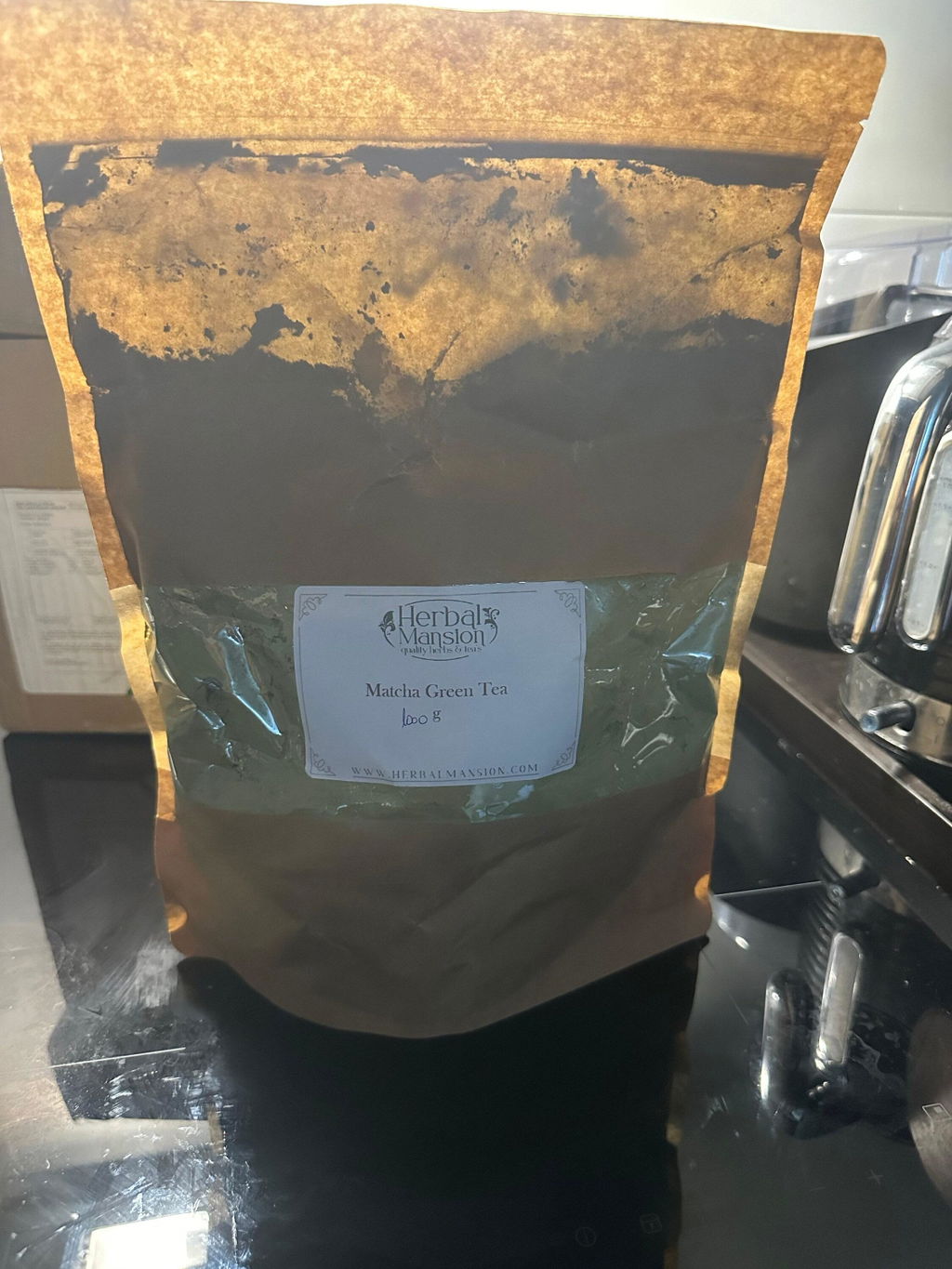
Matcha powder is green tea ground to a fine dust, which is whisked with hot water instead of being brewed and drunk together with the leaf. The drink is thick and sweet-grassy, with a distinct bitterness and a long aftertaste. This powder has a pronounced taste, so it stands up well to milk, cake and fruit. It is a tea for the bowl and the bamboo whisk, but also for the kitchen, for people who like a strong green flavour.
Whisked tea
Yeisai and the first Japanese book on tea
Ukers writes that tea drinking in Japan was revived in 1191 thanks to the abbot Yeisai, head of a Zen school, who brought seeds from China and planted them on Kyushu. The same abbot wrote the first Japanese book on tea and presented it to the shogun Sanetomo, who became an admirer of the drink. The abbot Myōe of Toga-no-o near Kyoto also received seeds from him. Ukers also writes that ceremonial tea drinking, with the tea powdered and whisked in a bowl, came to Japan around 1191 with Yeisai himself, who had come to know it in China during his second journey.
Tencha, koicha and usucha
Matcha is made from tencha, which Ukers in 1935 described as one of the four classes of Japanese tea. He wrote that tencha is always powdered and is made from shaded bushes, like gyokuro, except that the leaf is dried in its natural form, without rolling. Powdered tencha for the ceremony was called matsucha and was not an export tea. The same author recorded the division into koicha, thick tea, and usucha, thin tea, and noted that in his time gyokuro and tencha were still made by hand when sencha was already rolled by machine. The oldest rules of cha-no-yu were written down under the shogun Yoshimasa, in the 15th century, and Sen no Rikyū was its highest priest.
How matcha is made
The Heisses write that bushes for tencha are shaded for about three weeks before picking, so that the leaves stay dark green and soft. After picking, the leaves are heated to stop oxidation and dried without rolling, and then the stems and veins are removed. Tencha prepared in this way is ground to a fine powder; traditionally this was done slowly in stone mills.
How it is used today
- Usucha in a bowl. Whisked with water, with no additions.
- Matcha latte. With warm or cold milk.
- Pancakes. Green pancakes for breakfast.
- Baking and ice cream. A teaspoon colours the cake and gives it flavour.
In our Loose Green Tea collection you will also find Sencha, Kukicha and Genmaicha. All three are brewed rather than whisked.
Matcha in your tea cupboard
This is a tea for people who like a strong green flavour and want a powder in the kitchen for latte, pancakes and cake. It also suits those who want to try whisking in a bowl and fancy a chasen.
Frequently asked questions
What colour is matcha?
It ranges from bright to olive green, depending on the harvest and the shading. A powder with a pronounced taste stands up well to milk and baking.
Do I need a bamboo whisk?
No. A chasen gives the finest foam, but a battery milk frother or a closed bottle shaken hard will also break up the powder. First rub out the lumps with a little water.
Why is the portion so small?
Because you drink the whole ground leaf rather than an infusion, so about 2 g per bowl is enough for a full flavour.
Where is Matcha made?
In China, in the Japanese style: green tea ground to a fine powder that is whisked rather than brewed.
Does matcha contain caffeine?
Yes. Like every tea from the tea plant, matcha contains caffeine; the amount depends on how much powder you use.
Can I drink it during pregnancy or with medication?
It contains caffeine, so in these situations ask a doctor or pharmacist. A product description does not replace their advice.
Sources
- William H. Ukers, All About Tea, The Tea and Coffee Trade Journal Company, New York 1935, vol. I, chapter I “Tea in the Beginning”, pp. 8–10 (Yeisai), chapter XIII “Tea Characteristics”, pp. 234–236 and pp. 261–262 (tencha, matsucha), chapter XVI “Cultivation and Manufacture in Japan”, pp. 317–319 (koicha and usucha, hand manufacture); vol. II, chapter XIX “Glorification of Tea in Japan”, pp. 362–366 (Yeisai and cha-no-yu, Yoshimasa, Rikyū).
- Mary Lou Heiss, Robert J. Heiss, The Tea Enthusiast's Handbook: A Guide to the World's Best Teas, Ten Speed Press, Berkeley 2010, chapter on the green teas of Japan (tencha, shading, grinding).
- EFSA, Scientific Opinion on the safety of caffeine, EFSA Journal 2015, 13(5):4102.