


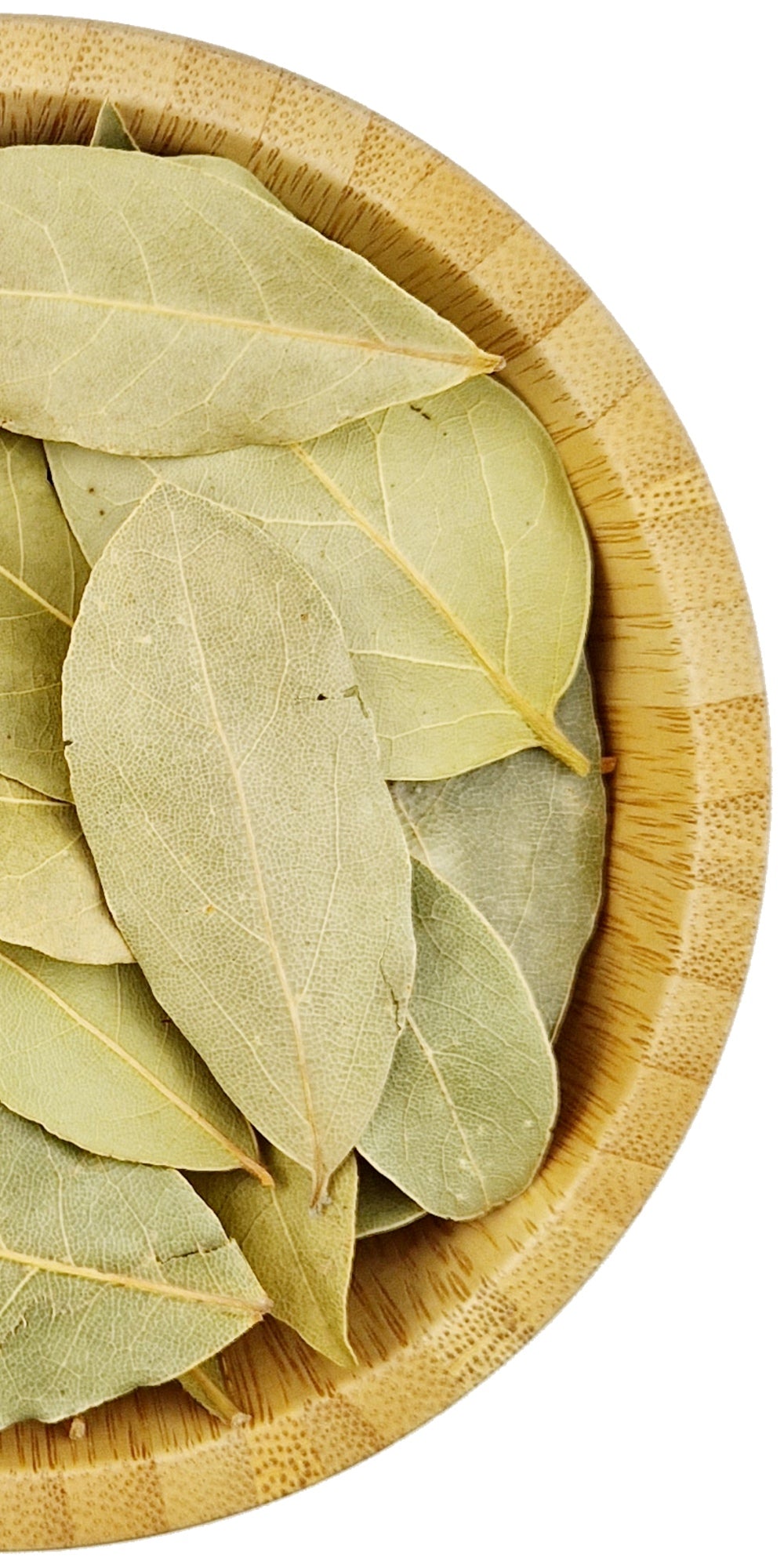
Our dried bay leaves, also known as laurel leaves, are the dried leaves of Laurus nobilis, the evergreen bay laurel native to the Mediterranean, and ours come from Turkey. The smooth, leathery leaves have a clean, herbal aroma that holds up through long cooking, so bay goes into the pot at the start and comes out before the dish reaches the table.
How to use bay leaves
Add one or two whole leaves at the beginning of cooking. Bay suits stocks, soups, stews, sauces and marinades, it is used in sausages, and it is one of the herbs tied into a bouquet garni. Its aroma survives long simmering without fading much, so there is no need to add more towards the end. Go easy: too many leaves make a dish bitter rather than more fragrant.
Remove the leaves before serving
Whole bay leaves stay stiff and sharp-edged even after hours in a stew, and they are hard to chew. Lift them out with a spoon before you serve. The flavour has already gone into the dish.
Not every "bay leaf" is bay laurel
Several different plants are sold as bay leaves, and they do not taste the same. California bay, Umbellularia californica, has larger leaves with a much stronger, camphor-like scent. Indian bay leaf, or tejpat, comes from Cinnamomum tamala, a relative of cinnamon, and smells of cinnamon rather than bay. Indonesian bay leaf, or daun salam, is Syzygium polyanthum from the myrtle family, and Indonesian recipes that ask for bay leaf usually mean salam. None of these is a straight swap for the others. Ours is the Mediterranean bay of European cooking, called laurier in French, alloro in Italian, laurel in Spanish, Lorbeer in German and defne in Turkish.
Laurel in Greek legend
In Greek myth the nymph Daphne was turned into a laurel tree, and daphne is the Greek word for laurel. At the Pythian Games, held at Delphi in honour of Apollo, the winners were crowned with wreaths of bay laurel, while at Olympia the prize was a wreath of olive.
For more whole spices for your cupboard, see Black Peppercorns and Juniper Berries. More are in our Herbs & Spices collection.
Storage
Keep the leaves in an airtight container away from light, heat and moisture. Good dried bay leaves keep a green colour; leaves that have turned brown and lost their scent are past their best and can taste bitter.
Frequently asked questions
Should you remove bay leaves before serving?
Yes. Whole leaves soften very little during cooking and keep their sharp edges, so take them out before serving.
Is bay leaf the same as cherry laurel?
No. Cherry laurel, Prunus laurocerasus, is a garden shrub from the rose family and is not related to bay. It is poisonous and must not be used in cooking. Our leaves are bay laurel, Laurus nobilis.
How many bay leaves should I use?
One or two leaves are enough for most pots of soup or stew.
What do dried bay leaves taste like?
They have a clean, herbal aroma. The main component of the leaf's essential oil is 1,8-cineole.
Where do our bay leaves come from?
Our bay leaves come from Turkey, one of the main exporters of bay leaves.
Sources
- Gernot Katzer's Spice Pages, Laurel (Laurus nobilis L.), accessed 24 November 2026.




