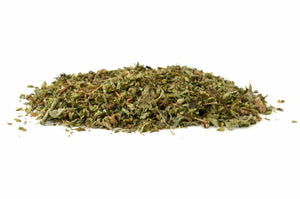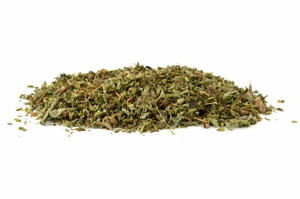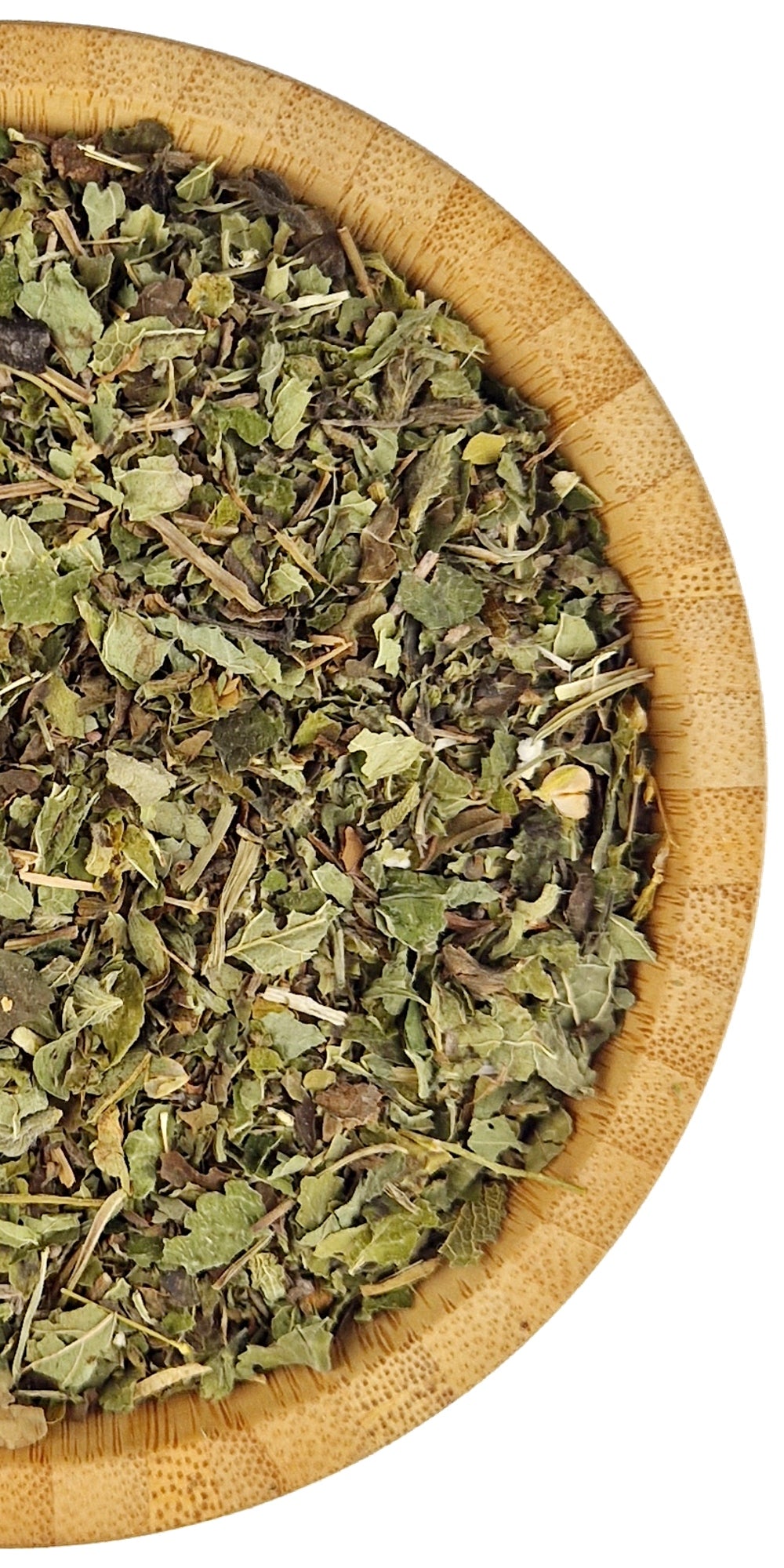
Dried lemon balm leaf is the cut, dried leaves of lemon balm without the stems. Lemon balm smells of lemon, although it has nothing to do with citrus fruit: it is a herb from the mint family whose leaves, when rubbed, give off a lemony, herbal scent, milder and sweeter than mint. Dried lemon balm is brewed on its own and combined with other herbs in blends, and in the kitchen it is used for lemonades, syrups, desserts and fish. The cut leaves are easy to measure with a teaspoon and release their flavour quickly in an infusion.
The bees' herb
Antiquity
The Greek name melissa means bee, and that is no accident. In the Georgics Virgil advises rubbing the hive with crushed lemon balm so that the swarm does not fly away, and Dioscorides described melissophyllon, the bee leaf, among the herbs added to wine. Pliny the Elder repeats both pieces of information in his Natural History. At that time lemon balm grew wild around the Mediterranean and in the Middle East.
The 17th century
In 1611 the Carmelites of Paris began making Carmelite water, a spirit distillate of lemon balm, lemon peel, nutmeg, coriander and angelica root.
How dried lemon balm is made
The shoots are cut before flowering or at its start, when the leaves hold the most oil, and dried quickly in shade with good airflow, because in the sun they turn brown. The dried leaves are stripped from the stems and cut. Part of the volatile oil evaporates during drying, which is why more dried lemon balm than mint goes into an infusion.
How it is used today
- Infusion. Lemon balm on its own or in blends with peppermint, chamomile, lavender and linden.
- Drinks. Lemon balm lemonade, iced tea and a syrup for water, best paired with lemon, honey, cucumber or strawberries.
- Cooking. In fruit salads, jellies, sorbets and creams, and a pinch of dried lemon balm in herb butter goes well with fish and chicken.
- Home and cosmetics. Scented sachets for the wardrobe, an addition to baths and to homemade toners made from the infusion.
In blends lemon balm is most often combined with peppermint, chamomile and lavender. Other herbs for single-ingredient infusions are in our Single Herbs collection.
Lemon balm in your herb cupboard
Dried lemon balm has a mild taste, so it is hard to overdo it, and its lemony note suits an infusion as well as a lemonade or a butter for fish. It is a herb for people who like lemony touches in their cooking and prefer to put together herbal blends themselves.
More ways to use it
- In the kitchen. For lemonade, brew 3 tablespoons of lemon balm in a litre of water, let it cool and add lemon. In cooking, add lemon balm at the end or to cold dishes, for example to herb butter for fish, because long cooking takes away its scent.
Frequently asked questions
How does lemon balm differ from mint?
Both belong to the same family and both are brewed in a similar way, but lemon balm has no menthol. Its infusion is lemony, mild and slightly sweet, while a mint infusion is cool and stronger. In one jug they complement each other well.
Why does dried lemon balm smell weaker than lemon balm from the garden?
The lemony scent of lemon balm comes from a volatile oil, part of which evaporates during drying. That is why a little more dried lemon balm goes into an infusion and why it is brewed covered.
Can I drink lemon balm during pregnancy or give it to children?
In these situations, ask a doctor or pharmacist. A product description does not replace their advice.
Sources
- Dioscorides, De materia medica, 1st century AD, book III, chapter on melissophyllon.
- Virgil, Georgics, 1st century BC, book IV, lines 62–64.
- Pliny the Elder, Natural History, 1st century AD, book XXI, chapters on lemon balm (apiastrum).
- Maud Grieve, A Modern Herbal, London 1931, entry “Balm”.
- Herb Society of America, Lemon Balm: An Herb Society of America Guide, Kirtland 2007, chapters on history and cultivation.