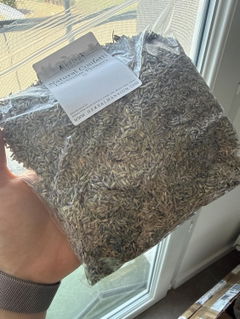

Dried dandelion leaf is the leaf of the common dandelion, Taraxacum officinale, brewed on its own as dandelion leaf tea. On the plant the leaves are lobed and spoon-shaped, and their toothed outline gave dandelion its name.
A flower made of many flowers
Rosette, taproot and milky sap
Dandelion belongs to the daisy family, Asteraceae. Its leaves grow in a rosette from a deep taproot, and a broken stem bleeds a milky sap. What looks like one yellow flower is a head of many tiny florets. It flowers mainly in spring, with odd blooms almost all year, and it is an important early food for pollinators.
Clocks and microspecies
Common dandelion is really a group of closely related “microspecies”. After flowering, each head becomes a round “clock” of seeds on white parachutes, carried off by the breeze. Blowing the seeds from a dandelion clock to “tell the time” is a favourite childhood game.
Lion’s tooth and Paris salads
The lion in the name
The name comes from the French dent de lion, “lion’s tooth”. Many languages keep the lion: German Löwenzahn, Spanish diente de león.
A third of the salad bowl
Dandelion leaves in winter salads appear in 18th-century cookbooks. From 1857 growers at Montmagny, north of Paris, cultivated dandelion to supply the city’s markets with salad leaves, and they blanched the plants under soil to keep the leaves pale and tender. According to the Slow Food Foundation, dandelion made up around a third of the salad leaves sold in 19th-century Paris. The classic French dish is a salad of dandelion leaves with crisp bacon lardons and croutons, in Lyon often topped with a soft-boiled egg. Young leaves picked before the plant flowers are the mildest.
How it is used today
- Infusion. A small amount of dried leaf, steeped covered in freshly boiled water.
- Iced tea. Brewed as usual, strained, cooled and poured over ice.
For other leaves for the cup, see Nettle Leaf and Birch Leaf. More single herbs are in our Single Herbs collection, and other plants for the cup are in Herbal Tea.
Dandelion leaf in your home cupboard
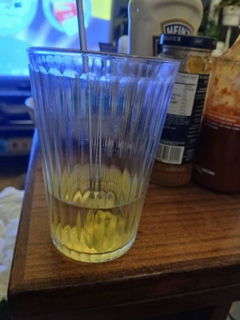
One seller describes the infusion as clear and greenish-gold, with a grassy, earthy taste and a gentle bitterness, closer to rocket or nettle than to chamomile. If it tastes too bitter, shorten the steep or use less leaf. Taste varies between batches.
Frequently asked questions
Is this dandelion leaf or dandelion root?
It is the leaf, not the roasted root. As one seller puts it, the leaf brews a light, grassy cup, while roasted root is dark and toasty.
How do I make dandelion leaf tea?
Use a small amount: 1 teaspoon of dried leaf per 250 ml cup. Pour over freshly boiled water, cover and steep for 5 minutes; 3 minutes gives a lighter cup, up to 10 a stronger one.
Is dandelion related to daisies?
Dandelion belongs to the daisy family, Asteraceae. If you know you react to plants in this family, ask your doctor or pharmacist before use.
Can I drink it during pregnancy or with medication?
If you are pregnant, breastfeeding, taking medication or have a health condition, ask your doctor before drinking herbal infusions.
Where does dandelion leaf come from?
The current batch comes from Poland.
Sources
- The Wildlife Trusts, Common dandelion, wildlifetrusts.org, accessed 20 November 2026.
- Royal Horticultural Society, Taraxacum officinale, rhs.org.uk.
- Royal Horticultural Society, Taraxacum officinale agg., rhs.org.uk.
- Slow Food Foundation for Biodiversity, Montmagny Dandelion (Ark of Taste), fondazioneslowfood.com, accessed 20 November 2026.
- Porter Hill, Dandelion Tea: Taste, Root vs Leaf and How to Brew It, porterhill.co.uk, accessed 20 November 2026.