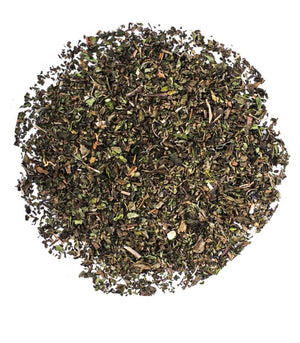


Dried peppermint gives a cool, distinct infusion that is easy to recognise from the first sip. It owes its coolness to menthol, of which it has more than other mints, which is why its infusion is stronger and more refreshing than one made from spearmint. It is brewed on its own and added to teas and herbal blends, and in the kitchen it is used in drinks, desserts and Middle Eastern dishes. The cut leaves release their flavour quickly and are easy to measure with a teaspoon.
A herb that was only described at the end of the 17th century
Antiquity
Mints have accompanied people for thousands of years, but this was not yet peppermint. The Greeks and Romans knew spearmint and pennyroyal and used them to flavour wine, sauces and the water for washing hands before a feast. Pliny the Elder described the mints in his Natural History, and their sprigs were woven into banquet wreaths.
England in the 17th and 18th centuries
Peppermint is a natural cross between water mint and spearmint. It was first described by the English botanist John Ray in the second edition of his survey of British plants in 1696, from a specimen found in Hertfordshire. In the middle of the 18th century it began to be grown commercially near Mitcham in Surrey, mainly for its oil. By the end of the century Mitcham was the main centre of peppermint growing in England, and its oil went to confectioners and perfumers all over Europe.
How dried mint is made
The shoots are cut before full flowering, when the leaves hold the most oil, and dried in shade with good airflow. The dried leaves are stripped from the stems and cut into pieces convenient for brewing.
How it is used today
- Infusion. Peppermint on its own or in blends with lemon balm, chamomile, lemongrass and green tea, also cold brewed.
- Drinks. A base for lemonades, iced teas and alcohol-free versions of the mojito, because strongly brewed and chilled leaves give a ready concentrate.
- Cooking. In Middle Eastern cooking dried mint goes into yoghurt, cucumber salads, lentil soups and marinades for lamb, and in desserts it pairs with chocolate, cocoa and ice cream.
- Home and cosmetics. Mint sachets for the wardrobe, an addition to foot baths and to homemade bath salts.
We stock its milder relative as spearmint, and lemon balm and chamomile suit blends with mint. Other herbs for single-ingredient infusions are in our Single Herbs collection.
Mint that is always to hand
Dried peppermint is one of the simplest herbs to use, because it needs no special proportions or long brewing, and its taste is hard to mistake for anything else. It is a herb for people who drink infusions every day and like to reach for them in the kitchen too.
More ways to use it
- In the kitchen. For iced tea, brew 2 tablespoons of leaves per litre of water, let it cool and add lemon. In cooking, add mint at the end or to cold sauces. Ground with sugar, it makes mint sugar for desserts.
Frequently asked questions
How does peppermint differ from spearmint?
Peppermint has more menthol, so its infusion is cooler and stronger. Spearmint is milder and sweeter, which is why it more often goes into Moroccan cooking and into tea with sugar. Both can be combined in one jug.
Is dried mint suitable for dishes, or only for infusions?
It is suitable for both. In Middle Eastern cooking dried mint is more common than fresh leaves and goes into yoghurt, salads, soups and marinades. It is best added at the end of cooking or to cold sauces.
Can dried mint be cold brewed?
Yes. Pour a litre of cold water over a tablespoon of leaves and leave it in the fridge for a few hours. This infusion is milder and less bitter than one brewed with hot water.
Sources
- John Ray, Synopsis Methodica Stirpium Britannicarum, second edition, London 1696, entry on peppermint.
- Pliny the Elder, Natural History, 1st century AD, book XX, chapters on mint.
- Maud Grieve, A Modern Herbal, London 1931, entry “Mint, Pepper”.