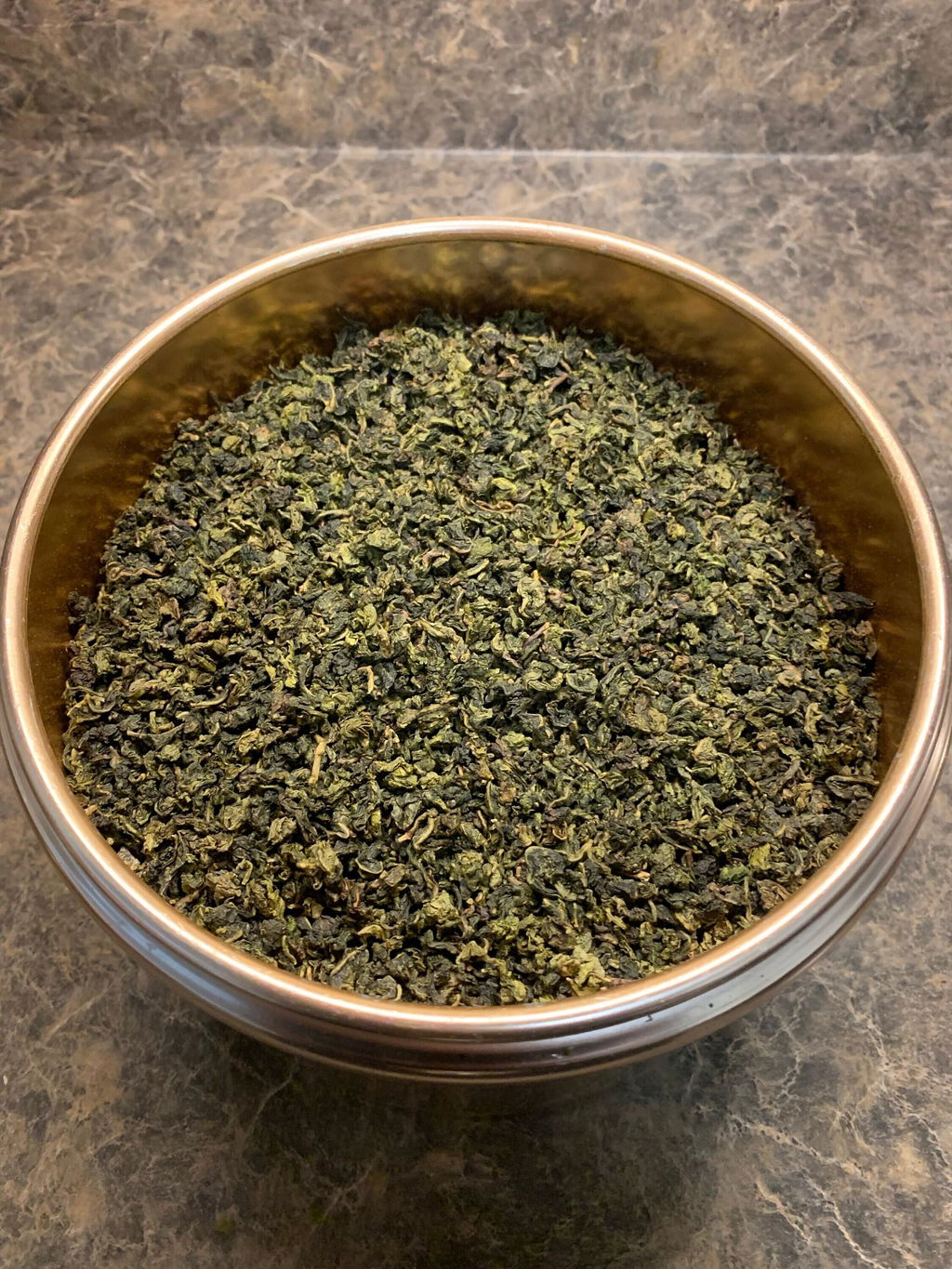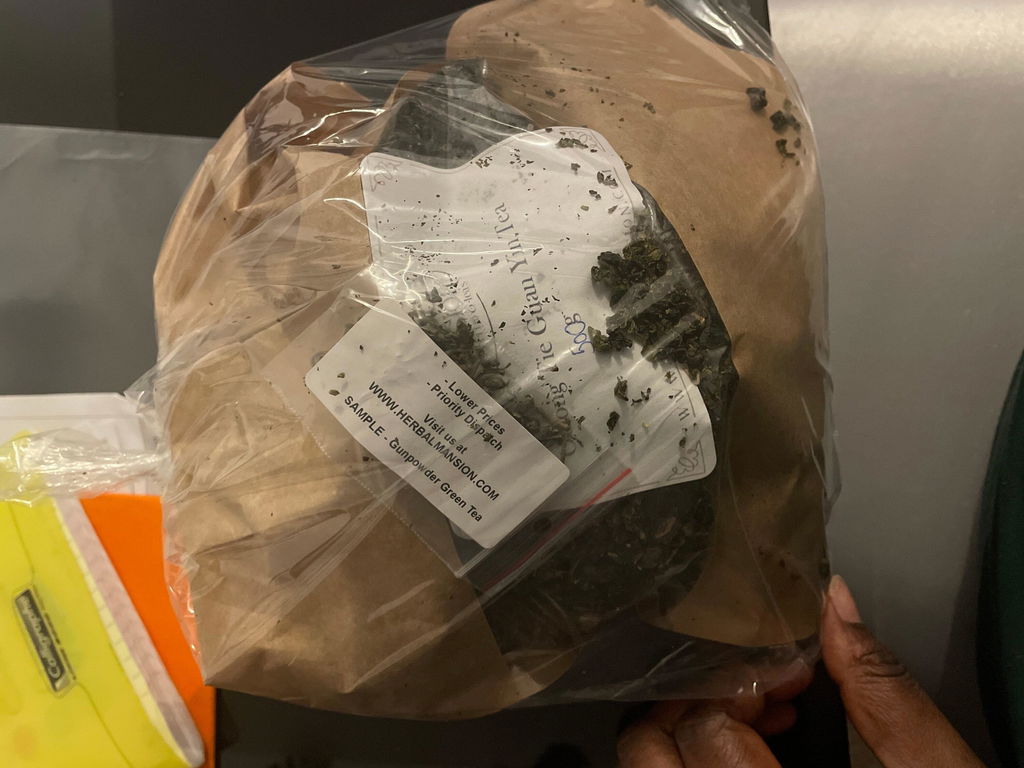


Oolong Tie Guan Yin is a Chinese oolong from Anxi, a tea between green and black, with a floral scent and a smooth, creamy taste that lingers for a long time. The leaves, rolled into tight balls, unfurl with each infusion into whole, large leaves, so one portion is brewed several times and each infusion tastes a little different. This Tie Guan Yin is a lightly oxidised oolong in the green style, which is why the infusion is pale gold. It is a tea for people who want something milder than black tea and more complex than green.
Iron Goddess of Mercy
Anxi and the legend
Tie Guan Yin comes from Anxi county in Fujian province, and its history begins in the first half of the 18th century. According to the most often repeated legend, the farmer Wei Yin, who set out tea every day before a figure of the bodhisattva Guanyin, found the tea bush shown to him in a dream in a rock crevice and grew it in an iron pot. Hence the name, literally Iron Guanyin, in English often rendered as the Iron Goddess of Mercy.
The Qianlong Emperor
A second version links the name to the scholar Wang Shirang, who in 1741 is said to have presented tea from Anxi to the Qianlong Emperor. The emperor thought that the heavy, rolled leaves resembled iron and named the tea himself. Both stories agree on the place and the time, Anxi between the 1720s and the 1740s, and since then Tie Guan Yin has been the model of Fujian oolong.
How Tie Guan Yin is made
After picking, the leaves wither in the sun and are then tossed in drums so that the leaf edges oxidise and turn red, while the centre stays green. Oxidation is stopped by brief heating, after which the leaves are rolled into balls and dried. For two hundred years Tie Guan Yin was made in the traditional style, more heavily oxidised and roasted, with a nutty, honeyed taste. In the 1990s, under the influence of Taiwan, the green style spread: lightly oxidised, floral and pale. It dominates sales today, and it is what this pack contains.
How it is used today
- Multiple infusions. One portion of leaves for 4 to 6 infusions, in a small teapot or a mug with an infuser.
- Tea with a meal. Slightly astringent and floral, it goes well with Asian dishes, fish and seafood.
- Cold. A jug of infusion from the fridge is sweet and distinctly floral.
- Instead of coffee. Milder than black tea, with a long, creamy aftertaste.
Other oolongs, including the milky Oolong Milk and the roasted Oolong Black Dragon, are in our Oolong Tea collection.
Tie Guan Yin in your tea cupboard
Tie Guan Yin is a good first oolong, because it shows everything that is interesting about this type of tea: a floral scent, a smooth taste and leaves that are infused many times. It is a tea for people who like to brew tea slowly and compare successive infusions from the same leaves.
Frequently asked questions
What is oolong?
It is a partly oxidised tea, between green and black. Tie Guan Yin is lightly oxidised, which is why it is pale and floral, while more heavily oxidised and roasted oolongs are darker and more honeyed.
How many times can the same leaves be infused?
Four to six times in a mug, six to eight in a small teapot. In a mug, lengthen each further brew by half a minute.
Does Tie Guan Yin contain caffeine?
Yes, like every tea from the tea plant. Successive infusions of the same leaves contain less and less caffeine.
Can I drink Tie Guan Yin during pregnancy or with medication?
It contains caffeine, so in these situations ask a doctor or pharmacist. A product description does not replace their advice.
Sources
- Victor H. Mair, Erling Hoh, The True History of Tea, London 2009, chapter on tea in Qing China.
- Mary Lou Heiss, Robert J. Heiss, The Story of Tea: A Cultural History and Drinking Guide, Berkeley 2007, chapter “Oolong Tea”.
- Kit Chow, Ione Kramer, All the Tea in China, San Francisco 1990, entry “Tieguanyin”.
- EFSA, Scientific Opinion on the safety of caffeine, EFSA Journal 2015, 13(5):4102.