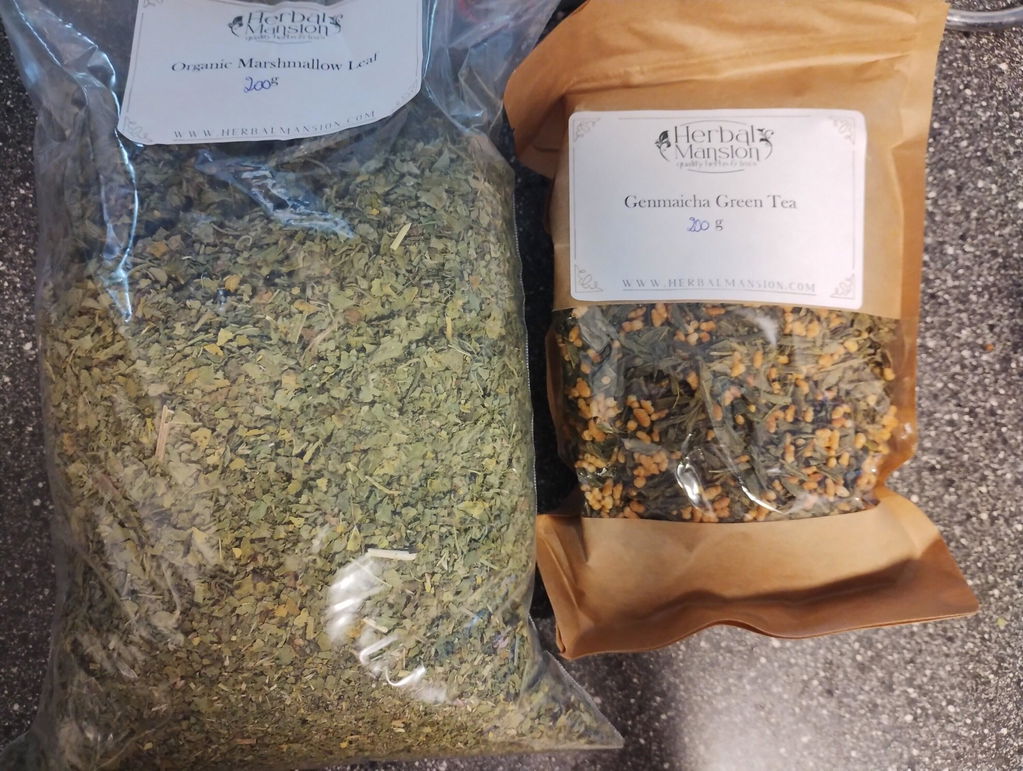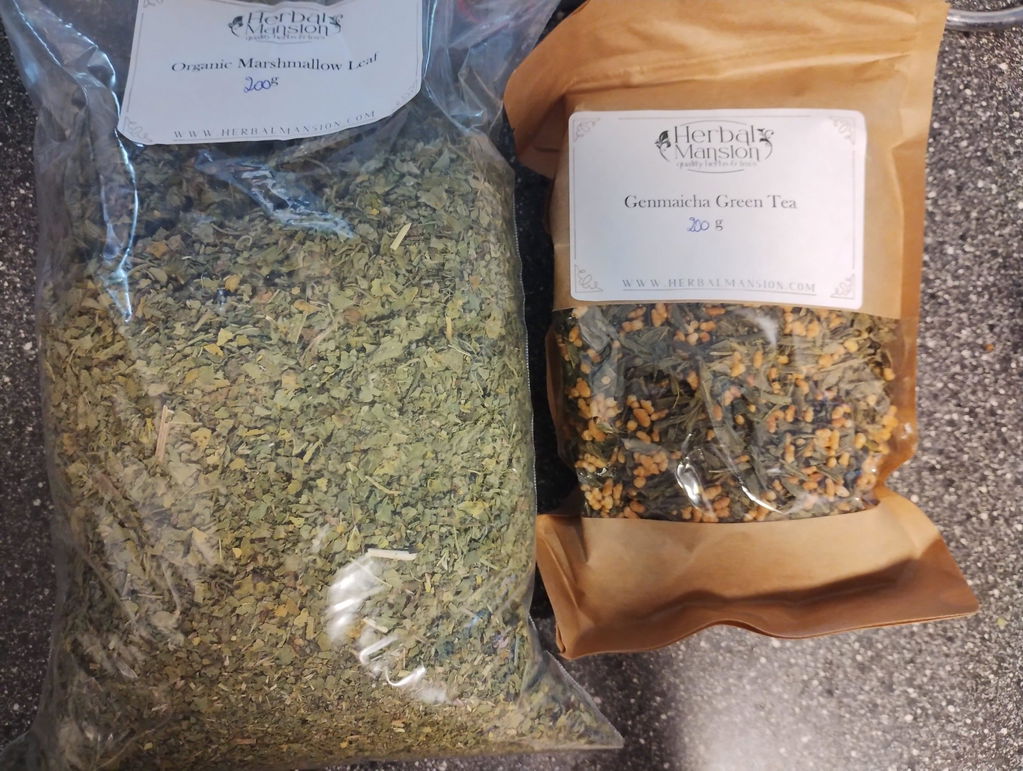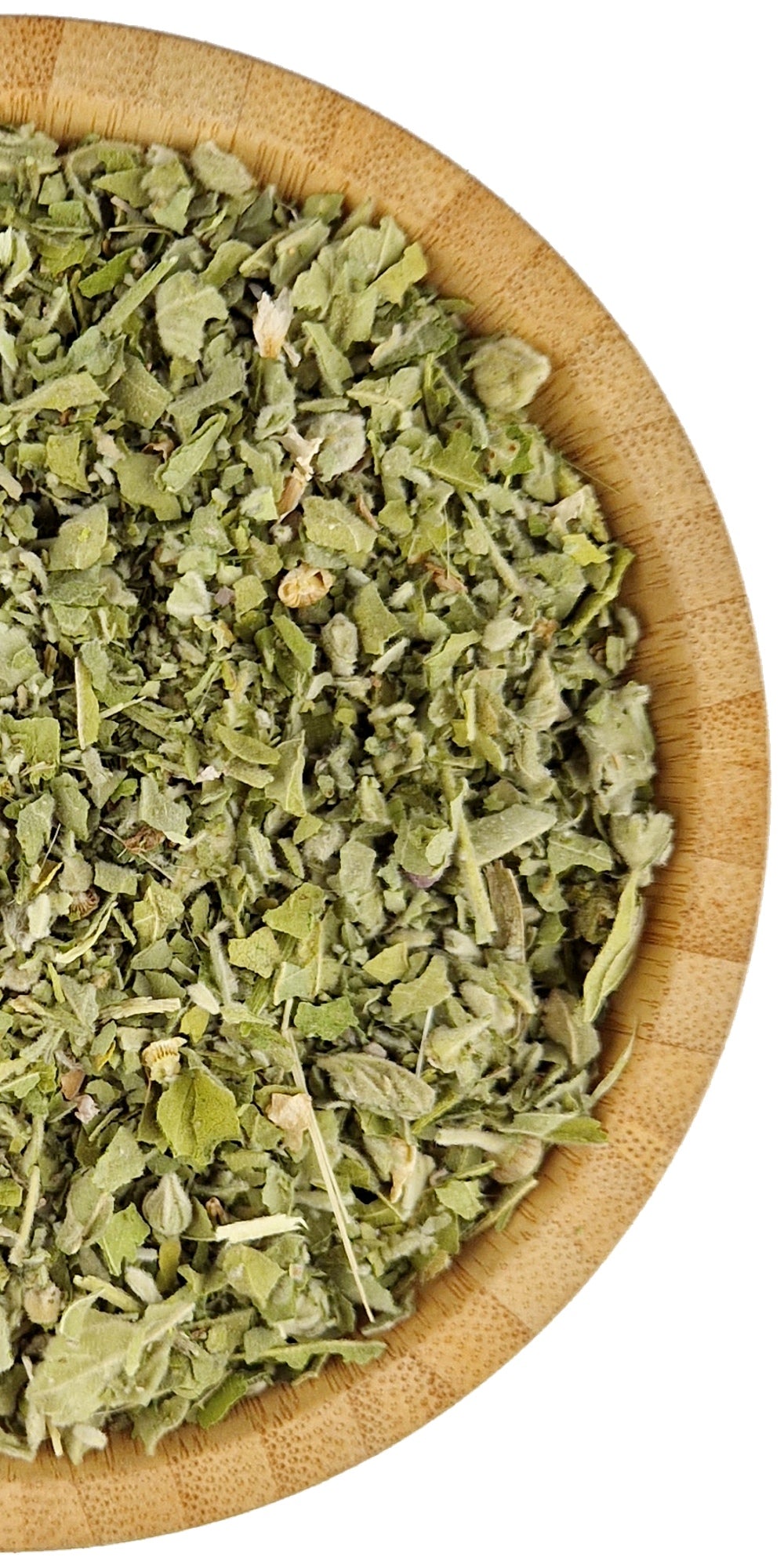
Dried marshmallow leaf is the cut leaf of the marsh mallow, Althaea officinalis, a tall perennial of the mallow family that grows on the upper edges of salt marshes. The plant gave its name to the marshmallow sweet, which was once made from its root, not from the leaf.
The mallow of the salt marsh
A plant of the mallow family
Marsh mallow belongs to the mallow family, Malvaceae. It is a clump-forming perennial with a taproot, and it grows to about 1.2 m. It flowers from July to September, and its seeds ripen from August to October. Each flower carries both male and female parts, and the flowers are pollinated by bees.
Where it grows
Its home is the upper edge of salt and brackish marshes, the banks of ditches and grassy banks near the sea. The native range runs from central and southern Europe, including Britain, through North Africa to western Asia.
The name
The English name goes back to the Old English mersc-mealwe, the mallow that grows near salt marshes, and mealwe itself comes from the Latin malva.
From marsh plant to sweet
Pâte de guimauve
The sweet takes its name from this plant, whose root once gave French pâte de guimauve its bounce; today’s marshmallows use gelatine instead. The word has meant the sweet since 1877, because the first versions were made from a paste of the root. The oldest recipe found by the food history blog Adventures in Taste and Time dates from 1757. A recipe from 1847, recreated there, combined a liquid boiled from the root with gum arabic, sugar syrup, whipped egg whites and orange flower water, and the whole process took about two days. Mass production arrived at the end of the 19th century with the “Starch Mogul” system.
Fibre, oil and glue
Plants For A Future lists several craft uses: fibre from the stems and roots for paper, oil from the seeds for paints and varnishes, and a glue made from the root. In the garden it is a plant for pollinators.
How it is used today
- Hot infusion. A small amount of leaf, steeped covered in water just off the boil.
- Room-temperature infusion. Leaves left to steep in room-temperature water for a few hours.
For other mallows, see Blue Mallow and Purple Hollyhock. More single herbs are in our Single Herbs collection, and other plants for the cup are in Herbal Tea.
Marshmallow leaf in your home cupboard
Marshmallow leaf makes a soft, silky cup. Use a small amount, brew your first cup for the suggested time and taste it before changing anything. Taste varies between batches.
Frequently asked questions
Is this the plant behind marshmallow sweets?
Yes. The sweet is named after the marsh mallow, and early versions such as French pâte de guimauve were made from a paste of its root. Today’s marshmallows are made with gelatine.
Is marshmallow leaf the same as marshmallow root?
No. Both come from Althaea officinalis, but this product is the leaf. The root is a different part of the plant.
How do I make a marshmallow leaf infusion?
Put 1 to 2 teaspoons of dried leaf in a 250 ml cup, pour over water just off the boil, at about 90°C, cover and leave for 10 minutes, then strain.
Can I steep it without hot water?
Yes. Leave 1 to 2 teaspoons of leaf in 250 ml of room-temperature water for about 4 hours, then strain.
Can I drink it during pregnancy or with medication?
If you are pregnant, breastfeeding, taking medication or have a health condition, ask your doctor before drinking herbal infusions.
Where does marshmallow leaf come from?
The current batch comes from Poland.
Sources
- Plants For A Future, Althaea officinalis, PFAF Plant Database, accessed 19 November 2026.
- Adventures in Taste and Time, Stay Puffed My Friends Part 2: France and Pâte de Guimauve, adventuresintasteandtime.com, accessed 19 November 2026.