




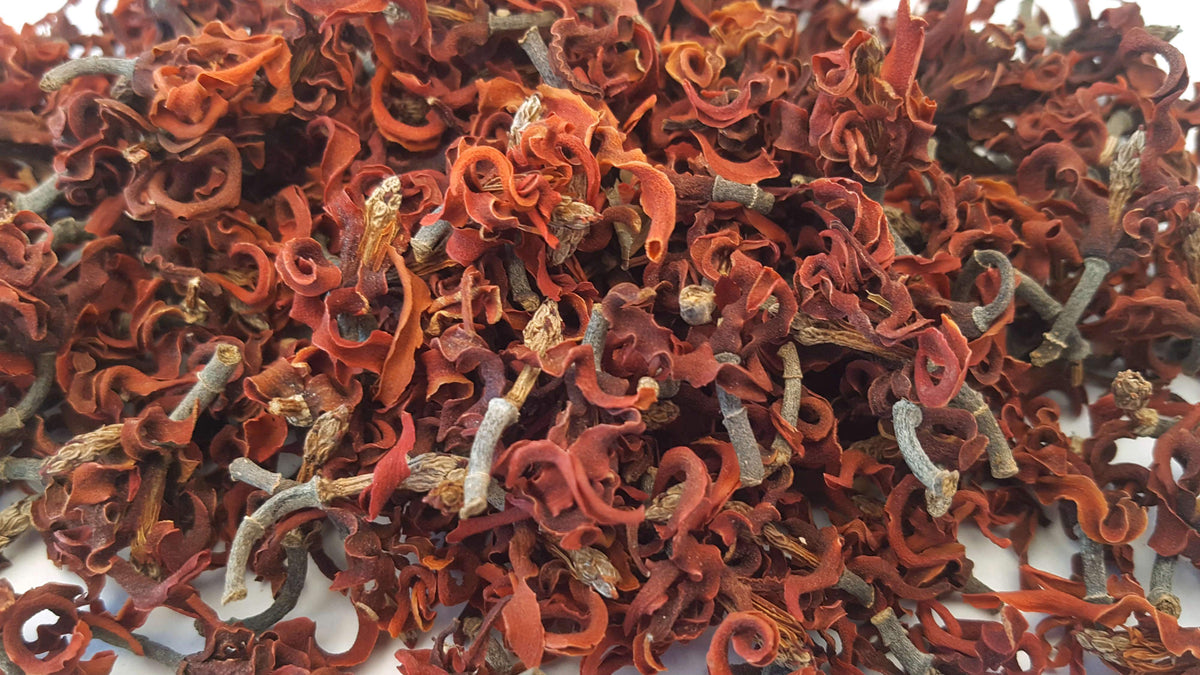
Dried magnolia flowers come from Magnolia, a genus of over 200 species of trees and shrubs from the Americas, the Himalayas and East Asia. Each flower usually has six tepals, the name botanists use when petals and sepals cannot be told apart, around many stamens set in a spiral.
An ancient line of flowering plants
Older than bees
The fossil record shows that the magnolia family, Magnoliaceae, was once widespread across Eurasia and North America. Its fossils go back around 95 million years, which makes magnolias one of the most ancient flowering plant lineages. They appeared before bees and are pollinated mainly by beetles, and their tough carpels stand up to beetles crawling over the flower.
A flower that closes at night
In the evening the inner tepals of a magnolia close over a visiting beetle. This helps carry pollen from one flower to another.
Named after a botanist from Montpellier
In 1703 Charles Plumier, in his Nova plantarum Americanarum genera, named a tree from Martinique Magnolia in honour of Pierre Magnol, who lived from 1638 to 1715 and had directed the botanic garden at Montpellier since 1696. Linnaeus later took up the name.
Magnolia petals in the kitchen
In Britain foragers pickle young magnolia petals in rice vinegar with sugar and salt, as a relish in the style of gari, the pickled ginger. The fresh petals are often described as gingery, with a hint of clove or cardamom, and older petals are more bitter.
How it is used today
- Flower infusion. Two or three dried flowers per cup, steeped covered in hot water.
- Decoration and crafts. Flowers in a glass jar, in a bowl or in a dried-flower arrangement.
Other flowers for the cup, such as Honeysuckle Flowers and Jasmine Flowers, are in our Herbal Tea and Flowers & Petals collections.
Magnolia flowers in your home cupboard
We have no reliable tasting notes for an infusion of dried magnolia flowers, and the gingery taste foragers describe belongs to fresh, pickled petals. Brew your first cup for the shorter time and taste it before adding more flowers or brewing longer. The colour varies between batches.
Frequently asked questions
Are magnolia flowers edible?
In Britain young, fresh magnolia petals are eaten pickled in rice vinegar with sugar and salt. Older petals are more bitter. These dried flowers are sold for infusion.
What do dried magnolia flowers taste like?
We have no reliable tasting notes for the dried flowers. Fresh petals are often described as gingery, with a hint of clove or cardamom, but that does not tell you how the infusion tastes.
Why are they called magnolias?
Charles Plumier named the genus in 1703 after Pierre Magnol, director of the botanic garden at Montpellier, and Linnaeus later took up the name.
Can I drink it during pregnancy or with medication?
If you are pregnant, breastfeeding, taking medication or have a health condition, ask your doctor before drinking flower infusions.
Where do the flowers come from?
The current batch comes from China.
Sources
- Encyclopaedia Britannica, Magnolia, Encyclopaedia Britannica Online.
- Encyclopaedia Britannica, Magnoliaceae, Encyclopaedia Britannica Online.
- Smithsonian Gardens, Magnolia madness.




